Fun Indoor Toddler Activities for Screen-Free Play
We may earn a commission for purchases made using our links. Please see our disclosure to learn more.
Rainy afternoons, long weekends, and those “please stop jumping off the sofa” moments all have one thing in common: your toddler still needs something to do. That is where indoor toddler activities become a lifesaver.
And no, you do not need a picture-perfect playroom or color-coded bins to make it work. Toddlers do not care if your activity setup looks like it belongs on Pinterest. They care about pouring, stacking, squishing, pretending, moving, and discovering something new.
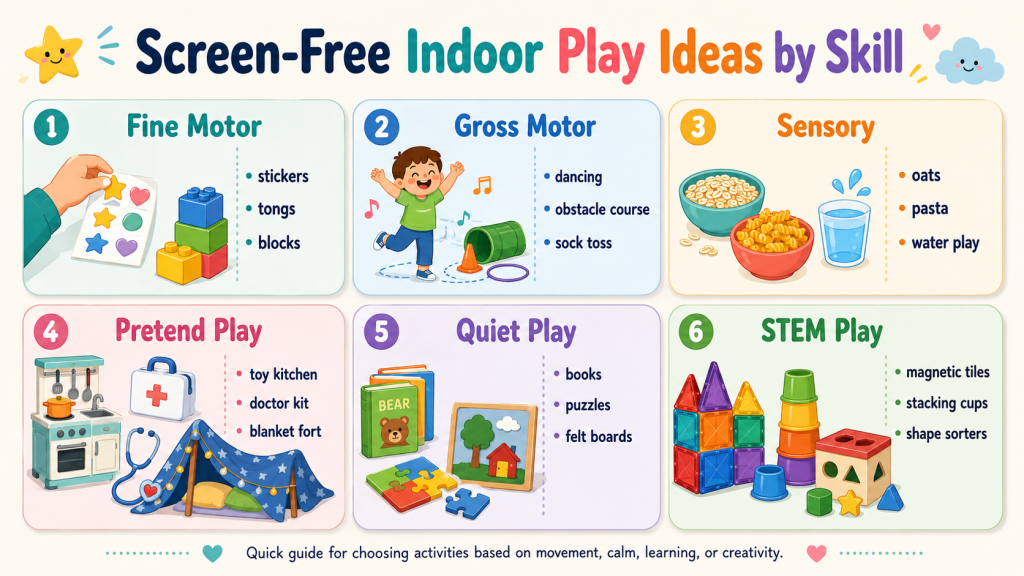
This guide is packed with simple screen-free play ideas you can use at home, including sensory play, fine motor activities, gross motor games, pretend play, quiet-time ideas, and a few helpful product picks that make indoor play easier.
Affiliate disclaimer: This article includes Amazon product suggestions, and I may earn from qualifying purchases at no extra cost to you.
Why Indoor Toddler Activities Matter
Toddlers learn by doing. They touch, toss, stack, squeeze, climb, clap, dump things out, and sometimes taste objects that should absolutely never be tasted.
It may look like chaos from the outside, but a lot is happening under the surface. Indoor play helps toddlers build:
- Fine motor skills
- Gross motor skills
- Language development
- Problem-solving skills
- Creativity
- Social-emotional growth
- Independent play habits
The good news? You do not need expensive toys for every moment. A cardboard box can become a rocket ship before breakfast, a grocery store before lunch, and a cozy reading cave by dinner. That is the beauty of toddler play.
Start With a Simple Indoor Play Mindset
The best indoor toddler activities are not complicated. In reality, they typically function better the simpler they are.
Your toddler does not need a full preschool lesson plan at home. They need short, playful moments that match their energy and curiosity.
Think of your day like a snack tray. A little movement. A little sensory play. A little pretend play. A little quiet time. When you mix those pieces together, the day often feels much easier to manage.
Keep It Short
Most toddlers are not designed to focus on one activity for an hour. Ten minutes can be a win. Twenty minutes? That is basically a parenting trophy.
Repeat What Works
If your toddler wants to scoop dry pasta from one bowl to another again and again, let it happen. Repetition is not boring to them. It helps them feel confident and in control.
Easy Sensory Play Ideas for Toddlers
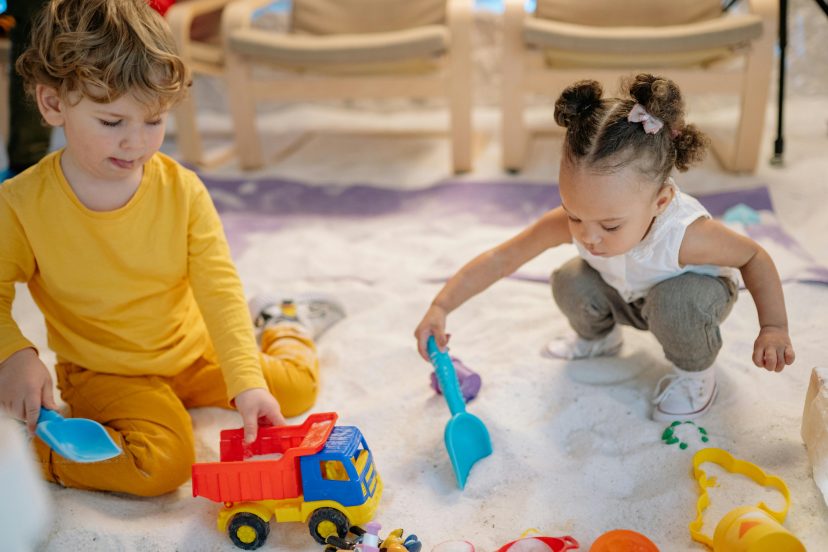
Sensory play is one of the easiest ways to keep little hands busy indoors. It gives toddlers a chance to explore textures, sounds, movement, and cause-and-effect.
You can make a simple sensory bin with:
- Dry oats
- Pom-poms
- Large pasta
- Cotton balls
- Water and cups
- Toy animals
- Measuring spoons
Always supervise sensory play, especially if your child still puts small items in their mouth.
Make a No-Stress Sensory Bin
Grab a shallow container, add one filler, and include two or three tools. That is enough.
You do not need a perfect woodland theme, handmade labels, or tiny decorative mushrooms. A scoop, a cup, and some dry pasta can keep a toddler happily occupied for longer than you expect.
Fine Motor Indoor Toddler Activities
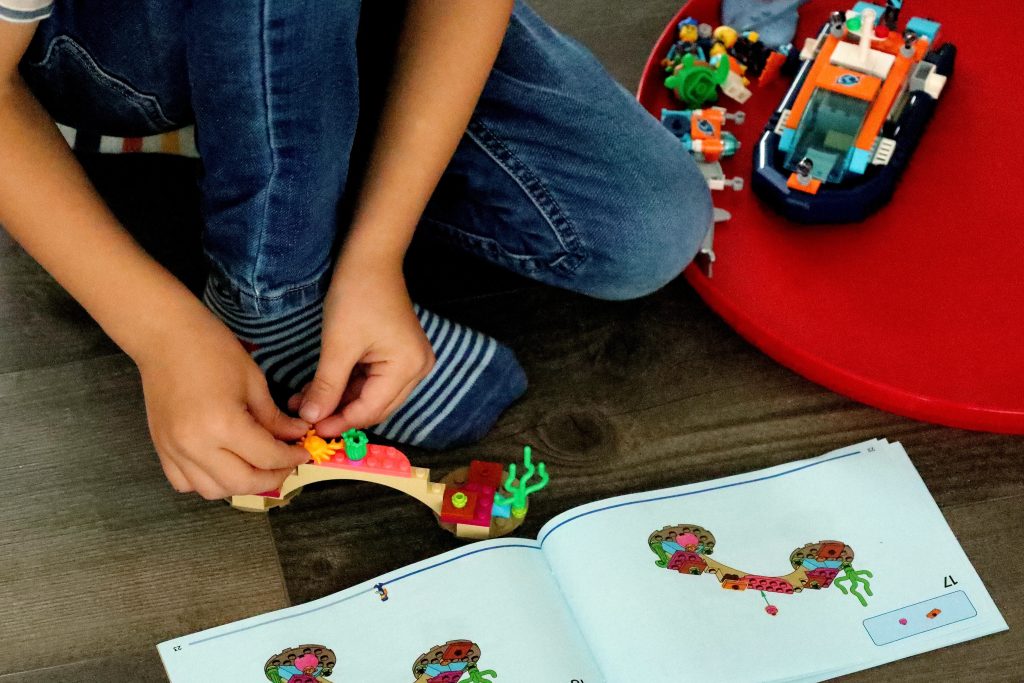
Fine motor play helps toddlers strengthen the small muscles in their hands and fingers. These skills later support drawing, feeding, buttoning, zipping, and writing.
Try these easy ideas:
- Drop pom-poms into a container
- Peel large stickers
- Stack blocks
- Thread large beads
- Sort chunky puzzle pieces
- Pick up soft objects with toddler-safe tongs
Sticker Rescue Game
Place large stickers on a tray, window, or sheet of paper. Then let your toddler peel them off.
It sounds almost too simple, but toddlers love it. To them, every sticker is a tiny rescue mission.
Gross Motor Activities for Indoor Energy
Some toddlers wake up with the energy of a puppy after three espressos. When they need to move, it helps to give that energy a safe place to go.
Try:
- Pillow obstacle courses
- Animal walks
- Dance parties
- Indoor bowling with soft balls
- Tape balance lines on the floor
- Tossing rolled-up socks into a laundry basket
The Couch-Safe Movement Rule
Instead of saying “stop jumping” twenty times, redirect the movement.
Try saying, “Let’s jump on the pillow path,” or “Can you hop from blanket to blanket?”
You are not shutting down their energy. You are giving it a safe lane to run in.
Ideas for Toddler Pretend Play
Playing pretend is more than just adorable. It helps toddlers practice language, emotions, routines, and social skills.
You can set up:
- A pretend grocery store
- A stuffed animal doctor clinic
- A toy kitchen café
- A cardboard box car
- A blanket fort library
- A baby doll bedtime routine
Pretend play also gives you a funny little window into your child’s mind. One minute they are feeding soup to a teddy bear, and the next they are scolding a toy dinosaur for not wearing socks.
You can also tie pretend play to seasonal learning. For example, if your toddler loves animals, this guide to hibernation preschool activities can help you create cozy indoor lessons about bears, winter, and nature.
Art Activities Without the Big Mess
Art with toddlers does not have to mean paint on the wall and glitter in places glitter should never be.
Start small and keep supplies simple.
Try:
- Crayons and paper
- Dot markers
- Water painting on cardboard
- Contact paper collages
- Large stickers
- Washable stamps
Tape the Paper Down
Tape your child’s paper to the table before they begin. This keeps it from sliding around and helps them focus.
It also makes the activity feel more official, which toddlers often love. Apparently, taped paper means serious business.
Building and STEM Activities at Home
Building activities are perfect for screen-free play because they invite toddlers to test, fail, rebuild, and try again.
A tower falls. They rebuild it. A block does not balance. They adjust it. That is early problem-solving in action.
Try building with:
- Wooden blocks
- Magnetic tiles
- Cardboard tubes
- Plastic cups
- Foam blocks
- Shape sorters
Ask simple questions while they play:
- “Can we make it taller?”
- “What happens if this big block goes on top?”
- “Which piece should we try next?”
You are not turning playtime into a lecture. You are gently opening the door to early STEM learning.
Music and Movement Activities
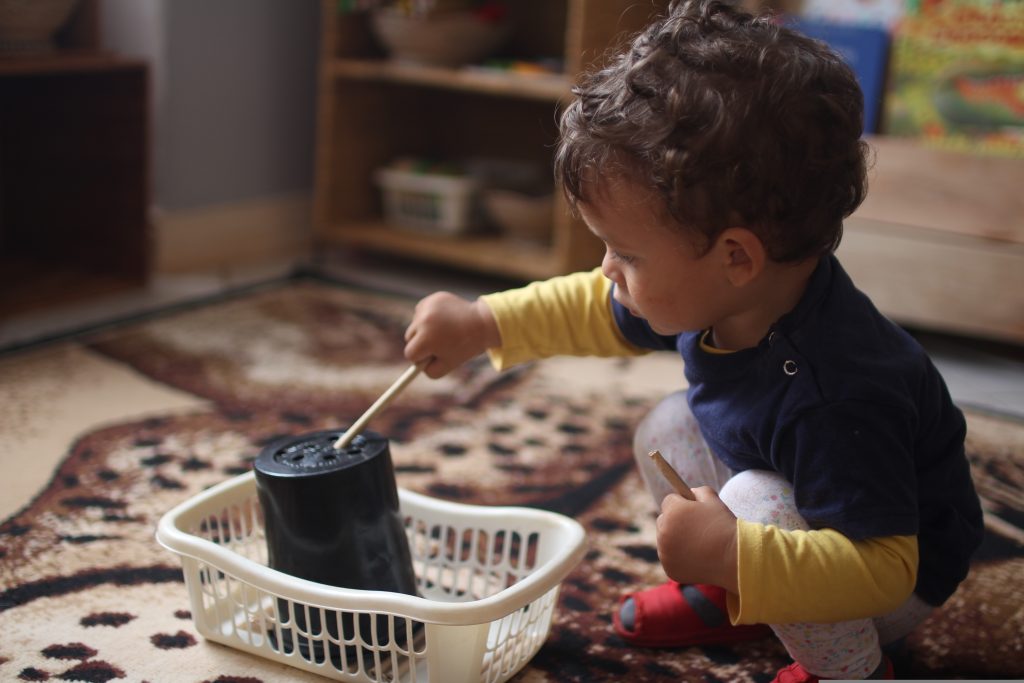
Music can turn an ordinary afternoon into instant fun. You do not need real instruments either. A pot, spoon, and toddler-level enthusiasm can do the job, although your ears may need a moment.
Try:
- Freeze dance
- Clapping patterns
- Shaker bottles
- Scarf dancing
- Marching games
- Sing-and-act songs
Add Cultural Variety
Play nursery rhymes, folk songs, and gentle music from different cultures. Toddlers naturally respond to rhythm, and music gives them a warm way to hear new sounds and patterns.
It is also a lovely reminder that play looks a little different in every home, culture, and family rhythm.
Quiet Indoor Toddler Activities
Quiet time with toddlers is not always truly quiet. Sometimes it simply means “less wild than usual,” and that still counts.
Calm activities help toddlers slow down, reset, and practice independent play.
Try:
- Board books
- Felt boards
- Matching cards
- Busy boards
- Stuffed animal reading time
- Simple puzzles
Create a small “cozy basket” with a few soft toys, books, and one simple puzzle. Pull it out when everyone needs a calmer moment.
It is not magic, but it can help shift the mood.
Kitchen Table Toddler Learning Activities
Your kitchen table can become a tiny learning station with almost no prep.
Try:
- Sorting spoons by size
- Matching socks
- Pouring water between cups
- Counting crackers
- Sorting blocks by color
- Making playdough shapes
Use Everyday Items
You do not always need new toys. Measuring cups, muffin tins, wooden spoons, plastic bowls, and clean containers can become toddler learning tools in minutes.
Toddlers love using “real” household items. It makes them feel helpful and grown-up, even if the job is simply moving dry pasta from one bowl to another.
Rainy Day Toddler Activities That Actually Work
Rainy days can make your home feel smaller than it is. The trick is to rotate between active play and calm play before everyone gets cranky.
Try this simple rainy-day rhythm:
- Start with movement.
- Move into sensory play.
- Offer a snack.
- Try pretend play.
- End with books or puzzles.
This helps your toddler use energy without getting overstimulated. Because once toddlers hit that overtired zone, the socks come off, the tears arrive, and somehow everyone is upset about a banana.
Best Products for Indoor Toddler Activities
Here are five helpful Amazon products that support indoor toddler activities, screen-free play, and early learning.
1. Learning Resources Spike The Fine Motor Hedgehog
This colorful toy helps toddlers place and remove chunky “quills,” which supports hand strength, coordination, color recognition, counting, and pattern play. Amazon lists it for ages 18 months and up.
Features:
- Chunky pieces for small hands
- Color sorting and counting practice
- Fine motor skill support
- Easy storage inside the hedgehog body
Best for: Parents who want a compact toy for fine motor practice, quiet play, or early learning.
2. Melissa & Doug Wooden Building Blocks, 100-Piece Set
This classic block set includes 100 wooden blocks in different colors and shapes. It works well for stacking, sorting, building, balancing, and open-ended play.
Features:
- 100-piece wooden block set
- Multiple shapes and colors
- Encourages building and imagination
- Great for solo or sibling play
Best for: Families who want one toy that can be used in many different ways.
3. Fat Brain Toys Squigz Starter Set
Squigz are flexible suction toys that stick to smooth surfaces and to each other. They work well for sensory play, problem-solving, bath time, high-chair play, and creative building.
Amazon describes them as food-grade silicone and free of BPA and latex.
Features:
- Suction-cup building pieces
- Sensory-friendly texture
- Supports motor skills and creativity
- Useful for windows, tubs, trays, and high chairs
Best for: Toddlers who enjoy pulling, sticking, building, and experimenting.
4. PicassoTiles 60 Piece Magnet Building Tiles Set
Magnetic tiles are a favorite for toddler STEM play because they are simple, colorful, and open-ended. This 60-piece PicassoTiles set encourages 2D and 3D building, shape recognition, color play, and spatial awareness.
Features:
- 60 magnetic building pieces
- Encourages STEM learning
- Supports shape and color recognition
- Works for toddlers and older preschoolers
Best for: Families who want a toy that can grow with their child.
5. Little Tikes Easy Score Basketball Set
This toddler basketball set works indoors or outdoors and adjusts from 2.5 to 4 feet. It helps children practice balance, throwing, coordination, and active play.
Features:
- Adjustable height
- Oversized rim for easier scoring
- Includes three balls
- Supports gross motor movement
Best for: High-energy toddlers who need a safe indoor activity for movement.
Research-Backed Reasons Play Works
Play is not just a cute way to pass time. It plays a real role in child development.
The American Academy of Pediatrics’ 2018 clinical report, play supports healthy child development, explains that play supports social-emotional, cognitive, language, self-regulation, and executive function skills. It also strengthens safe, nurturing caregiver relationships.
NAEYC’s 2022 review on playful learning in early childhood explains that playful learning can support development across different areas and may help children learn better than rigid, instruction-only approaches.
For screen balance, the American Academy of Pediatrics recommends limiting screen use for children ages 2 to 5 to about one hour per day of high-quality programming, with caregiver involvement. That makes screen-free indoor toddler activities a helpful tool, not another reason for parent guilt.
How to Set Up an Indoor Activity Rotation
An activity rotation keeps toys and play ideas feeling fresh without constantly buying new things.
Try a simple weekly rhythm:
- Monday: Blocks and music
- Tuesday: Sensory bin and books
- Wednesday: Pretend play and puzzles
- Thursday: Art and movement
- Friday: Fine motor games and dance
Store a few toys out of sight, then bring them back later. Many toddlers act like an old toy has magically become brand new again.
Tiny parenting win? Absolutely.
FAQs About Indoor Toddler Activities
What are the best indoor toddler activities for rainy days?
The best rainy-day toddler activities include pillow obstacle courses, sensory bins, building blocks, pretend play, sticker games, dance parties, and simple puzzles. Try mixing active play with quieter activities so your toddler can move, then calm down.
How can I keep my young child occupied without using screens indoors?
Use short activity stations. Offer blocks, sensory bins, pretend play, books, washable art, music, puzzles, and fine motor games. If your toddler loses interest quickly, rotate activities every 15 to 30 minutes.
What indoor toddler activities help with learning?
Sorting, stacking, matching, counting snacks, building towers, pretend play, puzzles, and music games all support early learning. These activities help with language, problem-solving, memory, coordination, and social skills.
Are sensory bins safe for toddlers?
Sensory bins can be safe when you supervise closely and choose age-appropriate materials. Avoid small pieces if your toddler still puts objects in their mouth. Larger items like cotton balls, scarves, water, or jumbo pasta may be better options.
How long should a toddler play independently indoors?
Start with 5 to 10 minutes, then build slowly. Some toddlers play independently for longer, while others need more connection first. A simple setup and your nearby presence can help them feel secure.