7 Fun Hibernation Preschool Activities
We may earn a commission for purchases made using our links. Please see our disclosure to learn more.
Trying to explain hibernation to preschoolers can feel a little like explaining taxes to a squirrel. You know it makes sense, but the audience may be more interested in snacks. That is why Hibernation Preschool Activities work best when they are hands-on, playful, and simple enough for little learners to touch, move, sort, build, and pretend.
In this guide, you’ll find cozy winter animal activities, bear cave crafts, sensory play ideas, hibernation books, simple science chats, and easy preschool lesson extensions. The goal is not to turn your child into a tiny wildlife biologist overnight. It is to help them understand how some animals rest, hide, slow down, or survive during winter in a way that feels fun and memorable.
This article includes affiliate-style product suggestions. Always check current product details, age guidance, and availability before buying.
Why Hibernation Preschool Activities Work So Well
Preschoolers learn best when a lesson feels like play. Hibernation is perfect for that because it naturally includes animals, winter, caves, food, sleep, movement, sorting, and storytelling.
That means you can teach one science idea through many learning styles. A quiet child may love the story basket. A wiggly child may love pretending to crawl into a bear den. A sensory-seeking child may happily scoop cotton-ball “snow” for twenty minutes while accidentally learning vocabulary. Sneaky learning for the win.
The American Academy of Pediatrics notes that play supports children’s brain, body, and social development, including planning, emotional regulation, and getting along with others. That is exactly why playful winter animal activities can teach more than facts. They also build language, confidence, and connection.
What Preschoolers Should Learn About Hibernation
Keep the science simple. Preschoolers do not need a long lecture on metabolism. Save that for later, preferably after coffee.
Focus on these child-friendly ideas:
- Some animals sleep or rest for a long time in winter.
- Some animals find warm, safe places like dens, burrows, or caves.
- Some animals eat extra food before winter.
- Not all animals hibernate.
- Some animals migrate, and others adapt to cold weather.
You can say, “Hibernation is when some animals rest deeply during cold months because food is harder to find.” Simple, clear, and preschool-approved.
Activity 1: Build a Cozy Bear Cave
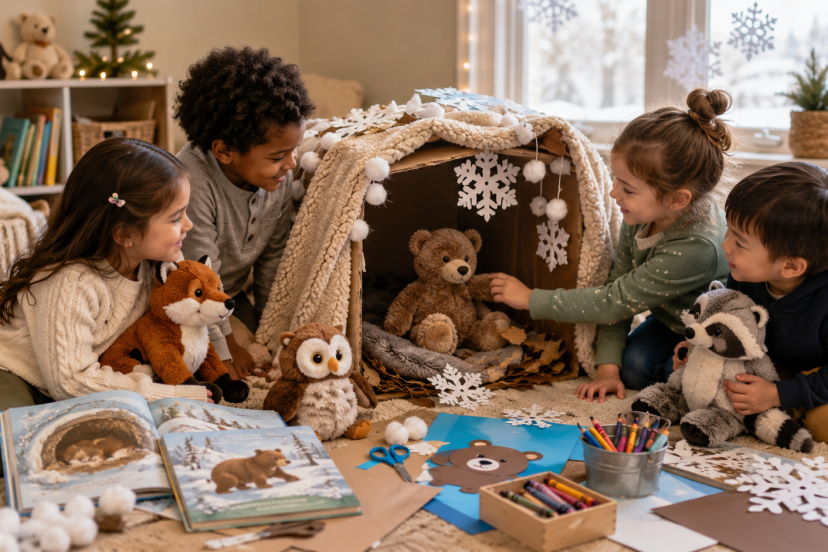
A bear cave activity is the classic for a reason. It is easy, visual, and naturally invites pretend play.
Use a cardboard box, blanket fort, laundry basket, or under-the-table space. Add brown paper, toy bears, leaves, cotton-ball snow, and a soft blanket inside.
How to Do It
Let children decorate the “cave” first. Then ask:
- What would a bear need before winter?
- Would the cave be noisy or quiet?
- What food might the bear eat before resting?
After that, invite them to crawl in and pretend to sleep like a bear. Bonus points if they snore dramatically. Preschoolers love ridiculous snoring. Honestly, who doesn’t?
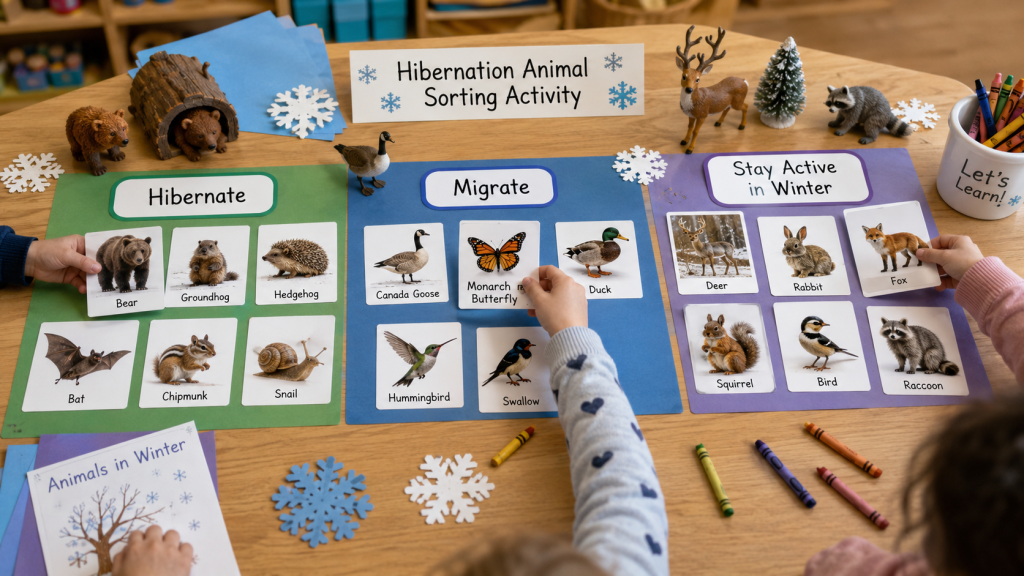
Activity 2: Sort Animals That Hibernate, Migrate, or Adapt
Sorting activities help preschoolers compare ideas without needing worksheets that feel like tiny paperwork.
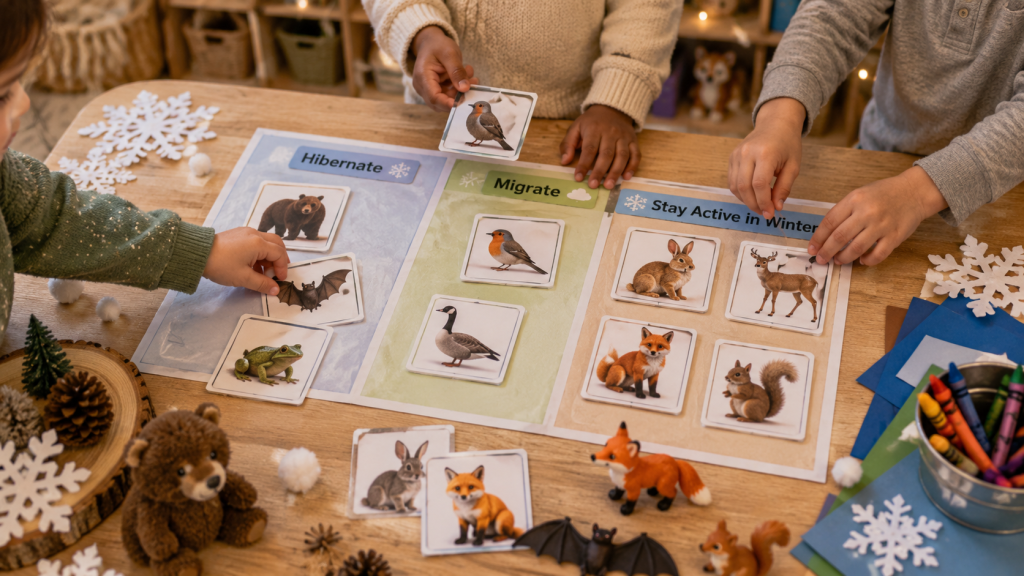
Create three baskets or paper mats labeled:
- Hibernate
- Migrate
- Adapt
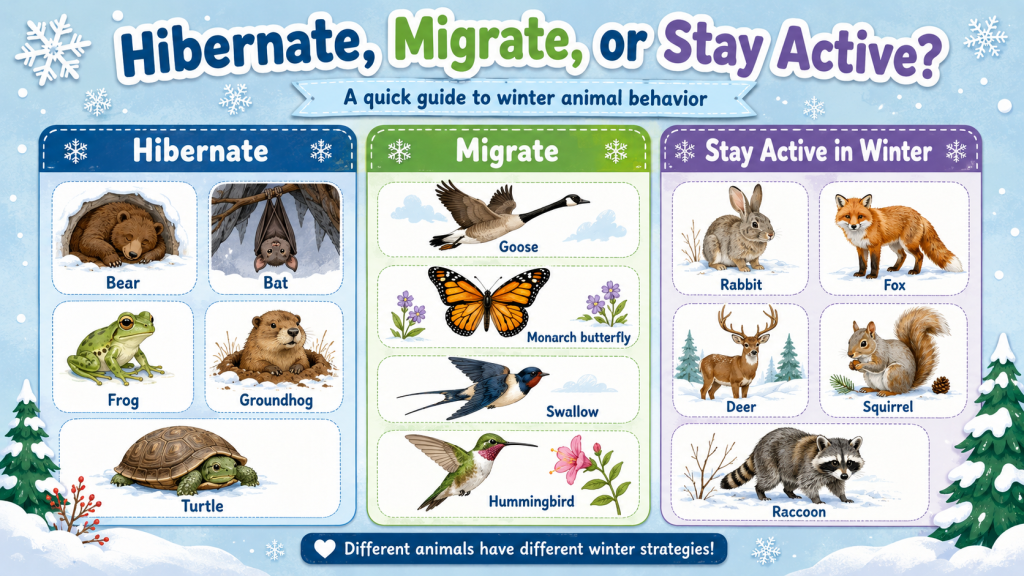
Then use animal cards or toy animals. Bears, bats, groundhogs, frogs, and some turtles can go in the hibernation group. Birds can go in migration. Deer, foxes, rabbits, and polar animals can go in adaptation.
Make It Easier
For younger preschoolers, use only two groups: “Sleeps in winter” and “Stays awake in winter.”
For older preschoolers, add the word “survive.” Ask, “How does this animal survive winter?” That question opens the door to early critical thinking.
Activity 3: Read a Hibernation Story and Act It Out
Books make hibernation feel less abstract. A good story gives children characters to care about, which helps the science stick.
Try reading a picture book, then act it out with stuffed animals. One child can be the bear. Another can be the mouse, squirrel, bird, or narrator.
Bear Snores On by Karma Wilson is a strong read-aloud choice because it centers on a bear sleeping in a cave while other animals gather around him. Amazon lists it as part of “The Bear Books” series.
Story Prompt
After reading, ask: “How did the animals feel when Bear woke up?”
That one question moves the lesson from science into social-emotional learning. Children practice noticing feelings, not just naming animals.
Activity 4: Make a Sleepy Bear Paper Plate Craft
This hibernation craft is simple, cute, and low-prep.
You need:
- Paper plates
- Brown paint or crayons
- Construction paper ears
- Glue
- Cotton balls
- A marker
Children color the plate brown, add ears, and draw a sleepy face. Then they glue cotton balls around the bear to make a snowy den.
Add Language Practice
Write or say a sentence together:
“My bear is sleeping in a warm den.”
Children can repeat it, trace it, or dictate their own version. This is a gentle way to blend preschool science with early literacy.
Activity 5: Create a Hibernation Sensory Bin
A sensory bin turns winter animal learning into a mini world.
Fill a bin with dried beans, shredded paper, cotton balls, felt leaves, pinecones, toy animals, small cups, and scoops. Add a few small containers as dens.
Children can hide animals, cover them with “leaves,” and move them into caves.
Sensory Bin Tip
Keep a towel or tray underneath unless you enjoy finding dried beans under furniture three weeks later. Every parent and teacher learns this the hard way.
Use vocabulary as they play:
- den
- burrow
- cave
- winter
- sleep
- warm
- cold
- food
- hibernate
Activity 6: Try Bear Snack Math
Snack math is powerful because preschoolers will do almost anything for crackers. No judgment. Same.
Give each child a small cup of bear-shaped crackers, cereal, raisins, or apple slices. Pretend the bear needs to gather food before winter.
Ask them to count:
- 3 berries
- 4 fish crackers
- 5 nuts
- 2 apple pieces
Then say, “The bear ate two. How many are left?”
Make It Inclusive
Use foods that work for your group’s allergies, culture, and family preferences. You can use paper food cutouts if snacks are not ideal. The learning still works.
Activity 7: Play the Winter Den Movement Game
This is perfect when the room energy has gone full popcorn machine.
Place animal pictures around the room. Call out actions:
- “Bears crawl to the cave.”
- “Bats hang still.”
- “Frogs hop to the mud.”
- “Birds fly south.”
- “Rabbits hop through snow.”
When you say “winter storm,” everyone freezes. When you say “spring,” they wake up and stretch.
This movement game supports gross motor skills, listening, vocabulary, and self-control.
How to Make Hibernation Lessons Inclusive and Culturally Aware
Not every child experiences snowy winters. Some children live in warm climates. Some families may have never seen snow except in books or videos. That is okay.
You can say, “In some places, winter gets very cold. In other places, winter feels rainy, windy, or only a little cooler.”
Then invite children to share what winter feels like where their family lives. Maybe it means snow boots. Maybe it means a cooler morning breeze. Maybe it means no big change at all.
This small conversation helps children see science as global, not one-size-fits-all.
Simple Hibernation Preschool Lesson Plan for a Week
You can stretch these activities across one cozy week.
Monday: Introduce hibernation with a story and animal pictures.
Tuesday: Build a bear cave and act out winter sleep.
Wednesday: Sort animals into hibernate, migrate, and adapt groups.
Thursday: Make the sleepy bear craft.
Friday: Use the sensory bin, snack math, and movement game.
Keep each activity short. Preschool attention spans are tiny but mighty. Ten focused minutes can beat thirty forced minutes every time.
Safety and Setup Tips for Mess-Free Winter Animal Activities
Choose materials with your child’s age and habits in mind. If a child still mouths objects, avoid small sensory items like beans, beads, acorns, or tiny animal figures.
Use larger props instead:
- Stuffed animals
- Felt shapes
- Big paper leaves
- Large plastic containers
- Cardboard boxes
Also, keep paint washable, glue minimal, and expectations realistic. A preschool craft does not need to look Pinterest-perfect. If the bear has six eyes and glitter eyebrows, congratulations. You have witnessed creativity in the wild.
Recommended Products for Hibernation Preschool Activities
Here are five Amazon product ideas that fit naturally into a hibernation preschool theme.
1. Bear Snores On by Karma Wilson
This cozy picture book works beautifully for circle time, bedtime, or a classroom hibernation unit. It gives children a warm story about a sleeping bear and animal friends in a cave.
Features: Rhyming language, woodland animals, strong read-aloud rhythm.
Use cases: Best for preschool storytime, acting out scenes, and bear cave lessons.
2. Hibernation Station by Michelle Meadows
This rhyming book introduces several animals getting ready for winter sleep. Amazon lists editions of Hibernation Station by Michelle Meadows, including book and Kindle formats.
Features: Hibernation theme, animal variety, playful rhyme.
Use cases: Great for circle time, hibernation vocabulary, and animal sorting.
3. Sleep, Bear! by Shelby Alinsky
This National Geographic Kids pre-reader introduces young children to bear hibernation with nonfiction-style features. Amazon describes vocabulary support and a wrap-up activity, which makes it useful for early learning.
Features: Nonfiction format, vocabulary support, kid-friendly photos/learning prompts.
Use cases: Best for preschool science centers and beginner nonfiction reading.
4. A Loud Winter’s Nap by Katy Hudson
This funny winter picture book follows Tortoise, who wants to sleep through winter but keeps getting interrupted. Amazon describes it as a charming picture book that can help children see winter as magical.
Features: Humor, winter setting, expressive characters.
Use cases: Great for discussing winter, feelings, rest, and story sequencing.
5. Learning Resources Sort & Seek Polar Animals
While polar animals are more about winter adaptation than hibernation, this toy set can support sorting, matching, vocabulary, and cold-weather animal conversations. Amazon lists it as a 15-piece toddler learning activity set.
Features: Animal figures, sorting play, fine motor practice.
Use cases: Best for sensory bins, animal habitats, and compare-and-contrast lessons.
How to Extend the Theme Beyond One Week
Hibernation can lead into many other preschool themes.
Try connecting it to:
- Winter weather
- Animal homes
- Nocturnal animals
- Forest habitats
- Migration
- Seasons
- Bedtime routines
- Food and survival
You can also connect the topic to family reading. For parents who want a bigger-picture guide to child development and family learning, this helpful list of trusted parenting books for every stage offers more ideas for building confidence at home.
Common Mistakes to Avoid
The biggest mistake is making hibernation too complicated. Preschoolers do not need a university-level biology lesson. They need a clear idea, repeated in different ways.
Avoid:
- Too many animal facts at once
- Long sitting times
- Tiny craft pieces for young children
- Expecting perfect answers
- Correcting every imaginative idea immediately
Instead, gently guide. If a child says, “The bear sleeps in a refrigerator,” you can smile and say, “That would be chilly! Bears usually choose dens or caves.”
How to Know the Activities Are Working
You will know the lesson is landing when children start using the words during play.
Listen for phrases like:
- “My bear is hibernating.”
- “This animal needs a den.”
- “Birds migrate.”
- “The frog is sleeping in mud.”
- “Spring wakes them up!”
Those tiny comments show that children are connecting language, memory, and imagination. That is the good stuff.
Research-Backed Reasons Hibernation Preschool Activities Matter
Hibernation preschool activities work because young children learn best through play, movement, and hands-on discovery. NAEYC supports play-based learning for the whole child, which fits perfectly with bear caves, animal sorting, sensory bins, and storytelling.
These activities also build language and thinking skills. Harvard’s Center on the Developing Child explains that back-and-forth conversations help build young brains. So when you ask, “Where does the bear sleep?” and your child answers, they’re practicing memory, vocabulary, and connection.
For accurate science, the National Park Service explains how animals slow down to survive winter, including lower body temperature, slower heart rate, and reduced energy use during hibernation.
FAQs About Hibernation Preschool Activities
What are the best Hibernation Preschool Activities for beginners?
Start with a bear cave, a simple read-aloud, animal sorting, and a sensory bin. These activities are easy to set up and help preschoolers understand hibernation through play.
How would you describe hibernation to a young child?
Say, “Hibernation is when some animals rest or sleep deeply during winter because it is cold and food is harder to find.” Keep it short and use animal examples.
What animals should preschoolers learn about during hibernation lessons?
Good examples include bears, bats, groundhogs, frogs, turtles, snakes, and some insects. You can also compare them with animals that migrate or adapt.
Are hibernation crafts good for preschool learning?
Yes. Crafts help preschoolers build fine motor skills, vocabulary, sequencing, and memory. A sleepy bear craft or paper cave can make the science idea easier to remember.
How long should a preschool hibernation activity last?
Most activities should last 10–20 minutes, depending on the group. Sensory bins and pretend play may last longer because children can explore at their own pace.