Best Parenting Books for New Parents

We may earn a commission for purchases made using our links. Please see our disclosure to learn more.
Parenting can feel like being handed a tiny human, a hospital bracelet, and absolutely no user manual. One minute you are Googling diaper rash at 2 a.m., and the next you are wondering if your toddler’s dramatic floor performance deserves an Oscar.
That is exactly why the best parenting books can feel like a calm friend sitting beside you saying, “You’re not failing. You just need a few better tools.”
This guide will help you choose parenting books that are practical, warm, research-informed, and easy to use in real family life. You will find Amazon book picks, buying tips, expert-backed insights, and a simple way to match each book to your parenting season.
Why the Best Parenting Books Still Matter
Parenting advice is everywhere now. Your aunt has an opinion. TikTok has 400 opinions. Your toddler has one opinion, and it is usually “no.”
The best parenting books give you something social media rarely does: depth. They slow things down. They explain why children behave the way they do, not just what to do when they melt down in the cereal aisle.
Good parenting books can help you:
- Understand your child’s brain and emotions
- Build calmer discipline habits
- Communicate without yelling
- Feel less alone
- Create routines that fit your real life
They do not make you a perfect parent. Thankfully, your child does not need perfect. They need present, safe, loving, and willing-to-learn.
How to Choose the Right Parenting Book
Before buying a parenting guide, ask yourself one honest question: “What is hard right now?”
If your baby will not sleep, choose a baby-focused book. If your child is talking back, choose a communication or discipline book. If you feel overwhelmed by conflicting advice, choose a research-based parenting book.
Look for books that are:
- Easy to read in short bursts
- Written by credible authors
- Practical, not just theoretical
- Respectful toward children and parents
- Flexible for different family structures and cultures
The right book should feel like a flashlight, not a judge with a clipboard.

Best Overall Parenting Book: The Whole-Brain Child
The Whole-Brain Child: 12 Revolutionary Strategies to Nurture Your Child’s Developing Mind by Daniel J. Siegel and Tina Payne Bryson is one of the best parenting books for parents who want to understand what is happening inside their child’s head. Amazon lists the book under its full title, focused on strategies for nurturing a child’s developing mind.
This book is helpful because it explains big child-development ideas in a way that feels usable. You learn why kids lose control, why logic does not work mid-tantrum, and how connection helps children calm down.
Best for: new parents, toddler parents, emotionally sensitive kids, and anyone who wants fewer “why is this happening?” moments.
Best Discipline Book: No-Drama Discipline
No-Drama Discipline: The Whole-Brain Way to Calm the Chaos and Nurture Your Child’s Developing Mind is another strong pick from Daniel J. Siegel and Tina Payne Bryson. Amazon describes it as a book that connects child brain development with how parents respond to misbehavior.
This is one of the best parenting books if discipline makes you feel stuck between being too strict and too soft. It helps you see discipline as teaching, not punishment.
Helpful features:
- Explains why children act out
- Gives calmer ways to respond
- Focuses on connection before correction
- Helps reduce reactive parenting
Best for: parents dealing with tantrums, hitting, yelling, power struggles, or daily boundary battles.
Best Communication Book: How to Talk So Kids Will Listen
How to Talk So Kids Will Listen & Listen So Kids Will Talk by Adele Faber and Elaine Mazlish is a classic for a reason. It gives parents scripts that feel practical instead of stiff.
This book is especially useful when your child says, “You never listen!” and your brain quietly leaves the building. It shows you how to validate feelings without giving up boundaries.
Use it when you want to:
- Reduce yelling
- Help kids name feelings
- Encourage cooperation
- Handle sibling conflicts
- Stop repeating yourself 27 times
Best for: parents of preschoolers, school-age kids, and tweens.
Best Data-Driven Parenting Book: Cribsheet
Cribsheet: A Data-Driven Guide to Better, More Relaxed Parenting, from Birth to Preschool by Emily Oster is a smart pick for parents who like evidence, numbers, and fewer dramatic parenting rules. Amazon lists it as part of the ParentData Series and describes it as a guide for more relaxed parenting from birth to preschool.
This book covers common early-parenting decisions, such as sleep, feeding, childcare, and routines. It will not tell you there is only one perfect way. Instead, it helps you weigh trade-offs.
Best for: analytical parents, first-time parents, and anyone tired of fear-based parenting advice.
Best Montessori Parenting Book: The Montessori Baby
The Montessori Baby: A Parent’s Guide to Nurturing Your Baby with Love, Respect, and Understanding by Simone Davies and Junnifa Uzodike is ideal for parents who want a calmer, more intentional home environment. Amazon lists the title as a guide to nurturing babies with love, respect, and understanding.
This book focuses on respect, independence, observation, and simple routines. It is not about turning your home into a perfect beige Instagram nursery. It is about noticing your baby as a capable little person.
Best for: parents interested in Montessori, gentle routines, baby development, and respectful caregiving.
5 Best Parenting Books to Consider
The Whole-Brain Child
Short description: A brain-based parenting book that helps you understand your child’s emotions and reactions.
Features:
- 12 practical strategies
- Child-development explanations
- Easy examples for daily struggles
Use case: Best for parents who want to respond calmly during tantrums, big feelings, and emotional storms.
No-Drama Discipline
Short description: A discipline guide that focuses on teaching, connection, and emotional regulation.
Features:
- Practical discipline tools
- Brain-based explanations
- Gentle but firm approach
Use case: Best for parents who want boundaries without constant yelling or punishment.
How to Talk So Kids Will Listen & Listen So Kids Will Talk
Short description: A communication classic that teaches parents how to speak so children feel heard and cooperate more often.
Features:
- Conversation examples
- Problem-solving tools
- Emotion-coaching language
Use case: Best for parents who want better everyday conversations with kids.
Cribsheet
Short description: A research-minded parenting guide that helps parents make calmer decisions from birth to preschool.
Features:
- Data-informed advice
- Covers baby and toddler topics
- Balanced, practical tone
Use case: Best for parents who want facts without panic.
The Montessori Baby
Short description: A respectful parenting guide for creating a simple, thoughtful baby environment.
Features:
- Montessori-inspired routines
- Baby development guidance
- Practical home setup tips
Use case: Best for parents who want to encourage independence from the earliest years.
Why Reading With Your Child Matters Too
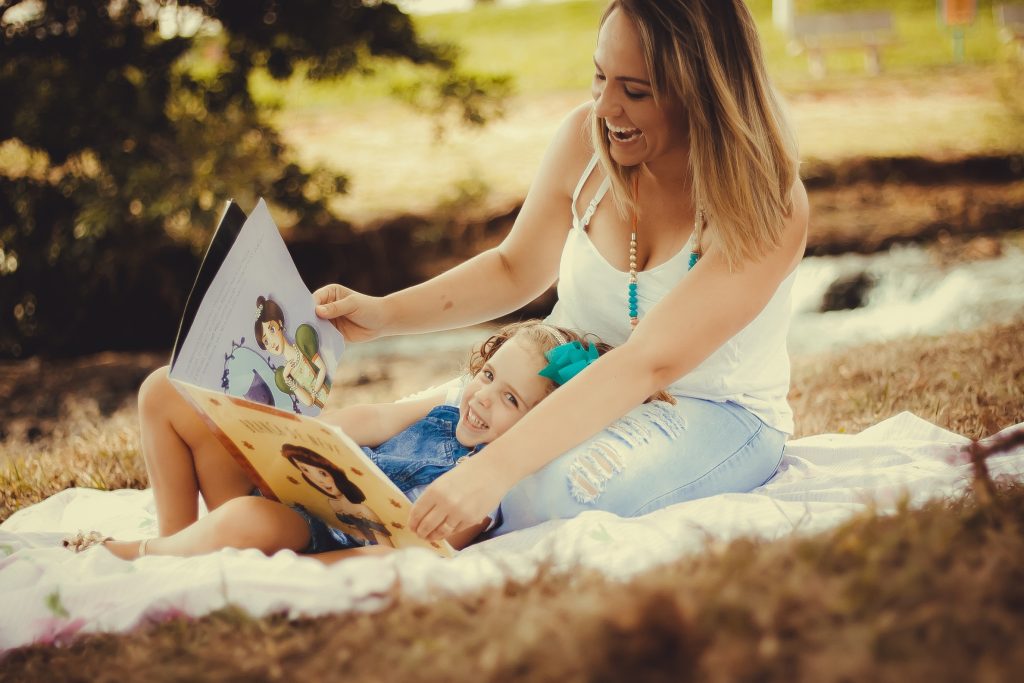
The American Academy of Pediatrics updated its shared reading guidance in 2024, encouraging parents and caregivers to read aloud with newborns and young children. The AAP says shared reading can support early literacy, loving relationships, brain development, attachment, and school readiness.
So, while you are choosing the best parenting books for yourself, remember to build a book habit with your child too. Even five cozy minutes with a picture book counts.
And when your child gets older, books can become part of family traditions, classrooms, and seasonal bonding. For example, creative school projects like festive Thanksgiving classroom door decoration ideas can turn learning into something warm, visual, and memorable.
How to Actually Use Parenting Advice
Here is the trick: do not try to apply everything at once.
Pick one idea. Try it for a week. Notice what changes.
For example:
- Instead of yelling, try naming the feeling first.
- Instead of rushing bedtime, add one predictable step.
- Instead of correcting instantly, pause and breathe.
- Instead of demanding cooperation, offer two reasonable choices.
Parenting advice works best when it becomes muscle memory. Tiny changes beat grand parenting makeovers every time.
Common Mistakes When Buying Parenting Books
Many parents buy a book because everyone recommends it, then feel guilty when it does not fit their child.
Avoid these mistakes:
- Buying based only on popularity
- Choosing books that shame parents
- Expecting one book to solve everything
- Ignoring your child’s age and temperament
- Reading too much and applying too little
A parenting book should support your instincts, not drown them out.
Best Parenting Books by Stage
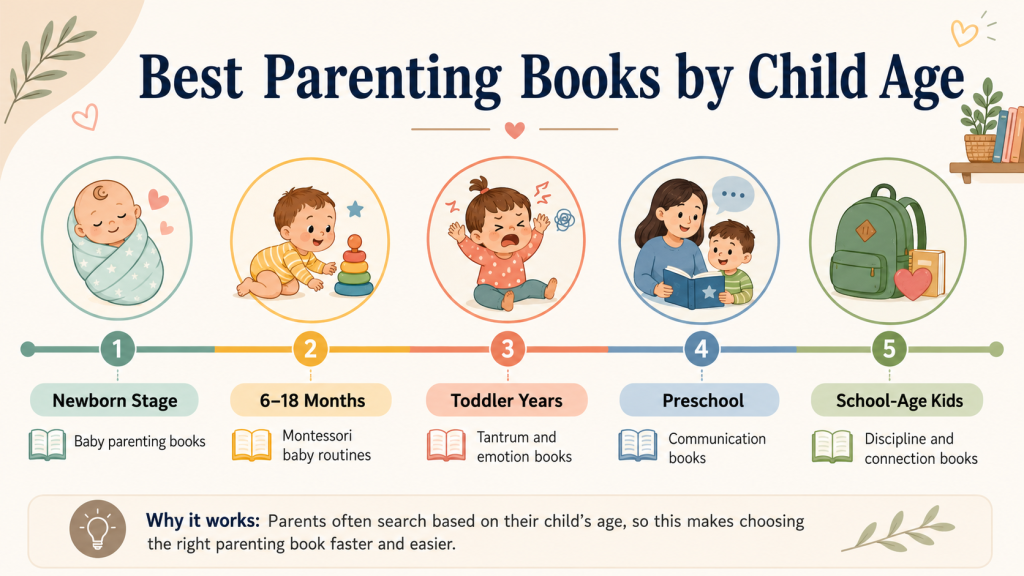
For newborns and babies, start with Cribsheet or The Montessori Baby.
For toddlers, choose The Whole-Brain Child or No-Drama Discipline.
For preschoolers and older kids, add How to Talk So Kids Will Listen & Listen So Kids Will Talk.
For overwhelmed parents, begin with the book that solves your loudest problem first. If you read them all at once, there is no prize.
Tips for Busy Parents Who Barely Have Time to Read
You do not need a candle, a quiet room, and two uninterrupted hours. Lovely dream, though.
Try this instead:
- Read 5 pages before bed
- Listen to the audiobook while folding laundry
- Highlight one idea per chapter
- Keep the book near your nursing chair or coffee spot
- Share one tip with your partner or caregiver
The goal is not to become a parenting scholar. The goal is to feel a little more equipped tomorrow.
Parenting Book Buying Checklist
Before you buy, check:
- Does it match your child’s age?
- Does the tone feel respectful?
- Does it offer practical examples?
- Is the author credible?
- Does it support your family values?
- Can you realistically use the advice?
If the answer is mostly yes, it is probably worth adding to your shelf.
What Research Says About Parenting Knowledge
Research shows that parenting knowledge and daily habits can shape a child’s early development. A National Academies report on parenting knowledge, attitudes, and practices found that responsive caregiving, warm relationships, and consistent routines support children’s emotional, social, and learning skills.
The American Academy of Pediatrics also recommends reading aloud from infancy. Its guidance on shared reading with babies and young children explains that reading together can support bonding, language development, and early learning.
FAQs About the Best Parenting Books
What are the best parenting books for first-time parents?
The best parenting books for first-time parents include Cribsheet, The Whole-Brain Child, and The Montessori Baby. They explain baby care, brain development, routines, and respectful parenting in practical ways.
Which parenting book is best for discipline?
No-Drama Discipline is one of the best books for discipline because it focuses on teaching, emotional regulation, and connection instead of fear-based punishment.
Are gentle parenting books useful for real-life behavior problems?
Yes, when they include clear boundaries and practical steps. Good gentle parenting books do not mean permissive parenting. They help you stay calm while still guiding your child.
What parenting book should I read for toddler tantrums?
For toddler tantrums, start with The Whole-Brain Child or No-Drama Discipline. Both explain why young children lose control and how parents can respond with more calm and structure.
How many parenting books should new parents read?
Start with one or two. Choose books that match your current challenge. Reading ten books at once can create more confusion than confidence.
Conclusion: Build Your Parenting Shelf Slowly
The best parenting books will not remove every tantrum, sleepless night, or mystery stain on the couch. Parenting is still parenting.
But the right book can give you language when you feel stuck. It can help you understand your child’s behavior instead of taking it personally. It can remind you that growth happens in tiny, ordinary moments: the apology after yelling, the bedtime story after a hard day, the deep breath before responding.
Start with one book that fits your season. Read slowly. Try one idea. Then keep going.
You do not need to become a perfect parent. You just need to keep becoming a more connected one.