Art Activity for Nursery: Simple, Safe Ideas for Little Creators
We may earn a commission for purchases made using our links. Please see our disclosure to learn more.
Planning an art activity for nursery children can feel complicated. You want toddlers to explore color and texture, yet may picture paint on walls, crayons in mouths, and a three-minute activity after a long setup. Nursery art needs neither an elaborate theme nor a perfect craft. It works best when materials suit the child’s age, choices stay simple, and adults focus on exploration rather than appearance. This guide covers inviting activities, mess control, suitable supplies, and products for different homes and temperaments. It includes options for babies and toddlers without turning creativity into another demanding household project for real families.
Affiliate disclosure: This article contains affiliate recommendations. If you purchase through qualifying links, the website may earn a commission at no additional cost to you.
What Makes an Art Activity for Nursery Age-Appropriate?
An age-appropriate art activity for nursery children matches what little hands can manage. A one-year-old may grasp a chunky crayon, while a two-year-old may repeat dots or swirls. Older toddlers may name colors and explain marks.
Keep the goal modest. Large paper, easy-grip tools, washable color, and a brief setup usually beat complicated craft kits. Five cheerful minutes still count as creative time.
Start With Process Art, Not Perfect Crafts
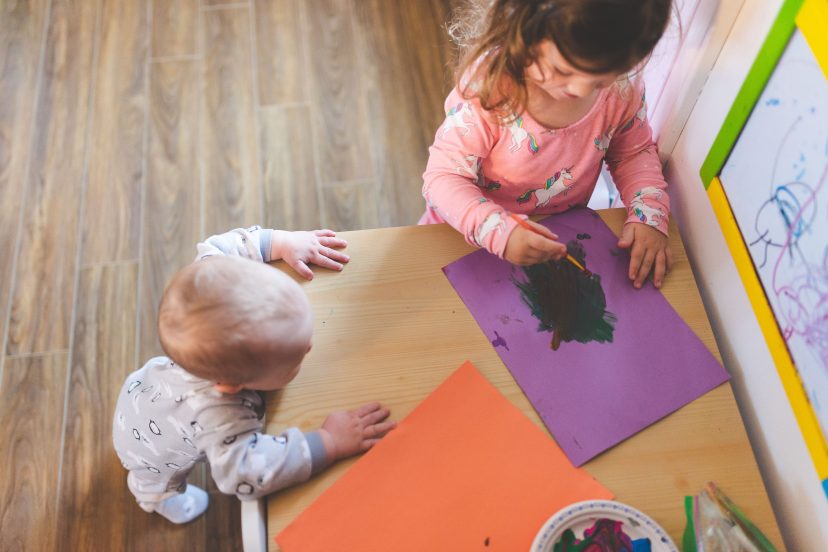
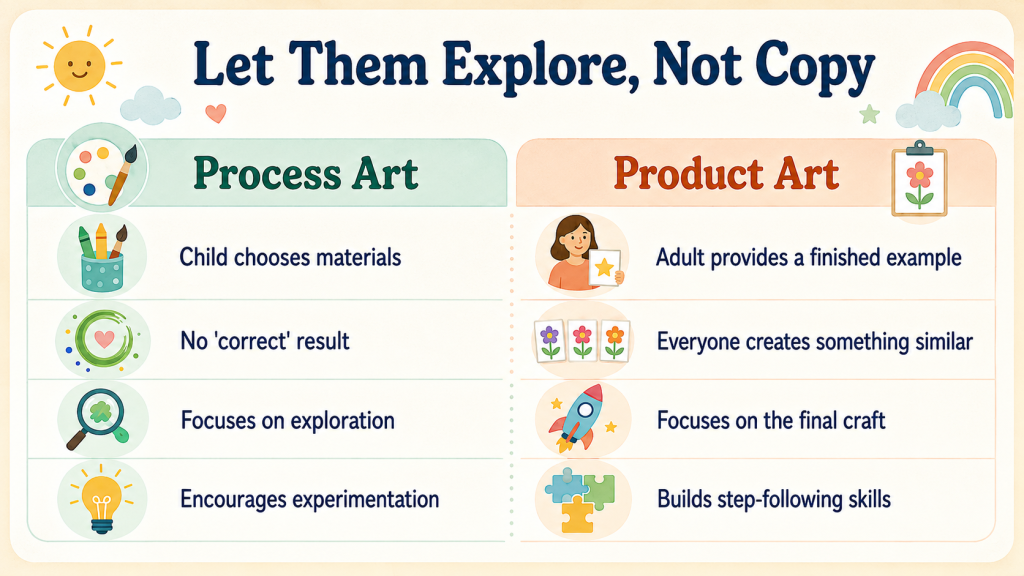
Process art centers on exploring materials rather than copying a finished sample. This approach makes an art activity for nursery children flexible: offer blue and yellow paint with a sponge, then let each child dab, sweep, mix, or watch.
Adults can support the experience without taking over. Say, “You made a long red line,” or ask, “What happened when the colors touched?” Avoid correcting the picture or adding details for the child. The unexpected result is part of learning.
Safety Comes Before the Setup
Before starting an art activity for nursery children, remember that little ones often explore with their mouths, so supervise continuously. Follow age labels and remove caps, broken crayons, beads, sequins, buttons, and other small pieces. “Non-toxic” does not mean edible; switch activities when a child repeatedly mouths a material.
Check allergies before using food-based color, plants, or fragranced products. Cover the floor, control access to water, wash hands afterward, and stop using any damaged supply that could leak, splinter, or shed pieces.
How to Prepare a Nursery Art Space
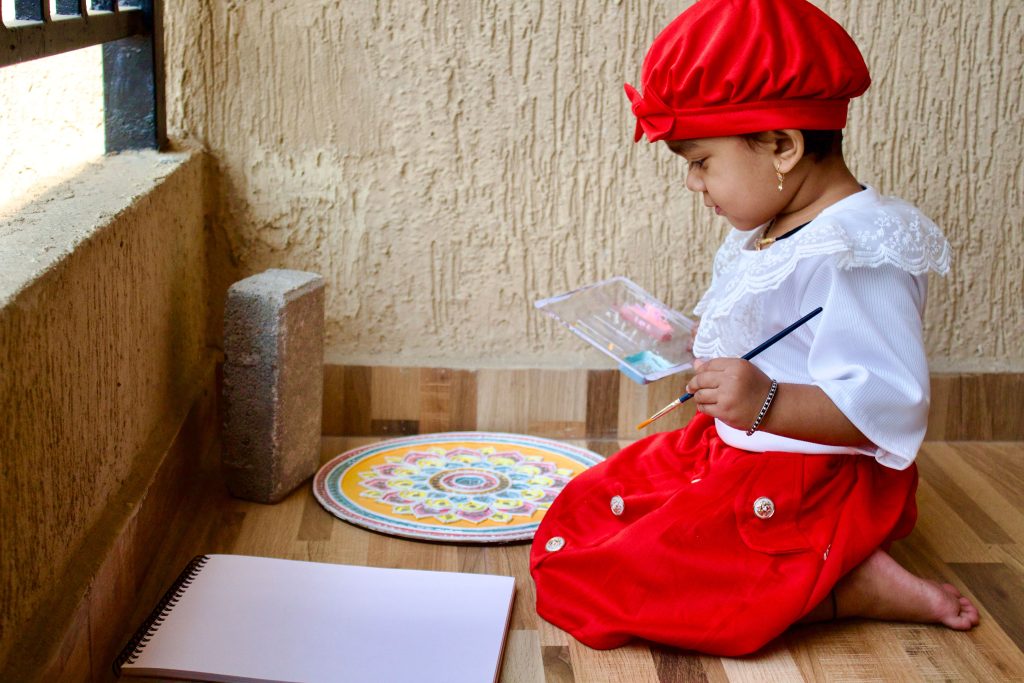
A washable high-chair tray, low table, or clear floor area can hold an art activity for nursery children. Tape down the paper, open containers beforehand, and offer only the tools needed. Too many choices often distract.
Define the working zone with a tray or washable mat, and keep cleanup supplies within adult reach. Families wanting variety beyond the art table may also enjoy these screen-free indoor toddler activities, with movement, sensory, and quiet-time ideas.
Simple Crayon Scribble Invitations
For an easy art activity for nursery beginners, secure a large sheet of paper and offer two or three chunky crayons. The limited palette preserves choice.
Refresh the invitation with dark paper, clean cardboard, or a long sheet shared by two children. Older toddlers may enjoy drawing beside an adult, provided the adult makes separate marks instead of creating a picture to copy. Remove broken pieces and supervise children who still bite or mouth tools.
Finger Painting Without Total Chaos
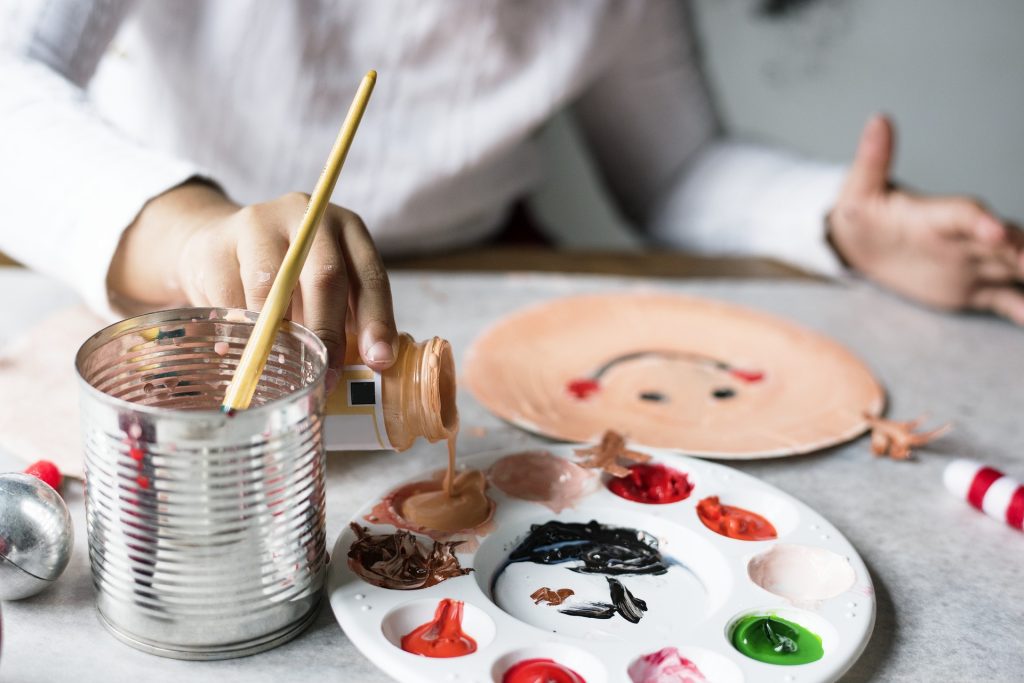
Place one spoonful of washable paint on paper inside a shallow tray. Add another color only after the child explores the first. Children who dislike sticky textures can use a sponge, toy vehicle, or wide brush.
For lower-mess play, seal small amounts of paint inside a sturdy resealable bag and tape every edge to the table. Inspect it constantly for leaks and discard it afterward. It is an activity material, not an unsupervised toy.
Contact Paper Collage Play
Tape contact paper sticky-side up to a table or wall, then offer large pieces of felt, tissue paper, ribbon, or lightweight paper. Children can place, pull, and rearrange items without managing liquid glue.
Keep every piece comfortably larger than the child’s mouth, and count materials before and after play. A vertical collage encourages reaching, but position it at a safe height so children do not climb or stretch toward furniture, cords, or shelves.
Dot, Stamp, and Print Activities
Dots and prints give immediate visual feedback. Depending on age guidance, try dot markers, large washable stamps, sponge shapes, or a clean cardboard tube dipped in a thin layer of paint.
Begin with one tool so the setup stays inviting. Use action words such as press, lift, roll, tap, and turn instead of asking for a recognizable picture. Check for removable parts, since many marker and stamp products are intended for children aged three and older.
Water Painting for Low-Mess Days
Offer a wide brush and a small cup of water for “painting” on dark paper, clean cardboard, a chalkboard, or a safe outdoor surface. The marks appear and disappear as they dry, inviting children to repeat the movement.
Water painting adapts easily to mixed ages and needs no pigment. Still, supervise continuously, wipe spills promptly, and inspect outdoor surfaces for heat, splinters, peeling paint, chemicals, or sharp edges before the child begins.
Nature-Based Art Activity for Nursery Children
Large leaves can become printing tools, pinecones can roll through paint in a tray, and sturdy flowers can make soft impressions. Nature adds texture without requiring an expensive kit.
Avoid unknown berries, mushrooms, irritating plants, sharp twigs, and swallowable pieces. Wash hands afterward, and remember that natural does not automatically mean safe. Curate the invitation: two large leaves and one paint color may offer more focused exploration than a crowded basket.
Recommended Products for an Art Activity for Nursery
The right product depends on age, sensory preferences, space, and realistic cleanup limits. These options serve different situations rather than repeating the same supply.
| Product | Best use | Stated age |
| Crayola Palm-Grip Crayons | First scribbles | 12 months+ |
| Honeysticks Beeswax Crayons | Chunky natural-wax option | 1–3 years |
| Crayola Washable Finger Paint | Sensory painting | 12 months+ |
| Do A Dot Art! Markers | Controlled dots and prints | 3 years+ |
| Crayola Color Wonder Kit | Low-mess coloring | 3 years+ |
| Melissa & Doug Water Wow! | Reusable travel activity | 3 years+ |
Crayola My First Palm-Grip Crayons, 6 Count, Designed for Toddlers
Best for: Babies and young toddlers making first marks
These egg-shaped crayons fit inside a small palm, so children do not need a mature pencil grip to make broad scribbles. Six colors provide choice, while the washable formula suits early exploration. They remain art materials rather than teethers, so supervise closely.
Honeysticks 100% Pure Beeswax Crayons, 12 Pack
Best for: Families prioritizing chunky crayons and a beeswax formula
Honeysticks Originals have a short, wide form designed for toddler hands and use beeswax with food-grade pigments. Their size supports a whole-hand grasp, while twelve colors add variety. Beeswax has a natural scent, which some families may appreciate and others may prefer to avoid.
Crayola Washable Finger Paint Set for Toddlers
Best for: A first supervised sensory-painting session
This set combines four washable paint colors with large paper sheets, creating a simple finger-painting setup. The paper gives sweeping hands room to move, and separate tubes let adults dispense small amounts. Children who resist wet textures may engage more comfortably through a sponge or brush.
Do A Dot Art! Rainbow Washable Paint Markers, 6-Pack
Best for: Older nursery children who enjoy stamping and repetition
Rounded sponge tips let children create circles and repeated prints without handling an open paint pot. The six-color set works well for quick invitations or shared tables. The manufacturer labels these markers for ages three and older, so they do not suit younger nursery rooms.
Crayola Color Wonder Mess Free Coloring Kit, 80 Piece
Best for: Apartments, shared rooms, and low-cleanup art time
Color Wonder markers reveal color on compatible paper rather than most surrounding surfaces. This kit pairs a broad marker selection with specialty pages, making it practical when ordinary markers feel stressful. It requires matching paper and is intended for children aged three and older.
Melissa & Doug Water Wow! Water Reveal Pad Bundle – Farm, Safari & Under the Sea
Best for: Travel, waiting rooms, and reusable quiet play
A refillable water pen reveals pictures and details on each spiral pad, and the pages become reusable after drying. Three themes provide variety during outings. Because children reveal prepared images, this choice offers less open-ended creation than blank paper and crayons.
Research-Backed Benefits of Nursery Art
Reliable guidance supports open-ended, developmentally appropriate exploration rather than claims that one craft will make a child smarter. The National Association for the Education of Young Children’s 2023 discussion of process art connects choice-driven art with expressive language, social-emotional interaction, problem-solving, and motor practice.
The CDC’s two-year developmental guidance, updated in 2026, encourages simple art with crayons or finger paint while adults discuss what children make. Milestones describe what most children can do by an age; they do not grade artistic talent.
For supplies, the U.S. Consumer Product Safety Commission’s art-material guidance explains toxicological review and the “Conforms to ASTM D-4236” statement. That wording concerns hazard evaluation and labeling, not edibility or suitability for every age.
How to Choose Supplies by Age and Temperament
When choosing an art activity for nursery children around age one, begin with large paper, palm-grip crayons, water painting, or tightly contained paint. Around two, many children can explore chunky crayons, broad brushes, finger paint, and simple printing. At three, more products become available, although age labels and mouthing habits still matter.
Temperament matters too. A cautious child may prefer one dry tool; a sensory seeker may enjoy paint or rolling tools. Buy a small, useful collection first, then expand according to the child’s interests.
Frequently Asked Questions About an Art Activity for Nursery
What is the easiest art activity for nursery beginners?
Tape a large sheet of paper to a table and offer two chunky, washable crayons. This setup takes less than a minute, avoids wet mess, and lets the child stop whenever interest fades. For a child who still mouths crayons, try supervised water painting on cardboard instead. The easiest activity is the one matching the child’s current way of exploring.
How long should a nursery art session last?
Follow the child rather than the clock. Five to fifteen minutes may be enough, while another child may return several times. End when the child starts throwing supplies, repeatedly leaves, or becomes frustrated. A short, positive art activity for nursery children builds familiarity without turning creativity into a demand.
Can babies do art activities safely?
Older babies can join carefully selected, fully supervised mark-making or sensory experiences, such as using an age-labeled palm crayon or pressing a securely sealed paint bag. Avoid loose small pieces and homemade mixtures unless ingredients and allergy risks have been checked. When a baby repeatedly mouths materials, pause and choose a safer developmental alternative.
How do I reduce mess without limiting creativity?
Limit the quantity, not the child’s decisions. Dispense a little paint, work inside a tray, tape paper down, and keep a damp cloth nearby. Choose washable supplies and protect clothing and flooring first. Water painting, reusable water-reveal pads, and contact-paper collage still provide meaningful cause-and-effect exploration with lighter cleanup.
Should adults show children what to make?
Demonstrate how a tool works, but avoid giving children a finished model to copy. Make one dot, show how to press a sponge, then step back. Describe what the child does and let the idea change. This keeps the art activity for nursery children focused on exploration, choice, and growing confidence.
Final Recommendation: Keep Nursery Art Simple and Open-Ended
A successful art activity for nursery children needs suitable materials, close supervision, manageable cleanup, and permission to end earlier than expected. Start with one dependable option: palm-grip crayons for first scribbles, washable finger paint for sensory exploration, or Water Wow! pads when travel and tidiness matter most. Watch the child’s response before buying more.
Choose supplies by age label, mouthing behavior, grip, sensory comfort, and available space. Resist improving the finished page. The smudges, repeated dots, and unexpected mixtures are the work. Set out a small invitation, stay nearby, describe what you notice, and let the child lead with curiosity.