
5 Emotional Literacy Activities For Kids

We may earn a commission for purchases made using our links. Please see our disclosure to learn more.
A child can feel furious about losing a game and still struggle to explain what happened inside. Another might say “I’m fine” when they are clearly worried about tomorrow’s school trip. Recognizing a feeling, naming it, and choosing what to do next are skills children learn through practice, not lectures.
These five Emotional Literacy Activities For Kids turn that practice into ordinary play. You can try them at home, in a classroom, or during a quiet moment together, using supplies you probably already have. You will also learn to adapt games by age and respond when a child avoids talking.
What Emotional Literacy Means for Children
Emotional literacy is the ability to notice, identify, describe, and understand feelings in yourself and other people. It includes recognizing that two children can react differently to the same event.
A child who says “I’m embarrassed because everyone looked at me” is identifying both an emotion and its possible cause. Emotion words do not prevent tears, but they help children ask for support.
Begin with simple, familiar emotion words like happy, sad, angry, scared, and excited. Add frustrated, disappointed, proud, jealous, or relieved as your child becomes ready. Use words connected to experiences your child understands.
Set Up Feelings Activities Without Pressure
Choose a calm moment rather than introducing a new game in the middle of a tantrum. Let your child watch before joining; five minutes can be enough.
Model a simple example: “I felt nervous, then relieved.” Never demand a personal disclosure.
Explain that every feeling is allowed, but hurting people or damaging things is not. If your child wants to stop, try another day. Keep questions curious, rather than using a game to investigate behavior or demand apologies. This protects the playful feeling of the activity.
Activity 1: Start a Daily Feelings Check-In
Draw several faces on paper or use expression photos. At breakfast or after school, invite your child to point to the picture closest to their mood.
Ask one gentle follow-up: “What happened that made today feel exciting?” Accept “I don’t know” as an answer. You can model your own check-in.
Try adding a second question: “What might help right now?” A tired child may need quiet, while a proud child may want to share.
Allow several pictures; moods change throughout the day.

Activity 2: Play Emotion Charades
Write emotions on cards or draw simple symbols for children who cannot read yet. Take turns choosing a card and acting out the feeling without speaking.
Players might slump for sadness or bounce with excitement. After guessing, ask, “What clues helped you decide?” Notice facial expressions and posture without turning it into a test.
Discuss how the same feeling can look different in different people. Anger can be loud or quiet; gestures never prove what someone feels.
For children uncomfortable performing, use toy animals to act instead. Keep guessing friendly, with no penalties.
Activity 3: Pause During Stories to Explore Feelings
Choose a book about a lost toy, new friend, or unexpected change. Stop at a turning point and ask how a character might feel.
Follow with “What in the story makes you think that?” Use picture clues and welcome several plausible answers.
For example, a character starting school might feel excited and nervous simultaneously. Ask what could have helped.
Familiar bedtime books work well. If questions interrupt the story too much, save them for afterward. Revisit the same book on another day and notice whether your child imagines new reasons for the characters’ reactions.
Activity 4: Make a Color-and-Feeling Art Map
Give your child paper, crayons, and a few feeling words. Ask them to represent today’s feelings using colors and shapes.
One child may choose jagged red lines for frustration; another may choose blue dots. Colors are personal associations, not universal mood signals.
Ask about the drawing only if your child wants to explain it. Ask “Tell me about this part” instead of interpreting colors yourself.
Older children can draw arrows showing how feelings shifted. Display the artwork only with their permission.
Activity 5: Use Puppets to Practice Tough Conversations
Set up a short pretend scene with two puppets or stuffed animals. One puppet wants a toy the other is using. Give each character a feeling and response.
Model language such as “I’m frustrated. Can I have a turn when you’re done?” Then switch roles and try a different ending. This rehearses requests without revisiting real arguments.
Keep scenarios familiar and low-stakes. A puppet can feel excluded without your child disclosing anything.
If your child prefers observing, perform both characters yourself. Value creative solutions over perfect scripts.

Connect Feeling Words to Helpful Coping Choices
Naming an emotion is a starting point, not a command to calm down. Once a child understands “I’m frustrated,” offer a short menu of actions: ask for help, take a break, move their body, or sit with a trusted adult.
Practice while calm. A child who dislikes breathing exercises might prefer drawing or squeezing a cushion.
During distress, prioritize safety and save explanations until later. For more guidance on setting limits while respecting feelings, explore gentle parenting with kindness and boundaries.
Match Emotional Literacy Activities for Kids to Their Age
For toddlers, name emotions during daily routines: “You’re disappointed because the blocks fell.” Use pictures, gestures, and brief phrases instead of expecting long explanations.
Preschoolers can enjoy charades, puppets, and simple story questions. Offer choices instead of open-ended questions.
School-age children can explore mixed feelings, discuss what triggered an emotion, and compare several possible solutions. Invite them to disagree with your interpretations.
These are guidelines, not deadlines. Language and development influence expression. For bilingual children, welcome feeling words in either language. The aim is understanding, not perfect vocabulary in one particular language.
Make Activities Accessible to Children Who Avoid Talking
Some children prefer gestures or need longer processing time. Let them point, draw, use picture cards, or select a toy instead of answering aloud.
Offer choices without assuming: “Does worried or excited fit better, or neither?” Accept corrections. For sensory-sensitive children, choose quiet materials.
Never demand eye contact or disclosure. If a child regularly struggles to communicate distress or their feelings significantly interfere with daily life, ask a pediatrician or qualified professional about appropriate support.
Common Mistakes That Make Feelings Practice Harder
Constant lessons can make children resist; wait for a calm moment.
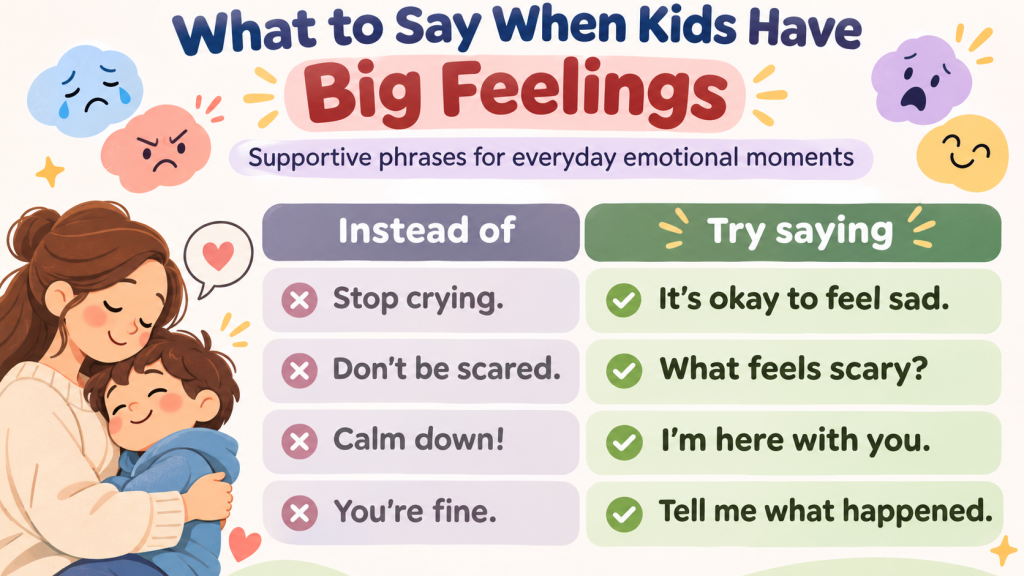
Avoid dismissing feelings or promising to erase anger. Instead, acknowledge the emotion while keeping a necessary boundary: “You can be angry. I won’t let you hit.”
Don’t correct a child’s personal color choices or insist on a single “right” expression in charades. Emotional literacy requires curiosity, not mind-reading.
Most importantly, skip rewards for reporting “happy” feelings. Children should never feel they must hide uncomfortable emotions to please adults.
What Research Shows About Learning Emotion Skills
A 2023 systematic review of randomized parenting trials examined 15 trials involving parents of young children. Such programs improved parenting practices and child emotional competence on average, but were more intensive than these games.
A 2018 meta-analysis of early-childhood social-emotional learning programs found improvements in emotional competence and several other outcomes among children in educational settings. Results varied, and no individual game was proven effective.
The practical takeaway is to use activities as opportunities for repeated, supportive conversations, rather than expecting an instant change in behavior. Research describes average group outcomes, not a promise about any individual child. Relationships, developmental needs, and consistency matter when deciding how to apply these ideas. The CDC’s guidance on noticing and naming emotions also emphasizes calm support, listening, validation, and boundaries.
Recommended Products for Emotional Literacy Activities for Kids
Homemade supplies are enough. These reusable tools offer different ways to start conversations.
Learning Resources Big Feelings Pineapple Deluxe Set
Best for: Preschoolers learning to recognize facial expressions.
This double-sided pineapple lets children assemble contrasting faces using interchangeable features. It includes a mirror and an emotions poster, making it useful for guessing games and conversations about changing moods. The small parts are a choking hazard under age three.
The Color Monster: A Story About Emotions by Anna Llenas
Best for: Shared reading and conversations about mixed feelings.
This illustrated hardcover follows a character sorting confusing emotions through colors. It gives adults an approachable way to discuss anger, sadness, fear, and happiness without asking children to disclose their own feelings. Remind children that colors have personal meanings. The publisher recommends the hardcover for ages four to eight.
hand2mind See My Feelings Mirror, Single Mirror
Best for: Children who learn through watching and copying expressions.
This handheld mirror includes six snap-in emotion slides and a guide with four activities. Children can compare their own expressions with pictured faces, then talk about clues that suggest different feelings. Its small parts make it unsuitable under age three. Facial expressions are useful hints, not definitive proof of someone’s emotional state.
hand2mind Feelings Family Hand Puppets
Best for: Children who enjoy storytelling and pretend conversations.
This set includes five soft puppets representing happy, angry, surprised, sad, and scared. Their distinct expressions and tactile details give children ready-made characters for acting out friendship problems or asking for help. The puppets invite conversation, but they do not teach coping strategies on their own; adults may need to demonstrate what each character can say or do.
hand2mind Express Your Feelings Sensory Bottles
Best for: Quiet visual play during emotion check-ins.
Four sealed bottles represent happy, angry, scared, and sad through different colors and moving contents. Children can choose a bottle, watch its movement, and discuss what the feeling reminds them of. The included activity guide offers conversation prompts. It is not guaranteed to calm every child.
Frequently Asked Questions About Emotional Literacy Activities for Kids
At what age should children start learning emotion words?
You can begin in toddlerhood by naming feelings in simple everyday situations. A toddler may understand “sad” or “mad” before they can explain why. Older children can learn words like disappointed or uncertain. Follow your child’s understanding, not a vocabulary deadline.
How often should we practice these activities?
Short, regular practice is usually easier to maintain than a long scheduled lesson. A quick check-in after school or one story discussion at bedtime may be enough to begin. Repeat whichever activity your child enjoys, and allow breaks. The goal is familiarity, not meeting a quota.
What if my child always says they’re happy or fine?
Don’t challenge the answer or insist that your child reveal more. You can offer other ways to communicate, such as choosing an image or talking about a fictional character. Model feelings without sharing adult worries. Optional conversations may feel safer.
Can emotion games help with tantrums?
They can provide vocabulary and chances to rehearse coping choices, but games do not prevent every meltdown. During a tantrum, focus on safety and calm support instead of testing emotion words. Practice later, when your child can participate. Seek professional guidance for severe or persistent distress.
Do I need special toys or printable emotion cards?
No. Homemade faces, crayons, books you already own, and stuffed animals are enough for all five activities. Purchased materials may be convenient if your child enjoys matching games or repeated visual prompts. Consider age, small-part safety, sensory needs, and conversation potential.
Conclusion: Start With One Small Conversation
The most useful Emotional Literacy Activities For Kids make feelings easier to notice, describe, and discuss without turning emotions into right-or-wrong answers. A daily check-in builds vocabulary; charades and stories introduce other perspectives; art and puppets give children ways to communicate indirectly.
Start with the option your child seems comfortable trying. Homemade tools work well; The Color Monster suits readers, while the Big Feelings Pineapple suits hands-on preschoolers. Keep boundaries clear, welcome different answers, and practice coping choices when everyone is calm.
This week, revisit one activity during a relaxed moment. Curiosity matters more than finishing every game. Notice which questions spark conversation and which ones make your child pull away, then adjust the next attempt accordingly.