
5 Reward Chart For Kids That Boost Motivation

We may earn a commission for purchases made using our links. Please see our disclosure to learn more.
Getting children to brush teeth, put toys away, start homework, or follow a bedtime routine can turn into a daily negotiation. A Reward Chart For Kids gives those expectations visible structure: your child can see the goal, notice progress, and connect effort with positive feedback. The tricky part is choosing a chart that fits your child rather than creating another system you have to nag them to use.
This guide compares five practical reward charts for different ages and family setups. You will also learn how to set achievable goals, choose sensible rewards, avoid common mistakes, and fade the chart as routines stick.
How a Reward Chart For Kids Actually Works
A reward chart visually tracks a behavior you want to encourage. Your child completes a defined action—putting pajamas in the hamper, for example—and earns a star, sticker, magnet, mark, or point. Keep the connection quick: behavior first, recognition soon afterward.
For younger children, visible progress may make more sense than a distant promise. Treat the chart as temporary support that fades as the routine becomes familiar.
When Reward Charts Help Most
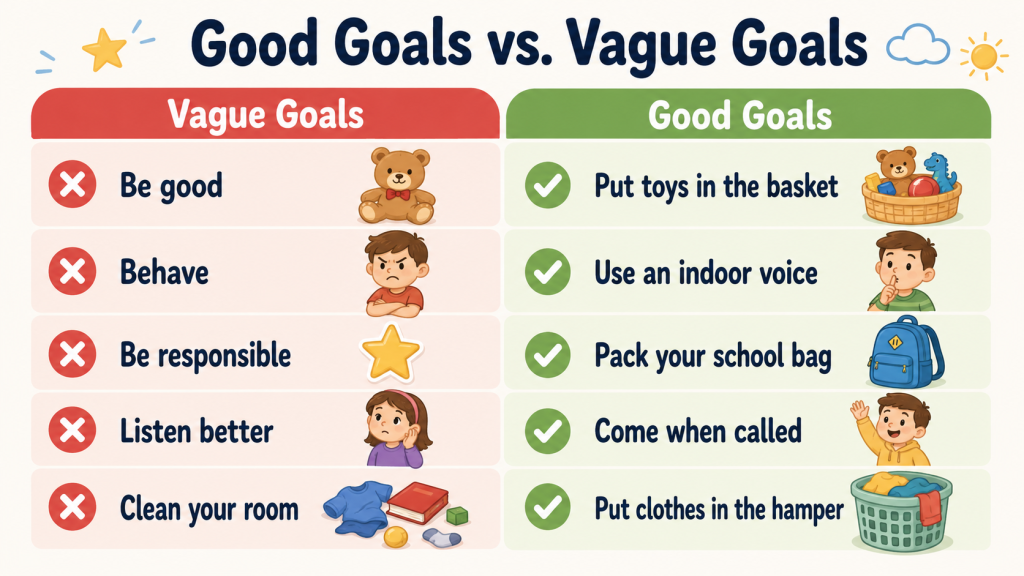
A Reward Chart For Kids works best for specific, observable behaviors within your child’s control. “Put three toys in the basket before bath” is clearer than “be good.” Charts can support routines, potty-training milestones, homework starts, chores, and courteous behavior.
They are less useful when distress or an unlearned skill drives the difficulty. If your child cannot yet do the task, teach and practice it first.
What Makes a Chart Motivating Instead of Stressful
Make the rules obvious: what earns a mark, how many are needed, and what happens next. Start with one achievable goal and pair each mark with acknowledgment.
When practical, offer small choices—the sticker design, one of two rewards, or where the chart hangs. These decisions can make a Reward Chart For Kids feel collaborative. Avoid changing the rules halfway through the week.
5 Recommended Reward Chart For Kids Options
The best Reward Chart For Kids depends on your child’s age, preferred feedback style, and how often you expect goals to change.
| Product | Best for | Format | Main consideration |
| Melissa & Doug Deluxe Wooden Magnetic Responsibility Chart | Preschool visual learners | Magnetic chart | Small pieces |
| Kenson Kids “I Can Do It!” Reward and Responsibility Chart | Tactile learners | Task cards and stars | Pieces need storage |
| Learn & Climb Behavior Reward Chart System | Sticker-loving families | Chart sheets and stickers | Consumable pages |
| Learning Resources Good Job Reward Chart | Visible earn-and-reward routines | Magnetic chart with reward box | Ages 3+ |
| JJPRO Magnetic Dry Erase Chore Chart Set | Multiple children and older kids | Dry-erase board | Reading helps |
Melissa & Doug Deluxe Wooden Magnetic Responsibility Chart With 90 Magnets
Best for: Preschoolers who respond to pictures and movable pieces
This wooden chart offers seven weekly goal spaces and 90 magnets for responsibilities and positive feedback. Its visual, hands-on format suits children who are still developing reading skills. It hangs for easy visibility, though adults should follow the manufacturer’s age guidance because the set contains small pieces.
Kenson Kids “I Can Do It!” Reward and Responsibility Chart, 11 x 15.5-Inch
Best for: Tactile learners who enjoy physically earning stars
Kenson Kids uses reusable task pieces and plastic stars, giving children a concrete way to see progress. It includes common chores and behaviors plus blank options, so goals can change without replacing the system. The tactile design suits hands-on children, although the separate pieces need a consistent storage spot.
Learn & Climb Behavior Reward Chart System – Pad with 26 Chore Charts for Kids, 2800 Stickers to Motivate Responsibility & Good Habits
Best for: Families wanting flexible sticker charts or separate sheets for siblings
A chore-and-prizes suggestion sheet, 2,800 stickers, and 26 perforated chart pages are all part of this system. Families can start fresh when goals change or give siblings separate sheets. It suits children who enjoy choosing stickers, while families wanting one long-term reusable board may prefer a magnetic or dry-erase option.
Learning Resources Good Job Reward Chart – 91 Piece Set, Custom Magnetic Chore and Responsibility Chart for Kids, Chore Magnets for Toddlers, Kids Job Chart
Best for: Children motivated by a visible “earn it” sequence
This magnetic set combines task tracking, customizable pieces, a write-and-wipe area, storage, and a built-in reward box. The layout makes progress and the eventual reward easy to connect visually. It includes 91 pieces and is labeled for ages three and older; the small-parts warning matters in homes with younger siblings.
JJPRO Magnetic Dry Erase Chore Chart Set for Fridge – Used for Multiple Kids – One Chore Chart and Two Bonus Dry Erase Pad/Grocery Boards – Behavior Chart for Multiple Kids
Best for: Multi-child households and families wanting a less preschool-style design
This reusable fridge set uses dry-erase writing rather than preset picture tasks, so responsibilities can be customized for different children. Two extra dry-erase boards add space for notes or lists. Older children may appreciate the straightforward design, while younger non-readers may need adult help interpreting written tasks.
Match the Chart to Age and Attention Span
Younger children usually need fewer goals, faster feedback, and strong visual cues. A preschooler may track one task and a few stars; an older child can often manage several responsibilities and wait longer for a privilege.
Choose the simplest Reward Chart For Kids your child can understand. Picture cues help emerging readers, while customizable writing space becomes more useful as routines grow complex.
Put the Chart Where the Routine Happens
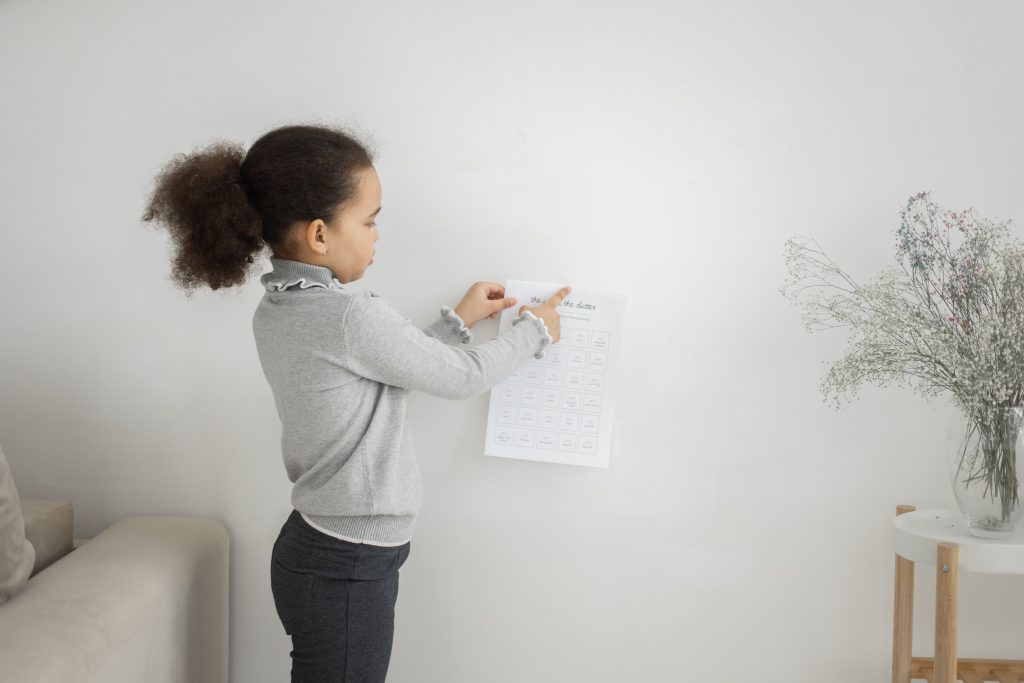
Place your Reward Chart For Kids where the target routine happens. A fridge works for kitchen jobs; a morning checklist may belong beside the bedroom door or backpack station. Your child should see it before and after the behavior.
Keep the supplies nearby too. If the chart is hidden—or the pen is always missing—immediate feedback becomes inconvenient and the system is easier to forget.
Research-Backed Guidance on Rewards and Praise
Research supports positive reinforcement when it is clear, timely, and consistent. The CDC’s guidance on praise and rewards recommends rewarding specific behaviors soon after they happen and pairing rewards with praise and attention.
A 2019 meta-analysis of 154 parenting-program trials also found that positive reinforcement, especially praise, was linked with stronger improvements in disruptive child behavior.
A 2016 study on parental praise and child compliance found that praise can support compliance, although highly specific praise was not always more effective than general praise.
Start With One Behavior You Can Clearly See
“Be respectful” is too broad to score consistently. Define success: “Use a calm voice when asking for help” or “Put the tablet on the counter when screen time ends.” Caregivers should award marks for the same action.
Start with something your child already manages sometimes. Once it becomes consistent, replace it with the next skill instead of continually adding goals.

Choose Rewards That Do Not Take Over
Rewards do not need to be candy, money, or toys. Social rewards can include praise, affection, attention, and enjoyable activities. “Choose tonight’s story” or “pick the car music” can make progress meaningful without creating a shopping habit.
Ask what your child values and keep choices manageable. Never make food, affection, sleep, comfort, or emotional support dependent on chart performance. Those are needs, not prizes.
Pair Every Star With Human Feedback
A star is only the visible part; your attention gives it meaning. Say what you noticed: “You started homework when the timer rang. Nice follow-through.” A smile, fist bump, or short sentence may fit better than cheering every ordinary task.
As the routine strengthens, gradually reduce external rewards while keeping sincere acknowledgment. The goal is less prompting, not permanent bargaining.
Common Mistakes That Make Charts Fail
Common problems include tracking too many behaviors, setting rewards too far away, and changing rules mid-goal. Do not remove earned stars after later misbehavior; once a marker is earned, it should stay earned.
Avoid sibling comparisons, public shame, and impossible targets. If a Reward Chart For Kids repeatedly triggers arguments, simplify the goal, shorten the wait for reinforcement, or reconsider whether a chart fits the underlying problem.
When to Scale Back or Stop the Chart
As the target behavior becomes routine, reduce tracking, shift toward social rewards, or remove that goal. Tell your child why: “You remember your backpack now, so we don’t need to track it.” That frames the change as progress.
If you are helping your child become more self-directed, Parentloom’s guide to supports the same move from adult prompting toward independent action. Keep a Reward Chart For Kids for temporary goals, not permanent scorecards.
Using Reward Charts With Siblings Without Creating Competition
Separate goals are usually fairer than a sibling race. Children of different ages need not share identical chores or thresholds. Let each child earn independently.
A dry-erase Reward Chart For Kids can make task lists easy to customize. Younger siblings may do better with separate sticker sheets or labeled sections so ownership stays clear. Track progress, not rank children.
Frequently Asked Questions About a Reward Chart For Kids
What age should you start using a reward chart?
Simple reward systems are often easiest to introduce during the preschool years, when children can connect a visible mark with a recent action. Readiness matters more than a birthday, though. Your child should understand the target and what earns the reward. Keep goals concrete, feedback quick, and the chart simple. Follow product age guidance whenever small parts are included.
How many behaviors should I put on the chart at once?
Start with one or two behaviors, especially for a child new to charts. A short list keeps expectations clear and gives you more chances to notice success. Once one behavior becomes routine, swap it for a new goal rather than endlessly adding rows. Older children may handle several responsibilities, but clarity still matters more than quantity.
Should I use toys, money, or treats as rewards?
You can, but they do not need to be the default. Privileges, shared activities, choice, praise, and attention can be easier to sustain. Match the reward to the effort and your family values. If you use material rewards, keep them modest and predictable. A Reward Chart For Kids should support a routine, not turn each responsibility into a purchase negotiation.
Can a reward chart reduce tantrums?
A chart may help when a tantrum is tied to a predictable routine or transition your child can learn, such as putting away a device when a timer ends. It will not address every cause of distress. Hunger, fatigue, anxiety, sensory needs, communication difficulty, or lagging skills may need a different response. Reward the specific alternative behavior you want rather than simply tracking “no tantrums.”
Should I remove stars when my child misbehaves?
Usually, no. Removing an already-earned star changes the agreement after your child met the target, and CDC guidance advises against taking away earned rewards. Address the new behavior separately. If the chart is confusing, clarify the rules for the next earning opportunity rather than erasing previous success. Consistency keeps the cause-and-effect relationship easier to understand.
Final Recommendation: Choosing a Reward Chart For Kids
The right Reward Chart For Kids is one your child understands and your family can use consistently. Preschoolers who benefit from pictures and movable pieces may like the Melissa & Doug magnetic chart. Families managing several changing routines may prefer the flexible JJPRO dry-erase format, while sticker-loving children get more variety from Learn & Climb.
Whichever format you choose, keep the target behavior specific, reward progress promptly, pair marks with genuine attention, and avoid taking away what has already been earned. Then fade the system as the routine becomes easier. Start with one behavior, choose a realistic reward, and use the chart as a temporary teaching aid rather than a permanent scoreboard.