
How To Build a Family Command Center That Keeps Everyone Organized

We may earn a commission for purchases made using our links. Please see our disclosure to learn more.
School permission slips disappear beneath the mail, a dentist appointment slips off the calendar, and someone remembers they need a clean sports uniform just before leaving for practice. Keeping track of everyone’s responsibilities can become a full-time job, particularly when one parent is expected to remember everything.
A family command center gives schedules, paperwork, household tasks, and everyday reminders a shared home. It can be as simple as a calendar beside the refrigerator or as detailed as an organized wall with individual folders and a weekly meal planner.
The real challenge is creating a system that everyone understands and uses. Start by identifying what regularly gets forgotten, then build an organization station around those needs rather than buying supplies that may end up collecting dust.
What Is a Family Command Center?
A family command center is a designated area where household members can find and update information about their daily lives. Unlike a personal planner, it is intended for shared use, making appointments, responsibilities, and upcoming activities accessible to everyone who needs them.
A functional setup usually includes a calendar, a place for important papers, a writing surface, and somewhere to keep frequently used items. Depending on your household, it might also contain a meal plan or children’s routine charts.
Identify Your Household’s Organization Challenges
Before choosing a layout, consider what tends to interrupt your family’s day. Perhaps school paperwork gets lost, appointments are double-booked, or mornings involve several trips upstairs to collect forgotten items.
Ask everyone what information they regularly need but struggle to find. A teenager might want to know who is collecting them after practice, while a younger child may need help remembering what to pack for school.
Build around the problems you encounter most often. A family with few paper documents may benefit more from a larger calendar than multiple filing pockets.
Choose a Location Everyone Can Access
Place the station somewhere your family naturally passes throughout the day. A kitchen wall, hallway near the entrance, or mudroom often works because these areas are already part of everyday routines.
Check the available wall space, lighting, and clearance before installing anything. A calendar should be readable without standing awkwardly, and projecting shelves or baskets shouldn’t obstruct a walkway.
Position children’s checklists at a height they can comfortably reach, while keeping small magnets, sharp pins, and sensitive documents safely away from younger children.

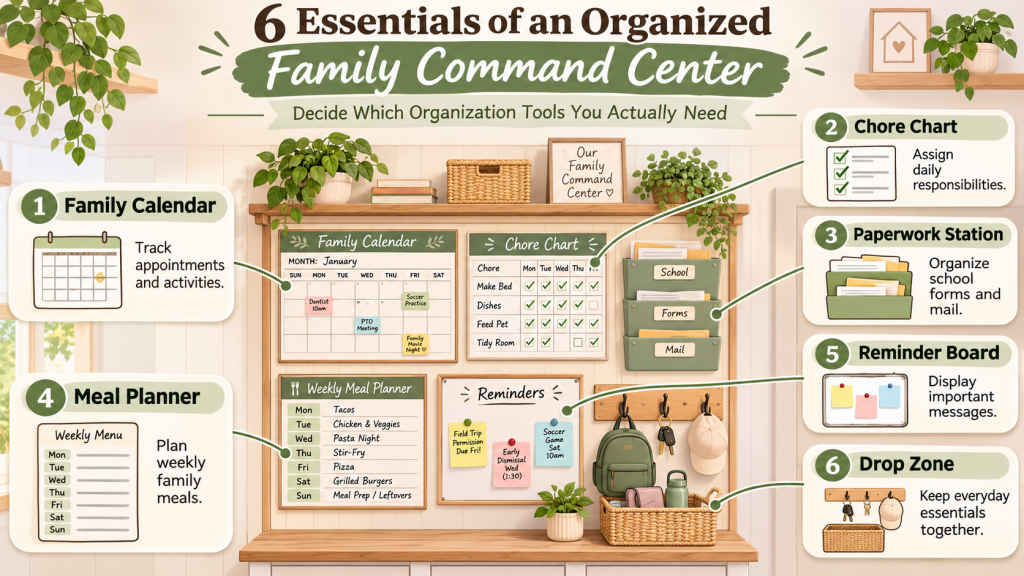
Decide Which Organization Tools You Actually Need
Start with a few essentials rather than filling the wall immediately.
- Calendar: Appointments, school events, activities, and deadlines.
- Paper organizer: Forms awaiting action and documents needed soon.
- Message board: Short reminders and temporary instructions.
- Chore chart: Individual or shared household responsibilities.
- Hooks or tray: Keys and other frequently misplaced essentials.
Add a meal planner or shopping list if it would genuinely simplify your routine.
Build a Shared Family Calendar
Use a monthly calendar for events that affect the household, such as school holidays, medical appointments, and extracurricular activities. A separate weekly view can hold details like pickup arrangements, assignment deadlines, and changing work shifts.
Color coding helps distinguish schedules, but pair colors with names or initials so the calendar remains understandable without memorizing a complicated system.
If everyone already uses a shared digital calendar, decide which version is the official record. For example, keep the full schedule on your phones and transfer the upcoming week’s important events onto the wall.
Create a Paperwork System That Prevents Piles
Give incoming paperwork a clear next destination. Instead of putting every document into one basket, divide papers according to what needs to happen to them.
Try three simple categories:
- Action needed: Forms to sign, bills to address, or invitations requiring a response.
- Coming up: Event instructions, tickets, or documents needed for an appointment.
- To file: Records worth keeping after the immediate task is finished.
Keep confidential documents in secure storage rather than open wall pockets. Review the action folder regularly and remove papers once dealt with.
Make Household Responsibilities Visible
Children can participate more easily when they know what is expected and when a task should happen. Use short instructions that describe a recognizable action, such as putting shoes on the rack instead of simply saying to tidy up.
Images can make information easier to understand for children who are still developing their reading skills. Older children may prefer written checklists or weekly assignments that give them more flexibility.
Choose a chore chart for kids suited to your children’s abilities and the responsibilities they are learning. Include adult tasks as well, so the station represents everyone’s contribution rather than becoming a noticeboard dedicated to children’s behavior.

Simplify Meal Planning and Grocery Shopping
A visible meal plan can make the evening routine easier to coordinate. Write down dinners for the coming week, noting nights when someone will be home late or the family will eat elsewhere.
Plan around ingredients you already have and leave room for leftovers. Keep a running shopping list nearby so household members can add items when supplies run low.
A flexible plan might list several dinner options without assigning each to a specific day. This works particularly well when schedules change unexpectedly.
Assemble and Arrange Your Organization Station
Lay your supplies on the floor or a table first to test how they fit together. Place the calendar in the most prominent position, followed by information that needs frequent attention. Keep paper pockets and writing supplies close to their corresponding boards.
Measure the wall, mark mounting positions, and follow the instructions for each item’s hardware. Select fasteners that match the wall type and can safely support the expected weight. If renting, check what mounting methods are permitted.
Before completing the installation, ask family members to try reading the calendar and reaching their assigned areas.
Establish a Routine for Keeping Everything Updated
A well-arranged station won’t stay current unless updating it becomes part of family life. Choose a regular time to review the upcoming week together, such as after Sunday dinner.
Check for schedule conflicts, assign pickup responsibilities, discuss school deadlines, and decide who will handle outstanding paperwork.
Assign ownership of recurring updates. One adult might review school messages while another handles grocery planning; children can update their own checklists when ready. Rotate responsibilities when needed so maintaining the system doesn’t quietly become one person’s extra job.
Adapt Your Setup for Small Spaces and Changing Needs
You don’t need an entire wall to organize family life. A narrow cabinet side can accommodate a weekly planner, while a magnetic refrigerator surface may hold a shopping list and calendar. A portable folder can replace mounted paperwork storage.
As children grow, replace picture schedules with age-appropriate reminders. Families with shared custody may benefit from a clear handover schedule and consistent packing lists. Keep personal details private and coordinate changes between caregivers.
If parts of your station go unused, remove them.
Recommended Products for a Family Command Center
U Brands Frameless Magnetic Dry Erase Monthly Calendar Board, 14 x 14 Inches
Best for: Compact wall-mounted family calendars.
This square calendar has a reusable writing surface and a small notes area for additional reminders. Its magnetic surface also lets you attach notices without adding a separate pinboard. The compact design suits a kitchen corner, although the date boxes may become crowded when several family members have activities on the same day.
Officemate Letter Wall File, Clear (21434)
Best for: Organizing school paperwork and incoming mail.
The clear plastic pocket keeps letter-sized documents visible while freeing up counter space. Its stackable design allows additional pockets to be installed as paperwork categories expand, and mounting supplies are included. Because the contents remain visible, use it for everyday forms rather than confidential documents, and empty it regularly.
Melissa & Doug Deluxe Wooden Magnetic Responsibility Chart with 90 Magnets
Best for: Children learning to follow weekly responsibilities.
The hanging chart provides space for seven goals and includes a second board for keeping unused magnets together. Children can use the illustrated pieces to identify responsibilities and mark progress throughout the week. Small detachable parts make it unsuitable for children under three, so households with toddlers need careful storage and supervision.
Command Large Utility Hook Mega Pack (17003-MPES)
Best for: Hanging lightweight essentials on suitable walls.
This pack includes 14 hooks and 16 adhesive strips, allowing you to create individual spots for keys, lanyards, and other light accessories. Each hook is rated for up to five pounds when correctly installed. Follow surface preparation and removal instructions, and choose stronger, appropriately mounted hardware for heavy schoolbags.
EXPO Low Odor Dry Erase Markers, Fine Tip, 4 Count, Assorted Colors
Best for: Color-coded schedules and detailed reminders.
The fine writing tips help fit names, times, and short notes into smaller calendar boxes. Assorted colors make it easier to separate different types of appointments or responsibilities. These markers are designed for whiteboards and other compatible nonporous surfaces, so test compatibility before writing on a different material.
How Predictable Routines Support Children’s Development
A 2024 systematic review of routines and child development reported associations between regular routines and favorable outcomes across areas including emotional development, self-regulation, and academic functioning. The findings do not establish that installing an organization board produces those benefits.
Wiley Online Library
The CDC’s guidance on routines and rules also encourages families with young children to establish predictable patterns while communicating changes calmly. The American Academy of Pediatrics recommends visible checklists and gradual introduction of responsibilities in its age-appropriate chore guidance.
Together, these findings and recommendations suggest that the value of a shared station lies in supporting consistent expectations. Adults still need to teach skills, help children manage transitions, and respond patiently when plans change.
Frequently Asked Questions About Family Command Centers
What Is the Typical Cost of Building a Family Command Center?
The cost depends on the supplies you already own and whether you choose basic or specialized organizers. Repurpose an existing whiteboard, folders, and a printed calendar to keep expenses down. Start with essentials and purchase additional storage only after identifying what your original setup lacks.
Can a family command center be entirely digital?
Yes. Shared calendar and task-list apps can work well for household members with regular device access. For younger children or relatives who rarely check their phones, a physical display may be easier to consult. Combining digital reminders with a small visible schedule can accommodate both preferences.
How do I encourage children to use the command center?
Introduce the station during an existing routine, such as getting ready for school. Show children how to find their information and update a completed task. Let them help choose labels or pictures, and gradually reduce reminders as they become more comfortable using the system independently.
What should I avoid displaying on a family organization wall?
Avoid passwords, financial details, medical records, and information that visitors do not need to see. Store these securely elsewhere. If the station is visible through a window or near an entrance, also consider limiting the amount of detail about children’s locations and household travel plans.
How do I organize a family with irregular work schedules?
Use a weekly view that identifies which adult is available for specific responsibilities. Confirm childcare, transportation, and important appointments as shifts become known. Keep fixed routines where possible, such as preparing schoolbags in the evening, even when the person overseeing those routines changes from day to day.
Conclusion: Create a System Your Family Can Maintain
A family command center works best when it reflects how your household actually operates. A shared calendar, a straightforward paperwork system, and visible responsibilities can address many everyday organization problems without requiring a complicated wall display.
Choose tools according to your available space and the information family members need. The U Brands monthly calendar is a practical option for compact scheduling, while the Officemate wall file can give important documents a designated place. Neither replaces regular communication or shared responsibility.
Start with the two or three areas causing the most difficulty. Use your setup for a week, discuss what worked with the family, and adjust anything that made daily routines harder instead of easier.