5 Calm Down Corner Ideas That Actually Work
We may earn a commission for purchases made using our links. Please see our disclosure to learn more.
Big feelings can turn an ordinary afternoon into a storm: a toy breaks, a sibling gets too close, or leaving the playground suddenly feels impossible. A calm-down space will not prevent every meltdown, and it should never become a prettier version of time-out. However, the right setup can give your child a predictable place to pause, reconnect, and practice skills they are still learning. These Calm Down Corner Ideas focus on what matters most—comfort, simple choices, age-appropriate tools, and support from a calm adult. You will learn how to build five versions, choose useful supplies, introduce the corner positively, and decide whether products fit your child, home, and budget.
Affiliate disclosure: This article may contain affiliate recommendations. We may earn a commission from qualifying purchases at no extra cost to you.
What a Calm-Down Corner Is—and What It Is Not
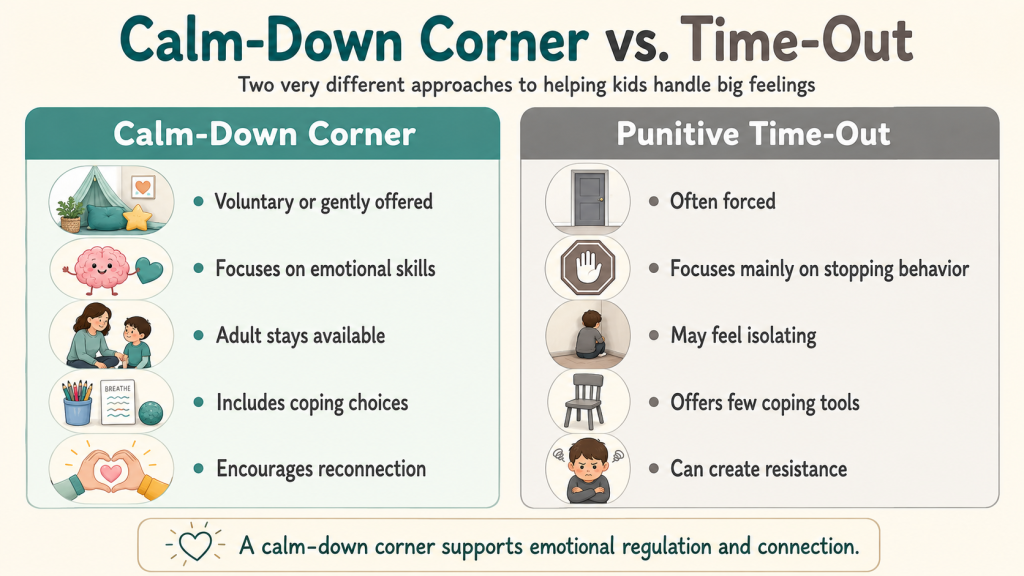
A calm-down corner is an area where a child can lower stimulation and use familiar coping tools. It is not a place for shame or forced isolation. Think of it as a practice station: children begin with adult support, then learn which strategies help. The goal is safer behavior, emotional awareness, and reconnection—not instant silence.
Why Some Calm Down Corner Ideas Fail
Many Calm Down Corner Ideas fail because adults introduce them only during conflict. “Go calm down” then feels like rejection. Other spaces become cluttered play zones or demand one strategy from every child. Keep the setup simple, practice during peaceful moments, and offer two or three choices. Most importantly, remain available instead of expecting furniture to regulate a distressed child.
Calm Down Corner Idea 1: Build a Cozy Sensory Retreat
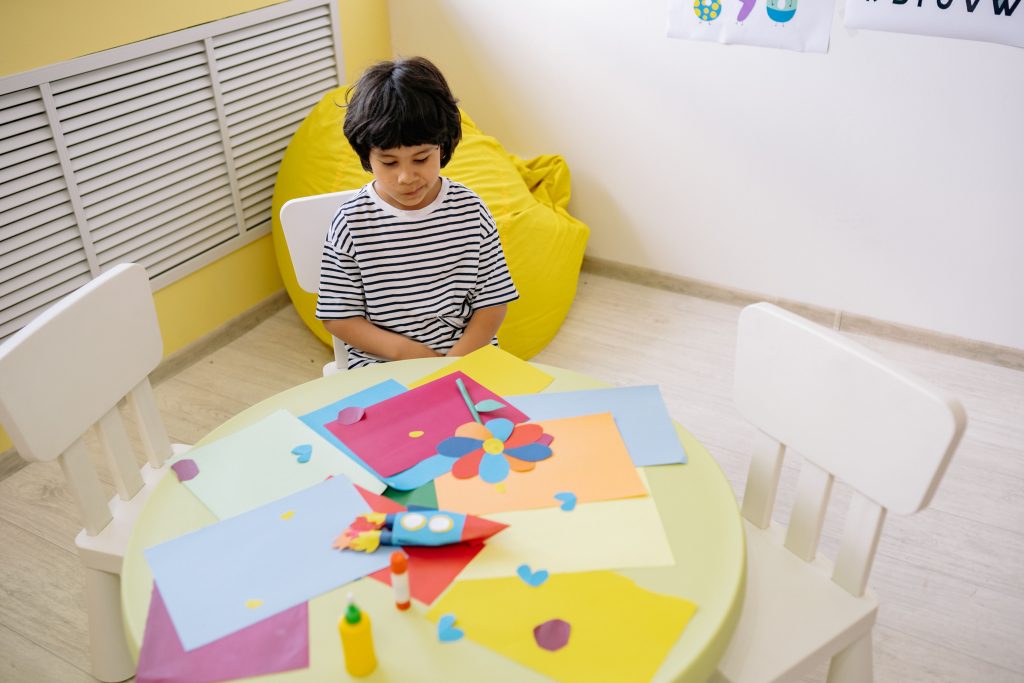
Reduce sensory load with soft lighting, a floor cushion, a small blanket, and one quiet visual tool. Avoid a dark hiding place that blocks supervision. These Calm Down Corner Ideas suit children overwhelmed by noise or activity because they provide a gentle pause without much talking. Let your child choose one item so the space feels familiar, not assigned.
Calm Down Corner Idea 2: Create a Feelings Check-In Station
Add a simple feelings chart, an unbreakable mirror, and cards showing a small range such as sad, angry, worried, tired, and excited. Ask, “Which face matches?” rather than testing your child. These Calm Down Corner Ideas make abstract emotions easier to identify. Naming a feeling does not excuse hitting; it supports understanding while you hold the boundary.
Calm Down Corner Idea 3: Add a Movement Reset Spot
Stillness is not calming for every child. A movement-seeker may settle through wall pushes, animal walks, slow stretches, or a carefully inflated wobble cushion. Post two brief choices and avoid unsupervised equipment that needs specialist installation. Movement-based Calm Down Corner Ideas should help a child reconnect with their body, not turn the area into an indoor playground.
Calm Down Corner Idea 4: Pair Breathing Tools With a Visual Timer

Practice breathing while calm: smell the flower and cool the soup, trace a finger, or blow a pinwheel. A visual timer makes the pause predictable for children who ask how long it will last. Use it as information, not a countdown to obedience. A child may return sooner or still need support when time ends.
Calm Down Corner Idea 5: Make a Portable Calm-Down Basket
For small homes, shared rooms, travel, or busy schedules, fill a basket with a feelings card, notebook, one tactile fidget, breathing prompt, and comforting object. Carry it to the sofa, car, or hallway as needed. Portable Calm Down Corner Ideas help children use familiar strategies away from home without depending on one permanent location.
Match the Setup to Your Child’s Age and Temperament
Toddlers need a caregiver nearby, very few choices, and sturdy items without loose parts. Preschoolers may enjoy emotion matching and playful breathing. Older children often prefer privacy, drawing, or written strategy cards. Temperament matters too: music soothes one child and irritates another. Watch patterns, then remove any tool that increases excitement, avoidance, or conflict.
Choose a Location That Feels Calm, Not Isolating
Choose a low-traffic spot within sight of an adult. A living-room corner or space beside a bookshelf often works better than a distant bedroom. Remove cords, unstable furniture, choking hazards, and breakables. Good Calm Down Corner Ideas reduce stimulation while preserving connection; if the location feels like banishment, children will resist it.
What to Put In—and What to Leave Out
Start with comfort, one feelings aid, and two coping choices. Add paper and crayons, a sealed sensory bottle, soft toy, visual timer, or age-suitable non-magnetic fidget only when useful. Leave out screens, food rewards, loud electronics, heavy objects, and excessive options. Review the contents regularly: a calm corner is a small toolbox, not a toy store.
Recommended Products for Calm Down Corner Ideas
These six options cover visual focus, emotion learning, time awareness, stories, movement, and portability. Buy only what solves a clear need.
| Product | Best for | Consideration |
| hand2mind bottles | Visual focus | Four emotions |
| Big Feelings Pineapple | Emotion words | Multiple pieces |
| TIME TIMER MOD | Transitions | Support still needed |
| A Little SPOT set | Story learning | More storage |
| Wiggle Seat | Movement | May energize |
| Fidget Dodecagon | Travel kits | May distract |
hand2mind Express Your Feelings Sensory Bottles—Secondary Emotions, Toddler Sensory Toys, Quiet Fidgets for Classroom, Calm Down Corner Supplies, Social Emotional Learning, Mindfulness for Kids
Best for: Visual learners who prefer quiet tools
This set contains four sealed bottles representing excited, impatient, lonely, and nervous feelings. The easy visual focus suits a low-stimulation corner and can open gentle conversations about less obvious emotions. Its practical strength is quiet, mess-free use. However, four bottles cannot represent every feeling, so pair them with broader emotion language rather than treating them as a complete system.
Learning Resources Big Feelings Pineapple Deluxe Set—Fine Motor Toys, Social Emotional Skills Regulation Tools for Kids, Gifts for Boys and Girls, Classroom Must Haves, Occupational Games
Best for: Preschoolers building emotion vocabulary
Children can arrange facial features on the pineapple and compare expressions using the included social-emotional components. That hands-on format makes abstract feelings more concrete and encourages conversation before a crisis. It also doubles as a fine-motor activity. Because the set has many pieces and is intended for children age three and older, adults should manage storage and age suitability.
TIME TIMER 60 Minute MOD Education Edition—Visual Timer with Desktop Software for Kids Classroom Learning, Teachers Desk Clock, Study Tool and Office Meetings with Silent Operation (Charcoal)
Best for: Children who need predictable transitions
The disappearing colored disk shows time passing without requiring a child to read numbers, while silent operation keeps the corner low-key. It can clarify a short pause, a breathing practice, or the transition back to an activity. Still, a timer is only a visual boundary; it should not become a threat or replace adult co-regulation and flexible judgment.
A Little SPOT of Emotion 8 Plush Toys with Feelings Book Box Set
Best for: Families who teach through stories and play
This box combines a feelings book with eight emotion-themed plush characters, giving children a concrete way to name, sort, and discuss inner experiences. It works especially well during calm teaching moments or sibling conversations. The plush format may feel approachable for younger children, although the full set takes more space than cards and may be more than a minimalist corner needs.
BouncyBand Wiggle Seat, Purple, 1-Pack—Small 10.75” D x 2.5” H Cushion for Kids Aged 3–7—Includes Pump for Easy Inflation
Best for: Young movement-seekers in small spaces
This inflatable 10.75-inch cushion allows controlled seated movement and includes a pump for adjusting inflation. It fits under a child without requiring dedicated exercise equipment, so it can work in compact homes. Yet movement is individual: some children settle with gentle wobbling, while others become more activated. Introduce it calmly, supervise use, and remove it if it increases bouncing or unsafe behavior.
Fidget Dodecagon—12 Sided Fidget Toy Stress Relief Cube for Children and Adults, Silent Compact Classroom Gifts (B3 Blue Sky)
Best for: Portable, budget-conscious calm kits
This compact dodecagon combines twelve tactile actions in one handheld item, reducing the need to pack several separate fidgets. It suits a travel basket or school-age child who benefits from busy hands while listening. However, not every action is silent, and an engaging fidget can become a distraction. Agree on where and when it belongs before adding it.
What Research Says About Calm Down Corner Ideas
Direct controlled research on home calm-down corners is limited, so the corner itself should not be described as a proven treatment. Stronger evidence supports its ingredients. The American Academy of Pediatrics recommends adult regulation, connection, and then reasoning in its guidance on helping children cope with stress. The CDC’s structure guidance emphasizes consistency and predictability, while Harvard explains that self-regulation skills grow through interaction and practice.
A 2020 observational study of 100 mother-child pairs linked responsive co-regulation at age three with stronger self-regulation at age four; it shows association, not proof. A 2022 randomized trial found benefits from an emotion-coaching parenting program, but it tested coaching, not a decorated space. Therefore, treat Calm Down Corner Ideas as settings for connected, repeated skill practice—not stand-alone fixes.
How to Introduce the Corner Without Turning It Into Punishment
Set up the space together while everyone is calm. Demonstrate each item and say, “We can use this place when feelings get too big.” During conflict, offer connection and choice: “Would you like me beside you here or in the calm corner?” Keep safety limits firm without demanding emotional performance. If meltdowns begin earlier, these practical toddler tantrum strategies can help you respond sooner.
Calm Down Corner Ideas FAQ
What age is a calm-down corner for?
Many families begin during the toddler or preschool years when a child can participate with close adult support. There is no universal starting age. Use developmentally appropriate, non-hazardous items and expect young children to co-regulate rather than calm alone. Older children can help design a more private, respectful space with drawing, writing, or sensory choices.
How long should a child stay in the corner?
There is no required number of minutes. Stay long enough to regain safer control, reconnect, and choose the next step—not to complete a punishment. A visual timer can add predictability, but readiness matters more than the clock. Some children settle quickly; others need an adult nearby, fewer words, movement, or another environment.
Should I send my child there during a tantrum?
Offer the corner instead of forcing it. During intense distress, calmly block unsafe behavior and stay available: “I will keep us safe. We can breathe here or move together.” A child who refuses may need connection before relocation. Revisit the plan later, after their thinking and language return.
What are the best Calm Down Corner Ideas for small spaces?
Use a portable basket, one floor cushion, and a wall feelings chart instead of bulky furniture. A tote can hold a breathing card, paper, crayons, and one tactile tool. The “corner” may appear beside the sofa and disappear afterward. A consistent routine matters more than a dedicated room or decorative canopy.
How do I know whether the corner is helping?
Look for gradual changes: your child accepts support sooner, chooses a tool, names a feeling, reduces unsafe behavior, or returns with less conflict. Track patterns for several weeks. If the corner repeatedly escalates distress, becomes avoidance, or cannot contain dangerous behavior, simplify it and discuss ongoing concerns with your child’s pediatrician or another qualified professional.
Final Recommendation: Keep Calm Down Corner Ideas Simple and Collaborative
The most useful Calm Down Corner Ideas match the child rather than a social-media photo. Begin with a comfortable spot, one feelings aid, and two coping choices; then observe what your child actually uses. Visual learners may appreciate the hand2mind sensory bottles, while children who struggle with uncertain transitions may benefit from the TIME TIMER MOD. Movement seekers need a different setup from children who crave quiet, and toddlers will need more adult presence than older children. Above all, practice together when nobody is upset and keep the space connected to family life. Start small, invite your child’s input, and treat the corner as a place for learning—not a place they are sent away.