5 Outdoor Family Winter Activities In The Snow
We may earn a commission for purchases made using our links. Please see our disclosure to learn more.
A fresh snowfall can make children race for the door while adults quietly wonder how long the mittens will stay on. Fortunately, memorable Family Winter Activities do not require a ski resort, a complicated itinerary, or a trunk full of gear.
The right Family Winter Activities can turn an unplanned snow day into a manageable outing everyone can enjoy. This guide shares five outdoor ideas for different ages, attention spans, and budgets. You will learn how to plan each activity, dress children comfortably, reduce common winter risks, and choose genuinely useful products. The goal is simple: help your family move, play, and come home happy.
Affiliate disclosure: This article contains affiliate recommendations. We may earn a commission if you purchase through qualifying links, at no additional cost to you.
Why Simple Family Winter Activities Often Work Best
Good Family Winter Activities turn ordinary spaces into something new. A backyard becomes a building site, a hill becomes an adventure, and a quiet path suddenly holds tracks and tiny clues.
Still, children rarely need a packed schedule. Choose one main activity that suits your youngest participant, then let older children add difficulty or creativity. The fort may lean or someone may lose interest. That is normal, not a failed outing.
Check the Weather and Snow Before Going Out
Check the temperature, wind chill, visibility, and precipitation. Wind can make mild air feel bitter, while wet snow quickly soaks cuffs and gloves. Postpone the outing when conditions are severe.
Inspect the play area for roads, water, hidden rocks, branches, fences, and ice. Before leaving, set a clear return rule: go inside when clothing becomes wet, anyone feels numb, or a child stops participating.
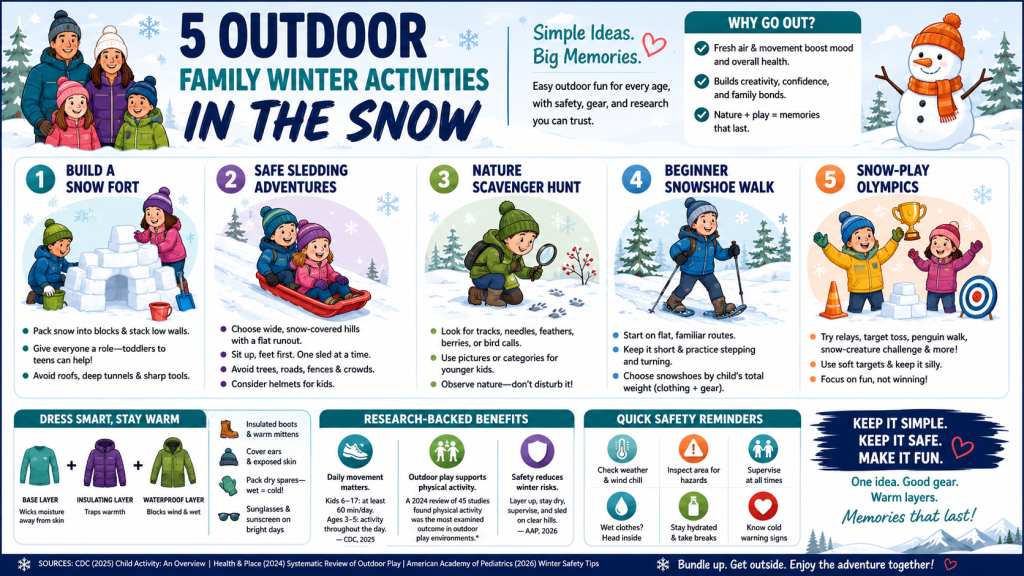
Family Winter Activities #1: Build a Snow Fort
Choose level ground away from roads and vehicles. Pack snow into low walls using buckets, brick molds, or gloved hands.
Give everyone a role. Toddlers can fill containers, older children can stack blocks, and teens can plan the layout. If powdery snow will not hold, build a windbreak or miniature village instead.
Keep walls low enough for supervision, and avoid roofs, deep tunnels, and sharp tools.
Family Winter Activities #2: Choose a Safe Sledding Hill
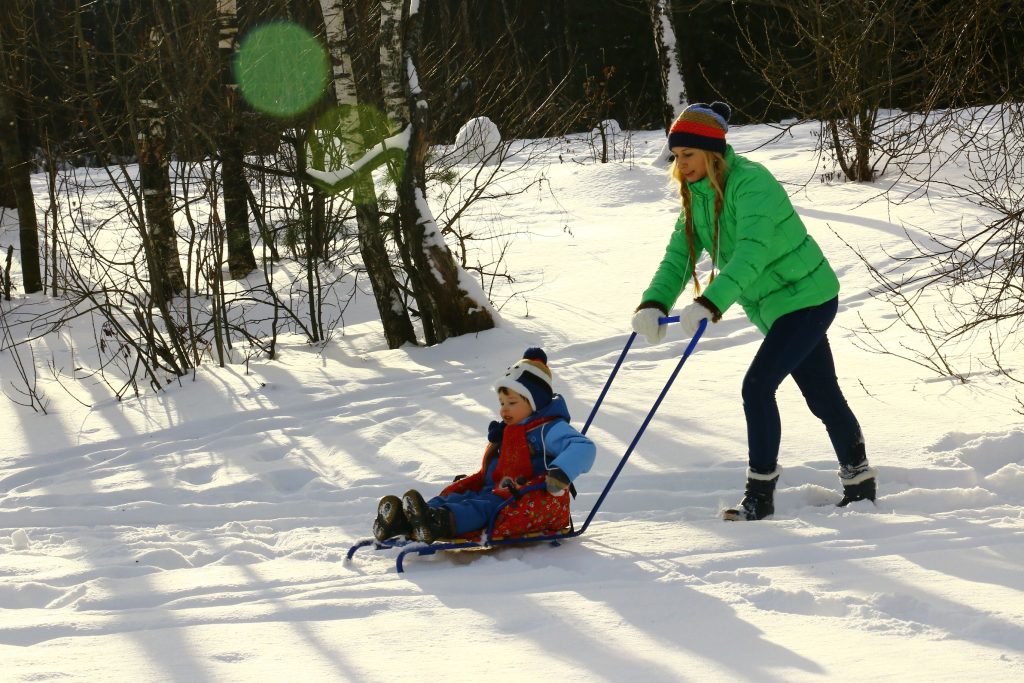
For safer Family Winter Activities, choose a broad, snow-covered slope with a long, flat stopping area. Avoid glare ice, roads, trees, fences, rocks, water, parked vehicles, and crowded hills.
Children should sit upright and travel feet first. Send one sled at a time and create a separate walking route uphill. Younger children need close supervision.
A steerable sled may offer more control, although no design can fix an unsafe hill. Consider a properly fitted helmet for child sledders.
Family Winter Activities #3: Plan a Nature Scavenger Hunt
Create a short list based on your surroundings: an animal track, evergreen needle, feather, bird call, red berry, or three shades of brown.
Use pictures or categories such as “something rough” for younger children, then continue the winter learning at home with these hibernation preschool activities. Older children can photograph clues or identify tracks later. Keep an eye on plants and animals without disturbing them.
This is one of the easiest Family Winter Activities to adapt. Search a small park with a reluctant walker; an energetic sibling can scout ahead.
Family Winter Activities #4: Take a Beginner Snowshoe Walk
For this Family Winter Activities option, begin on a flat, familiar route. A backyard loop, open field, or groomed trail is better than steep or remote terrain.
Keep the first walk short because the wide stance and bulky clothing can tire children quickly. Practice stepping and turning before going farther.
Choose snowshoes by the child’s total weight, including clothing and gear, and recheck bindings during the walk. For preschoolers, “monster feet” play may be more enjoyable than completing a trail.
Activity 5: Hold a Snow-Play Olympics
Set up three or four quick events, such as a mitten relay, snowball target toss, penguin walk, snow-creature challenge, or sled pull on level ground.
Use soft targets and keep thrown snow away from faces. Scoring is optional; silly awards such as “best dramatic finish” may suit mixed ages better.
Adjust each event instead of expecting identical performance. A preschooler can carry one snowball in a cup, while an older child completes a longer relay. Adults may join, though snow pants rarely improve sprinting elegance.
Match the Activity to Your Children’s Ages
Toddlers often prefer scooping, stamping, and pouring to organized games. Keep them close to a warm indoor space.
Children ages five to eight usually enjoy missions, building challenges, and repeated sled runs. They may need reminders about wet clothing and fatigue.
Give tweens and teens ownership by letting them choose the hill, design the competition, or photograph the outing. Age is only one clue, however. Confidence, coordination, sensory preferences, health needs, and experience matter too.
Dress in Layers for Comfortable Snow Play
Use a moisture-managing base layer, an insulating middle layer, and a wind- and water-resistant outer layer. Layers are easier to adjust than one bulky garment.
Choose insulated boots with toe room, plus warm mittens or gloves. Pack dry spares because wet hands can end an outing quickly. Cover ears and exposed skin, and consider sunglasses and sunscreen on bright days because snow reflects ultraviolet light.
Finally, label loose gear. Snowy parks have a mysterious talent for collecting one glove from every family.
Keep Young Children Interested Without Overplanning
Start with a small goal: build one wall, find five clues, or take three sled rides. Bring one simple prop, such as a bucket, magnifier, or bright ball, rather than hauling a toy-store inventory.
Use a snack or warm drink as a natural break. A child who becomes unusually quiet, clumsy, tearful, or disengaged may be cold or tired.
Ending early protects the next outing; forcing another half hour can make snow play feel like a chore.
Make Winter Play Inclusive for Different Needs
Inclusive Family Winter Activities begin with access, not identical participation. Choose level, packed routes for mobility devices and strollers. Nearby shelter, restrooms, and parking may matter more than dramatic scenery.
Offer meaningful roles with different movement demands. A child can photograph tracks, decorate a fort, hold clue cards, or judge a target toss. For sensory-sensitive children, introduce snow through tools and pack dry clothing they already tolerate.
Quiet breaks should feel normal, not like punishment.
Recommended Products for Family Winter Activities
These products support different ages and styles of snow play. Confirm current sizing, age guidance, and instructions before use.
| Product | Best use | Main consideration |
| Flexible Flyer Baby Pull Sled | Toddler rides on flat snow | Not for downhill use |
| GeoSafari Jr. Kidnoculars | Preschool nature hunts | Modest magnification |
| Ideal Sno-Brick Maker | Forts and snow villages | Needs packable snow |
| Yukon Charlie’s Sno-Bash Kit | Beginner youth walks | Check fit and load |
| HotHands Value Pack | Backup caregiver warmth | Single-use product |
Flexible Flyer Baby Pull Sled
Best for: Toddlers exploring flat, packed snow
This molded pull sled has a high back, wide base, safety belt, and tow rope for adult-guided rides. Its supportive shape helps smaller children sit steadily on level ground. It is not intended for downhill sledding, and adults still need continuous supervision while following the manufacturer’s current age instructions.
Educational Insights GeoSafari Jr. Kidnoculars
Best for: Preschool winter nature hunts
These focus-free children’s binoculars provide 2x magnification, large eyepieces, and a breakaway neck strap. Young explorers can watch birds and scan trees without adjusting a focus wheel. They are designed as beginner exploration tools, so the modest magnification may feel limiting to older children.
Ideal Sno Toys Sno-Brick Maker
Best for: Budget-friendly forts and creative building
This rectangular mold packs and releases snow into brick shapes for walls, towers, and miniature villages. It is simple, reusable, and easy for siblings to share. However, very dry powder may crumble instead of holding a clean shape, so results depend on snow texture.
Yukon Charlie’s Kids’ Sno-Bash Snowshoe Kit with Trekking Poles and Carry Bag, 16-Inch
Best for: Children ages roughly six to ten trying snowshoeing
This youth kit combines 16-inch aluminum snowshoes, easy-pull bindings, poles, and a carry bag. Fit and flotation depend on shoe size, body weight, gear, and snow conditions, so check the current manufacturer chart before ordering.
HotHands Hand Warmer Value Pack, 10 Pair
Best for: Caregivers who want compact backup warmth
These air-activated, single-use warmers fit inside adult coat pockets or mittens during longer outings. They are useful when supervising rather than moving constantly. Follow package directions, avoid prolonged direct skin contact, and keep them away from babies or anyone unable to communicate discomfort.
What Research Says About Outdoor Winter Play
The CDC’s 2025 child activity guidance recommends activity throughout the day for ages three to five and at least 60 daily minutes for ages six to seventeen. Walking, climbing, pulling, and running in snow can contribute to that movement.
A 2024 systematic review of outdoor play environments included 45 primary studies and found that physical activity was the most frequently examined outcome. However, the studies differed substantially, preventing firm conclusions about which play-space features help most. Enjoyable, repeatable access may matter more than elaborate equipment.
The American Academy of Pediatrics’ 2026 winter guidance recommends layers, dry gear, warm-up breaks, supervision, feet-first sledding, clear slopes, and caution with snow tunnels. These steps reduce avoidable hazards.
Frequently Asked Questions About Family Winter Activities
How long should children play outside in the snow?
There is no universal limit because temperature, wind, clothing, age, activity, and health all matter. Plan short sessions for toddlers and warm-up breaks for everyone. Head inside when clothing becomes wet or a child shows numbness, persistent shivering, unusual clumsiness, lethargy, or a clear behavior change.
What are the best Family Winter Activities for toddlers?
Toddlers usually enjoy scooping snow, filling buckets, making footprints, decorating a mound, or riding in an appropriate pull sled on level ground. Keep sessions short and supervise closely. Avoid steep hills, deep tunnels, and complicated rules. A dry spare pair of mittens is often more useful than another toy.
Can families enjoy snow activities without special gear?
Yes. Fort building, footprint trails, nature searches, target tosses, snow-creature contests, and short walks require little beyond suitable clothing. Household buckets, cups, and spoons can support building. Specialized products should solve a genuine need.
Is sledding safe for young children?
Sledding carries collision and fall risks, so location and supervision matter. Choose a snow-covered slope under about 30 degrees with a flat runout and no roads, trees, fences, water, or crowds. Children should sit upright and ride feet first. Preschoolers should remain separate from faster, older riders.
What should I pack for outdoor winter play?
Bring spare mittens, dry socks, water, a simple snack, tissues, sun protection, and any needed medication. For longer outings, pack an insulated drink and extra base layer. Keep the load realistic; carrying half the house through deep snow is its own winter sport.
Make Your Next Snow Day Easy to Repeat
The best Family Winter Activities fit the weather, setting, and people you actually have—not an imaginary family that never loses a glove. Start with one idea, choose a safe location, use adjustable layers, and stop while everyone still has some energy.
Toddlers may enjoy the Flexible Flyer Baby Pull Sled on level snow. Older children may prefer the Slippery Racer toboggan, Sno-Bash snowshoes, or a fort made with the Sno-Brick Maker. Mixed-age families can rely on scavenger hunts and snow Olympics because each person can participate differently.
Keep the plan simple, repeat what works, and let the day stay imperfect.