5 Crafts To Do When You’re Bored With The Kids
We may earn a commission for purchases made using our links. Please see our disclosure to learn more.
You know the moment. It’s mid-afternoon, somebody has already raided the snack drawer twice, and then the words arrive like a tiny emergency siren: “I’m bored.”
That’s usually when parents feel pressure to perform. We think we need a perfect plan, a Pinterest-level setup, or the patience of a preschool teacher who drank exactly the right amount of coffee. You don’t.
Sometimes the best Crafts To Do When You’re Bored are the simple ones. The kind that use paper scraps, old cardboard tubes, a handful of markers, and ten minutes of your attention. This article will walk you through five easy, screen-free craft ideas you can actually do with kids, plus tips for mixed ages, cleanup, product picks, and a little research-backed reassurance that creative play is doing more than just filling time.
Affiliate note: This post includes a few Amazon product suggestions, and I may earn a small commission from qualifying purchases at no extra cost to you.
Why boredom is not a parenting failure
Boredom gets treated like a smoke alarm. It goes off, and suddenly everyone panics.
But boredom is often just a blank page. It can feel annoying in the moment, sure, yet it also creates space for imagination. When kids are not constantly entertained, they start looking around. A paper bag becomes a puppet. A cereal box becomes a spaceship. A pile of stickers becomes serious artistic business.
So no, you do not need to “fix” boredom instantly. You just need a gentle nudge that helps your child turn that restless energy into something they can make with their hands.
Create a low-pressure craft station first
Before you start any project, make your life easier.
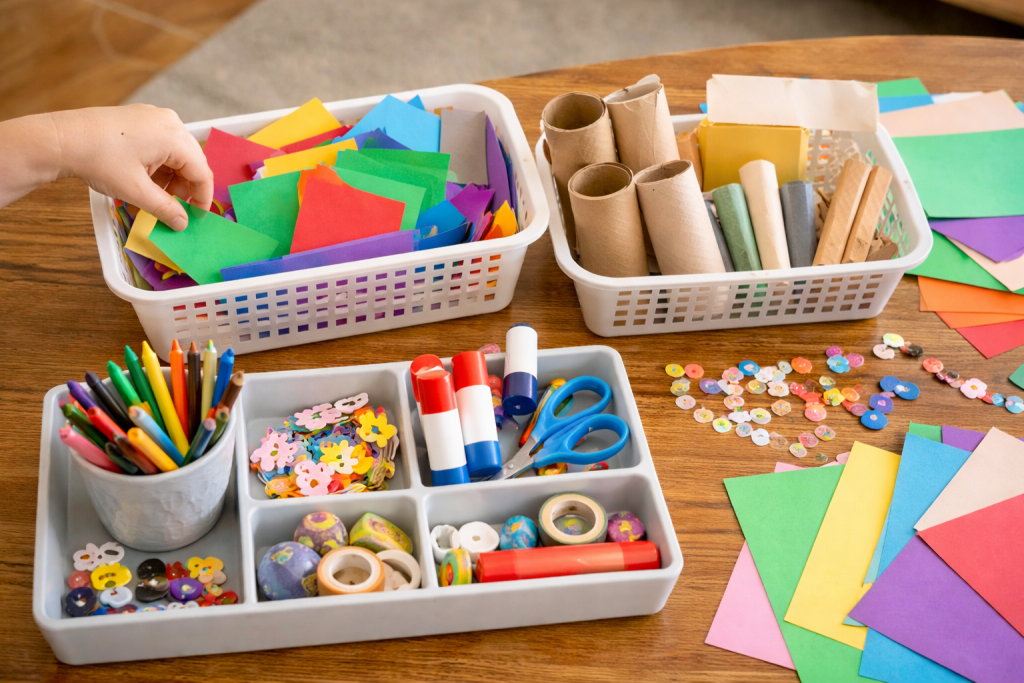
Set out a few basics in one basket or tray:
- paper
- kid-safe scissors
- glue stick
- tape
- crayons or markers
- a small “recycling stash” with tubes, boxes, and scraps
That’s it. Not a craft store explosion. Not twenty bins labeled in perfect handwriting. Just enough supplies to say, “Here, let’s make something.”
A simple setup matters because it lowers the emotional temperature. Kids are more likely to start when materials are visible, and you are more likely to say yes when the prep doesn’t feel like a second job.
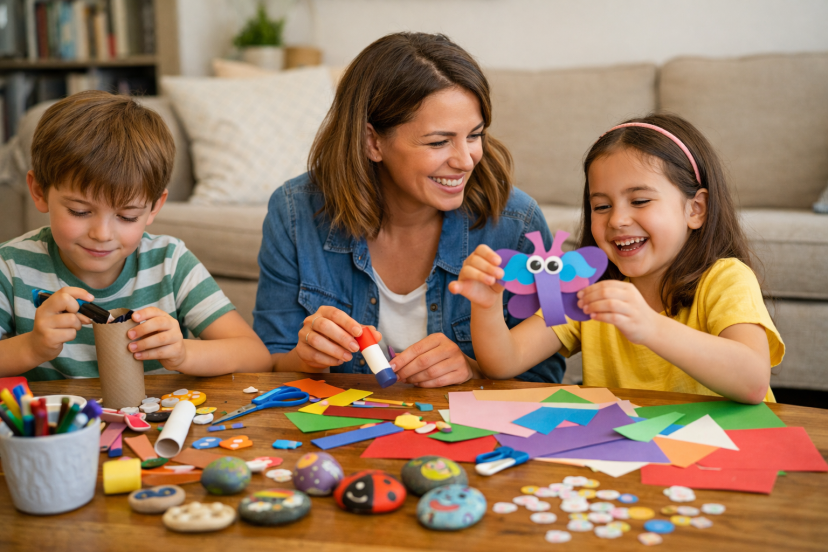
Craft #1: Paper collage creatures
This is one of my favorite easy crafts for kids because it works for almost every age and rarely needs fancy supplies.
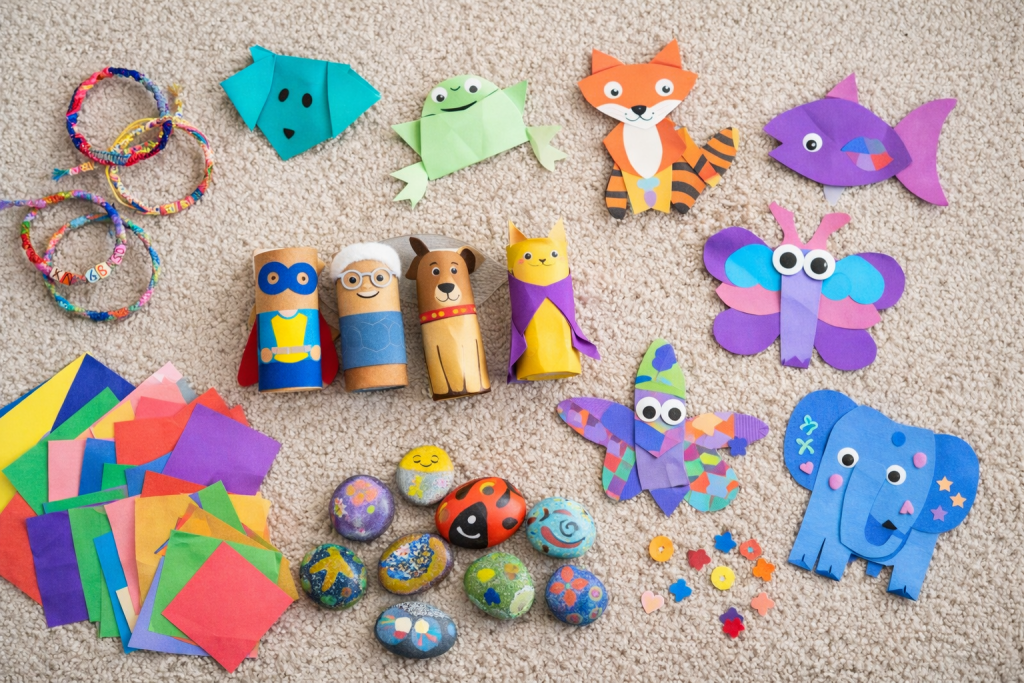
Hand your child colored paper, old magazines, junk mail, stickers, and glue. Then say, “Make the weirdest animal you can imagine.” Maybe it has butterfly wings, tiger legs, and grandma glasses. Perfect.
How to do it
Fold a sheet of paper in half for a “creature card” or use a full sheet for a poster. Cut or tear shapes. Layer them. Add googly eyes if you have them. Then ask your child to name the creature and tell you what it eats for breakfast.
That final step is more important than it may first appear. The craft turns into storytelling, which keeps the activity going longer without extra supplies.
Why kids love it
There is no wrong answer. That freedom is gold, especially for kids who freeze when they think something has to look “good.”
Craft #2: Toilet roll storytellers
If your house has empty toilet paper rolls, congratulations, you already own a tiny puppet studio.
Turn the rolls into characters using markers, paper, yarn, tape, and scraps of fabric. Make animals, superheroes, grandparents, dragons, or a very dramatic potato if that’s where the creative spirit leads.
How to do it
Let kids decorate each roll as a character. Then place them in a row and create a mini show on the couch, the coffee table, or behind a blanket “stage.”
Make it feel fresh
Try a theme:
- family dinner gone wrong
- jungle rescue mission
- fairy tale remix
- a rainy day news channel
This works beautifully for bored kids activities because it combines making, pretending, and laughing. One minute you are crafting; the next minute you are watching a cardboard squirrel host a talent show.
Craft #3: Kindness rock painting
Rock painting has staying power for a reason. Kids love the sensory part, the bright colors, and the treasure-hunt feeling of placing finished rocks outside.
Use smooth stones, paint pens or acrylic paint, and simple designs like hearts, smiley faces, stars, or short messages such as “You’ve got this” or “Hello.”
How to do it
Wash and dry the rocks first. Keep the designs simple. Younger kids can paint patterns and dots. Older kids can add words, tiny doodles, or layered designs.
When the rocks are dry, place them in the yard, garden, or neighborhood walkway where allowed. Suddenly the craft becomes a small act of kindness, which feels surprisingly meaningful on an otherwise ordinary day.
Why this one is special
This is a great rainy day craft because it starts indoors but can end with a little outside adventure.
Craft #4: Friendship bracelets
There is something magical about a craft kids can wear, trade, or gift. Friendship bracelets feel personal, and that makes them stick.
You can go super simple with braided yarn or embroidery thread, or use beads for kids who love patterns and color choices.
How to do it
Start with three strands for beginners. Tie a knot, tape the top to a table, and braid. If your child is ready for more, try simple knot patterns or add beads between sections.
Good for more than “just crafting”
Bracelet making slows kids down in a good way. It gives busy hands a job. It also helps with patience, sequencing, and that very real life skill of sticking with something when it doesn’t come together in the first 30 seconds.
In other words, it is the opposite of scrolling.
Craft #5: Origami animals
Origami is one of the best indoor craft ideas when you want minimal mess and maximum focus.
All you really need is paper and a willingness to accept that the first folding attempt may look less like a crane and more like a confused sandwich. That is part of the charm.
How to do it
Start with easy shapes: dog faces, fish, tulips, or jumping frogs. Use larger paper for younger kids, since tiny folds can get frustrating fast.
A smart tip
Make a whole collection instead of one piece. Turn the finished origami into a pretend zoo, a puppet cast, or a tabletop village.
This is one of those DIY kids projects that grows with your child. A six-year-old might make a fish. A ten-year-old might suddenly become an unpaid paper engineer.
Adapt crafts for toddlers, big kids, and mixed ages
This is where many parenting plans fall apart. One child is three. One is eight. One wants glue on every surface known to humankind.
The trick is not finding one perfect craft. It is giving everyone the same theme with different levels of difficulty.
For example:
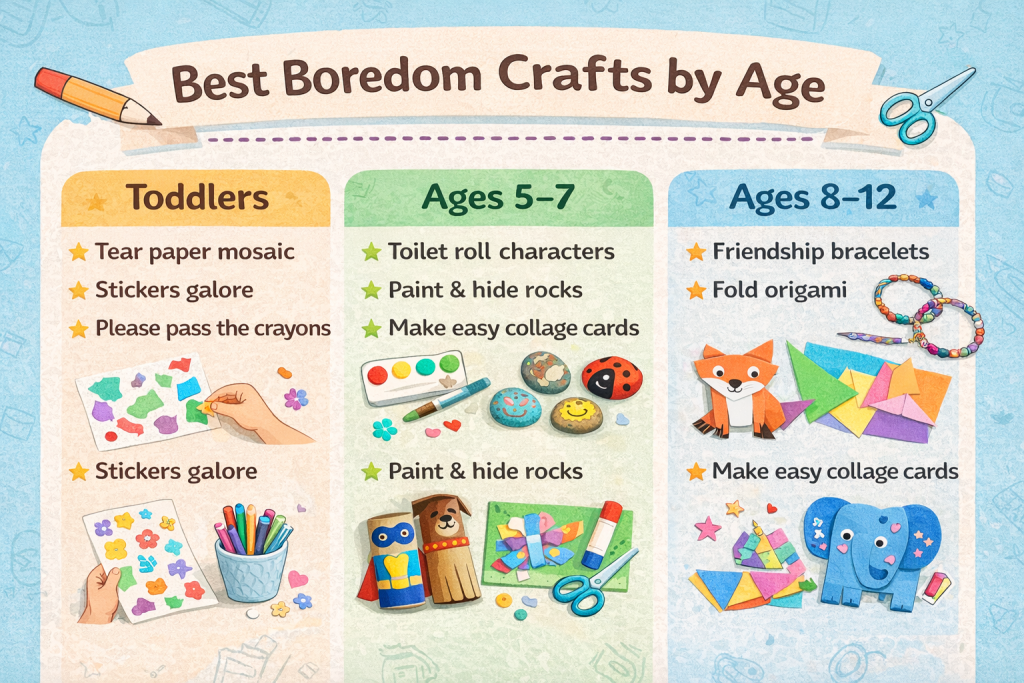
- collage creatures: toddlers tear paper, older kids cut details
- rock painting: little ones do dots and stripes, older kids add words
- friendship bracelets: younger kids bead, older kids braid or knot
- origami: toddlers decorate finished shapes, older kids do the folding
Same activity. Different entry points. Less drama.
What to do when a younger sibling wants in
Sometimes your older child is finally focused, and then a toddler waddles in like a tiny chaos consultant.
Instead of fighting that reality, build a side activity. Give the younger child stickers, chunky crayons, or scraps to sort by color. If they are more into scooping, pouring, and squishing than folding and gluing, this guide to sensory play for toddlers is a great next step.
That way, you are not forcing everyone into the same exact project. You are creating a creative zone where each child can participate at their level.
Keep the mess from taking over your house
You do not need to become one of those people who says, “I simply love glitter,” unless that is truly your calling.
A few rules help:
- use a washable tablecloth or old sheet
- keep one trash bowl on the table
- choose glue sticks over liquid glue when possible
- stop while everyone is still in a decent mood
The goal is not a spotless experience. The goal is a manageable one. There is a big difference.
Use crafts to build connection, not just pass time
This part matters.
Crafts are not only boredom busters for kids. They are also conversation shortcuts. Some children talk more while their hands are busy. They will tell you about a friend, a worry, a strange playground incident, or a wildly detailed dragon backstory while gluing paper ears onto a purple cat.
So ask easy questions:
- What should we name this?
- Who would you give this to?
- What happens next in the story?
- What colors feel happiest today?
You are not conducting an interview. You are just staying nearby, which is often where the good stuff happens.
5 Amazon products that make bored-day crafting easier
If you want a few grab-and-go options for screen-free activities, these are the kinds of kits worth keeping on hand:
Blue Squid Deluxe Arts & Crafts Chest – 3000+ pcs
A big all-in-one supply box with a portable case and tons of pieces. Great for families who want one box they can pull out on rainy days without planning ahead. Best for ages 4+ and especially useful if you have multiple kids sharing supplies.
YITOHOP Arts and Crafts Supplies for Kids -1000+ pcs Art Craft Kit in Carrying Travel Box
This is a solid starter kit if you want variety without building your own supply stash. It includes pipe cleaners, pompoms, beads, paper, glue, scissors, and more in a reusable box, so it works well for younger kids, homeschool time, or grandparents’ houses.
Creativity for Kids Rock Painting Kit – Hide and Seek Rock Kit
A strong pick for the kindness-rock idea above. It comes with 10 natural river rocks, 8 weather-resistant paints, waterproof transfers, tracking stickers, brushes, and instructions. Best for kids who love painting and the idea of hiding their art outdoors.
DDAI Arts and Crafts for Kids Age 8-12 Friendship Bracelet Making Kit
This kit is built around wearable creativity, with a bracelet maker format and pre-cut threads that make it less intimidating for beginners. Best for older kids, playdates, sleepovers, or any child who loves giving handmade gifts.
hapray Origami Kit for Kids Ages 5-8 8-12
A tidy, low-mess option that includes 152 papers, 72 patterns, and a 96-page beginner guide. Best for kids who like step-by-step projects, quiet concentration, and paper crafts that do not involve glue on your dining table.
What the research says about creative play
This is not just about filling an awkward afternoon.
A 2018 AAP report on the power of play explains that play supports social-emotional, cognitive, language, and self-regulation skills, and that it can help build executive function while supporting healthy child development. That is a pretty strong reminder that “just crafting” is doing real work.
A 2019 longitudinal study on childhood creativity and later adjustment followed 7,558 children and found that creativity at age 7, including activities like crafts, painting, drawing, storytelling, and drama, was associated with a lower relative risk of social and behavioral maladjustment by age 11. That does not mean every glue stick is secretly a miracle. It does mean creative activities can support healthy development in ways that last.
FAQs about Crafts To Do When You’re Bored
What are the easiest crafts to do when you’re bored with kids?
The easiest ones use supplies you already have: paper collage, toilet roll characters, rock painting, simple bracelets, and beginner origami. If setup takes too long, the craft usually loses its magic.
How do I keep kids interested in a craft for longer?
Add a story, a challenge, or a purpose. Instead of “paint this rock,” try “make a rock that would cheer someone up.” Instead of “make a puppet,” try “make a puppet who has a secret.”
Are crafts better than screen time when kids are bored?
They serve different purposes, but crafts usually invite more hands-on problem-solving, conversation, and creativity. Even 20 minutes of screen-free making can change the mood of the whole afternoon.
What craft works best for siblings of different ages?
Collage is usually the safest bet. Little kids can tear and glue, while older kids cut shapes, add details, and create stories around what they make.
What if my child says they are bad at crafts?
Pick low-pressure projects with no “perfect” outcome. Collage, rock painting, and puppet making work well because weird, silly, and unfinished can still look wonderful.
A gentle final word for the next “I’m bored” moment
The next time your child announces boredom like it is breaking news, take a breath. You do not need a masterpiece. You do not need matching bins, a themed playlist, or the energy of a children’s museum on wheels. You just need one simple invitation to make something. These Crafts To Do When You’re Bored can turn a restless afternoon into laughter, conversation, and a little creative pride. Truthfully, that’s already plenty.