Best Car Camera for Baby: 6 Practical Picks for a Clearer Backseat View
We may earn a commission for purchases made using our links. Please see our disclosure to learn more.
When your baby rides rear-facing, a quick glance in the rearview mirror often tells you very little. That is why many parents consider a car camera for baby use: a small backseat camera sends a live image to a screen near the driver, making it easier to check whether a pacifier fell out, a toddler is awake, or everything looks calm.
This guide compares six current options and explains the features that matter most, including screen size, night vision, wiring, mounting, and distraction. You will also find research-backed car-seat guidance and practical setup advice, so you can choose a camera that fits your vehicle and routine without turning another screen into another driving distraction.
What a Car Camera for Baby Actually Does
A typical car camera for baby has a rear-seat camera and front display for brief checks. Many models add infrared night vision, brightness controls, image flipping, or wide-angle lenses. For a rear-facing child, the key advantage is being able to see them directly without having to line up a baby mirror with the car’s rearview mirror.
Why Parents Choose a Camera Over a Mirror
A mirror is simple and needs no power. A camera can be easier to see after dark or when an awkward headrest makes mirror alignment difficult. A car camera for baby can also reduce the urge to twist around, but the screen still demands restraint: glance briefly, then return your eyes to the road.
What to Look for Before You Buy
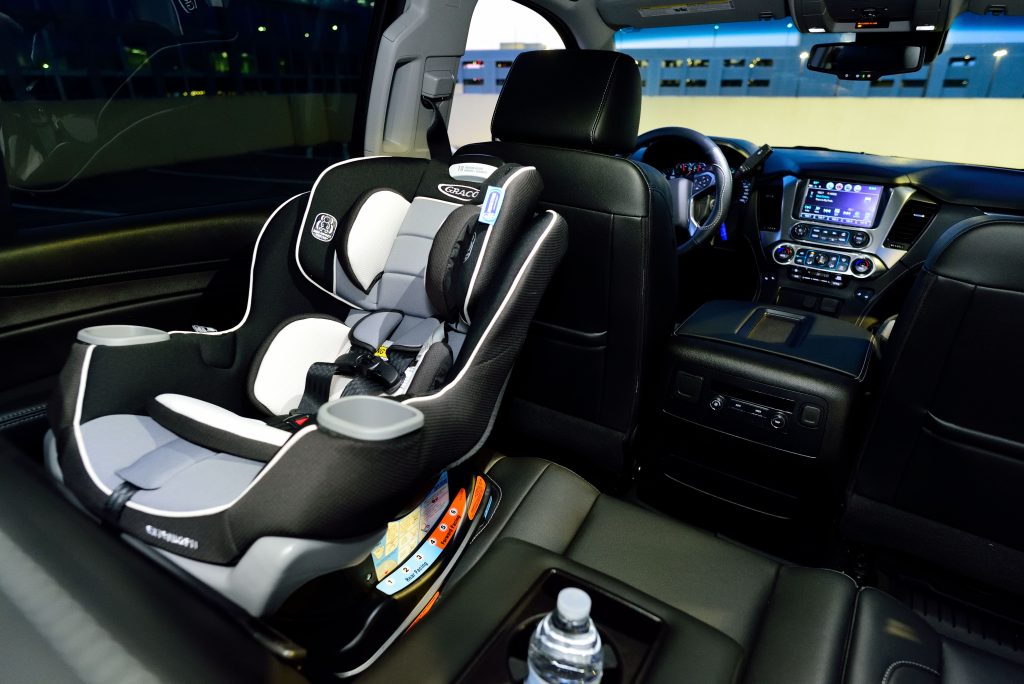
Start with your vehicle. Check the rear headrest, dashboard space, available USB or 12V power, and cable route. Then compare screen size, camera adjustment, low-light visibility, cable length, and brightness controls. Stable mounting matters more than flashy specifications: a sharp camera is not useful if it shifts out of position or creates snag-prone wiring.
Screen Size and Placement Matter More Than You Think
A 7-inch display can be easier to read in a large cabin but may feel oversized in a compact car. A 4.3- to 5.2-inch screen is easier to place. For any car camera for baby, choose a readable position that does not block the windshield, mirrors, warning displays, or controls.
Night Vision and Image Quality: What Is Worth Paying For
Infrared night vision is a strong reason to consider a camera over a mirror. Many current models use 940 nm infrared LEDs for low-light viewing without a bright visible beam. Adjustable brightness matters because a comfortable daytime screen may glare at night. Mounting angle and glare control can matter as much as 1080p resolution.
Wired vs. Wireless Baby Car Cameras
Wired systems send the feed through a cable and suit families who leave the camera in one car. Wireless models remove the long video cable, which helps when switching vehicles, but battery management becomes another task. Choose the car camera for baby format that matches your routine.
Best Car Camera for Baby: 6 Recommended Products
These six picks serve different vehicles and priorities rather than repeating the same design.
DoHonest Baby Car Camera HD 1080P: Rear Facing Car Baby Monitor Clear Image | Crystal Night Vision, Adjustable View Angle, Easy Setup, Anti-Glare Display, Safety for Kids & Infants
Best for: First-time buyers who want a compact wired setup
The DoHonest V33 combines a 4.3-inch display, 1080p video, 940 nm infrared night vision, and a 360-degree adjustable camera. Its compact monitor suits smaller dashboards. Because it is wired, plan the cable route and confirm the power connection works conveniently in your vehicle before installation.
DoHonest Baby Car Camera 7-Inch: USB Plug-Play Easy Setup, 150° View | HD 1080P Clear Picture, Large Screen Great Visibility, 360 Degree Rotating Backseat Camera Two Kids Clear Night Vision -V9
Best for: Parents who prefer a large, easy-to-see display
The V9 pairs a 7-inch LCD with 1080p video, a 150-degree view, 360-degree camera adjustment, and infrared night vision. It supports USB or cigarette-lighter power. Its larger image is easy to read quickly, but the display needs careful placement so it does not block the windshield or important controls.
Itomoro 2026 Upgraded Dual Baby Car Camera 1080P 940NM Night Vision | Split Screen 360° Swivel 150° Wide View Rear Facing Easy Install Baby Car Backseat Monitor Fits Cars/SUVs/Trucks
Best for: Twins or two children in separate rear-seat positions
This Itomoro system includes two cameras and a 5-inch 1080p IPS monitor with single-camera and split-screen modes. Infrared night vision supports low-light viewing of two separate seats. The extra camera and cables make setup more involved, so this model best suits families who value dedicated dual views over minimal hardware.
Babyvue BV6 Wireless Baby Car Camera Fast Setup, No Wiring Car Baby Monitor | HD1080P, Auto IR Night Vision, 5.2″ Display, Mirror Image, Brightness Adjustable, 3X Zoom, for Kids Rear Seat Safety
Best for: Families who regularly move the camera between vehicles
The Babyvue BV6 uses a point-to-point link between its camera and 5.2-inch 1080p monitor, avoiding a long cabin video cable. It adds automatic infrared night vision and adjustable brightness. Portability is the main attraction, but the battery-powered rear camera must be charged before longer drives.
OTTOCAST Baby Car Camera & Wireless CarPlay Adapter, 1080P HD Rear Seat Monitor Display on Car Screen, 150° Wide Angle No-Glow Night View, Safety for Kids & Infants
Best for: iPhone users with a compatible CarPlay-equipped vehicle
OTTOCAST shows the rear-seat feed on the vehicle’s existing CarPlay screen, avoiding a separate monitor. It supports full-screen, split-screen, and picture-in-picture views plus night vision. Compatibility is critical, so verify the vehicle’s USB communication port, CarPlay setup, and iPhone connection requirements before buying.
Rohent Baby Car Camera HD 1080P – Rear-Facing Infant Monitor Clear Picture | Super Night Vision 150° Wide-Angle Lens Anti-Glare Screen Easy Install, Peace of Mind While Driving (Not USB)
Best for: Drivers who prioritize a compact anti-glare display
Rohent combines a 4.3-inch anti-glare display with 1080p video, automatic night vision, a 150-degree lens, and 360-degree camera adjustment. Its smaller screen suits tighter dashboards, while brightness control helps as lighting changes. This version is labeled non-USB, so confirm your vehicle has the required power connection.
| Product | Standout feature | Best fit |
| DoHonest V33 | Compact 4.3-inch screen | Smaller cabins |
| DoHonest V9 | 7-inch display | Large, quick-glance image |
| Itomoro Dual | Two cameras, split screen | Twins or two children |
| Babyvue BV6 | Wireless camera-to-monitor link | Multi-car households |
| OTTOCAST | Uses compatible CarPlay screen | Minimal extra dashboard hardware |
| Rohent | Anti-glare 4.3-inch display | Bright or compact cabins |
Match the Camera to Your Vehicle and Car Seat
Check the route from the rear headrest to the display for seats, tracks, or doors that could pinch wiring. The camera should adapt around the child restraint, never change its base, harness, or belt. If you are still choosing the restraint, Parentloom’s guide to choosing a newborn car seat for travel can help with rear-facing fit and vehicle compatibility.
Install the Camera Without Interfering With the Car Seat
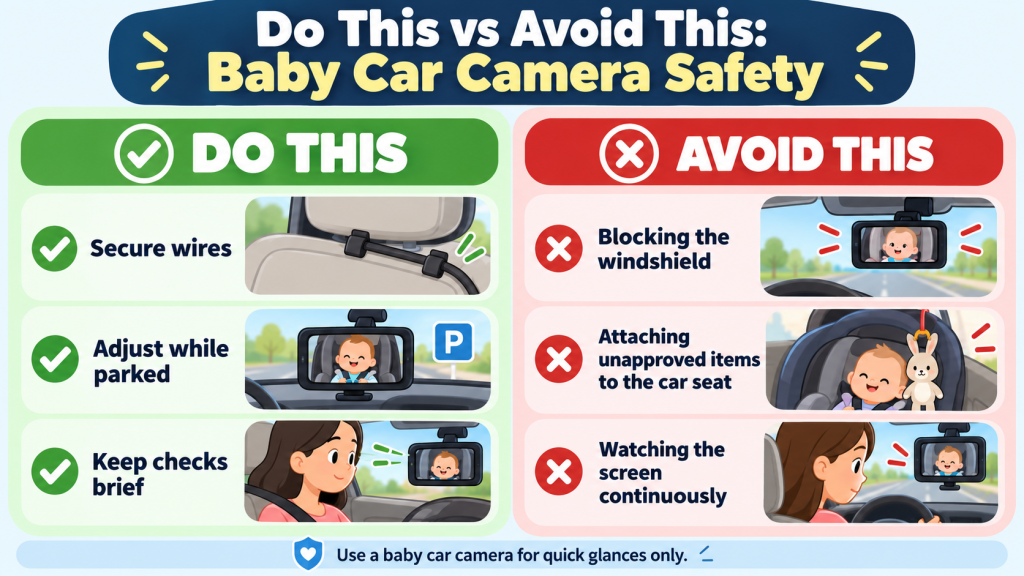
Mount the camera according to its instructions, keeping hardware and cables away from the restraint’s harness, belt path, connectors, and moving parts. Keep any extra cable safely secured and out of the child’s reach. Adjust the camera only after the seat is correctly installed. A car camera for baby should observe the restraint, never force you to alter it.
Research-Backed Safety Guidance for a Car Camera for Baby
A car camera for baby can help you check a rear-facing child, but it should support—not replace—proper car-seat use and attentive driving.
The American Academy of Pediatrics advises keeping children in a rear-facing car seat until they exceed the seat’s maximum height or weight limit. Its rear-facing car-seat safety guidance explains why correct installation and positioning matter.
Driver attention is equally important. According to NHTSA’s distracted-driving safety guidance, 3,208 people were killed in U.S. crashes involving distracted drivers in 2024. Keep camera checks brief and return your eyes to the road immediately.
NHTSA also advises caution with aftermarket car-seat accessories. Avoid mounting cameras, straps, or cables in ways that interfere with the car seat, harness, or belt path.
Common Buying Mistakes to Avoid
Do not buy the biggest screen before deciding where it will sit, or assume “wireless” means maintenance-free. Check headrest compatibility, power connectors, cable length, and display placement before ordering. For two children, a dual-camera system offers more predictable coverage than hoping one wide lens frames both seats. Never treat the monitor as something to watch continuously.
Is a Baby Car Camera Worth It for Night Driving or Road Trips?
Night driving is where a camera can have an advantage because infrared imaging can show a rear-facing child when a mirror reveals little. On road trips, a quick view can show whether a child is asleep or awake. If your baby appears distressed, tangled, or needs hands-on help, pull over safely rather than trying to solve the problem while driving.
Set Up the Display for Quick Glances, Not Watching
Adjust brightness, camera angle, and image orientation while parked. Position the display for a short glance without blocking your forward view. If the monitor can dim or sleep, use that feature when appropriate. A well-positioned car camera for baby should fade into the background; longer checks belong at a safe stop.
Frequently Asked Questions About a Car Camera for Baby
Is a baby car camera a better option than a baby mirror?
Not for every family. A mirror is simpler, needs no power, and may work perfectly in daylight. A camera can provide better nighttime visibility and may be easier to position in some vehicles. Choose according to your rear-seat layout, driving schedule, and whether adding a powered display genuinely makes brief checks easier rather than adding clutter.
Does a baby car camera work in the dark or at night?
Yes. Many current models use infrared night vision to create a usable image when the cabin is dark. Look for automatic day/night switching and adjustable display brightness. Night performance still depends on camera position, lens quality, and obstructions, so aim the camera while parked and test the setup after dark before depending on the view.
Where should I mount the monitor?
Choose a spot that allows a brief glance without blocking the windshield, mirrors, warning displays, or controls. Dashboard layouts vary, so there is no universal best position. Mount and adjust the display while parked, confirm that it stays secure over bumps, and avoid any placement that encourages you to look away from traffic for extended periods.
Can I attach the camera directly to the infant car seat?
Only if the child-restraint manufacturer specifically permits that accessory and installation method. NHTSA cautions against aftermarket products used with car seats unless the seat manufacturer makes or allows them. In most setups, mount the camera to the vehicle headrest or another location specified by the camera maker without changing the car seat, harness, or belt path.
Do I need a wireless car camera for baby?
No. A wired model may be simpler if it stays in one vehicle because there is no rear-camera battery to remember. Wireless designs are appealing when you frequently swap vehicles or want to avoid routing a long video cable. Compare everyday convenience, charging habits, mounting, and power options rather than choosing solely because a product is labeled “wireless.”
Final Recommendation: Choosing the Right Car Camera for Baby
The best car camera for baby fits your vehicle cleanly, gives you a readable image with a brief glance, and leaves the child restraint completely undisturbed. The DoHonest V33 is a sensible compact wired option, while the Itomoro dual-camera system better suits two separate child seats. If you often move between vehicles, the Babyvue BV6 offers a more portable wireless arrangement.
Whatever you choose, prioritize stable mounting, night vision, sensible display placement, and the correct power connection. Set everything up while parked, keep your attention on the road while moving, and use the camera for quick visual checks—not as a replacement for safe driving or correct car-seat installation.