The Best Weighted Stuffed Animals the Little Ones Will Love
We may earn a commission for purchases made using our links. Please see our disclosure to learn more.
If you’ve ever watched your child melt down over what looks like a tiny thing, you know it rarely feels tiny to them. Bedtime can turn dramatic. Homework can feel impossible. Even getting in the car can somehow become a full emotional weather event.
That is part of why Weighted Stuffed Animals have gotten so much attention lately. They are soft, familiar, and a lot less intimidating than a “sensory tool” sounds. For some kids, a weighted plush can feel like a steady little anchor when the day feels loud or wobbly. That matters, especially when anxiety is common in childhood. The CDC says 11% of children ages 3–17 had current, diagnosed anxiety based on 2022–2023 U.S. data.
In this guide, you’ll learn what weighted plush toys actually do, how to choose one safely, what the research really says, and which Amazon options are worth a closer look.
Affiliate note: This article includes product recommendations, and I selected them based on current Amazon U.S. availability, practical use, and parent-friendly features.
Why Weighted Stuffed Animals Feel So Appealing to Parents
Honestly, they make emotional sense.
A weighted blanket can feel like a commitment. A therapy tool can feel clinical. But a soft puppy, sloth, or cow? That feels doable. It slips into real family life. Your child sees a cuddle buddy. You see a calming stuffed animal that might make transitions smoother.
That “friendly enough to try” factor is a big deal. Parents are often not looking for perfection. They just want one thing that helps bedtime feel less like a hostage negotiation.
What Weighted Stuffed Animals Actually Do
The idea behind a sensory stuffed animal is simple: gentle weight can create what’s often called deep pressure input. Think of it like the difference between being lightly tapped on the shoulder and getting a steady, reassuring hug. One gets your attention. The other can help your body settle.
That does not mean every child will love it. Some kids adore deep pressure. Others act like you handed them a wool sweater in July. Still, for the right child, a weighted plush can support calm, focus, and body awareness.
When a Weighted Plush Helps Most
Bedtime wind-down
A bedtime comfort toy can help when your child is tired but still buzzing. Not magically. Not instantly. But sometimes enough to make the routine feel less jagged.
Transitions
School to home. Playtime to dinner. Bath to bed. Those little in-between moments are where a weighted lap animal or cuddle plush often shines.
Quiet-focus activities
Reading, coloring, listening to a story, or just sitting through a long car ride can feel easier when a child has something steady in their lap or across their chest. Five Counties’ OT guidance specifically recommends weighted animals and lap pads for short daytime use during challenging moments like transitions or seated tasks.

What the Research Really Says
This is where I want to be straight with you: the research is promising, but it is not a fairy wand.
A 2017 study on deep pressure in young people with autism found that several participants showed immediate benefits in mood and behavior after deep-pressure sessions, but responses varied by child. That last part matters. Some kids respond beautifully. Some do not.
A 2020 systematic review of weighted blanket use concluded weighted products may help reduce anxiety, but the evidence is still limited for insomnia. So the smart takeaway is this: treat weighted stuffed animals as a comfort tool, not a cure.
There is also a useful reality check from a 2014 randomized trial in Pediatrics. It found weighted blankets did not objectively improve sleep length or sleep onset in autistic children, even though children and parents still preferred them and tolerated them well. In other words, your child might love the feeling even if it does not “fix” sleep on paper.
How to Choose the Right Weight and Size
Start lighter than your inner overachiever wants to.
A practical OT-style rule is that weighted tools should usually stay in the 2–5 pound range for kids and should never exceed about 10% of body weight. Most importantly, your child should be able to pick the item up and move it independently.
A few quick pointers:
- Smaller kids often do better with lighter lap-style options.
- Bigger kids may enjoy a full-body cuddle plush around 4–5 pounds.
- If your child is new to deep pressure, go lighter first. You can always upgrade later.
Safety First Before It Becomes a Favorite
This part is not glamorous, but it matters more than the cute face.
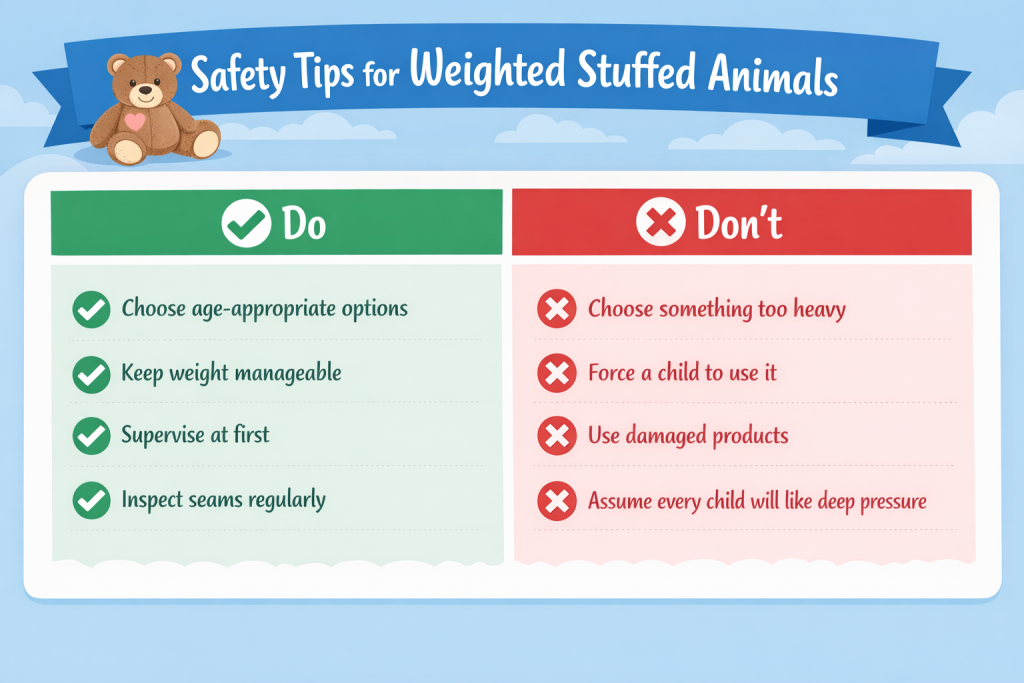
Verywell Family’s expert-backed review notes that weighted stuffed animals are generally recommended for children over age 3, and that weighted items should stay under roughly 10% of body weight. OT guidance also says these tools work best in short chunks, with regular inspection for rips or seam damage, and only when the child can move them on their own.
So before bedtime becomes official, check four things:
- your child can remove it easily
- the seams and filling feel secure
- the weight feels calming, not pinning
- you are using it as support, not forcing it because the internet said it was “life-changing”
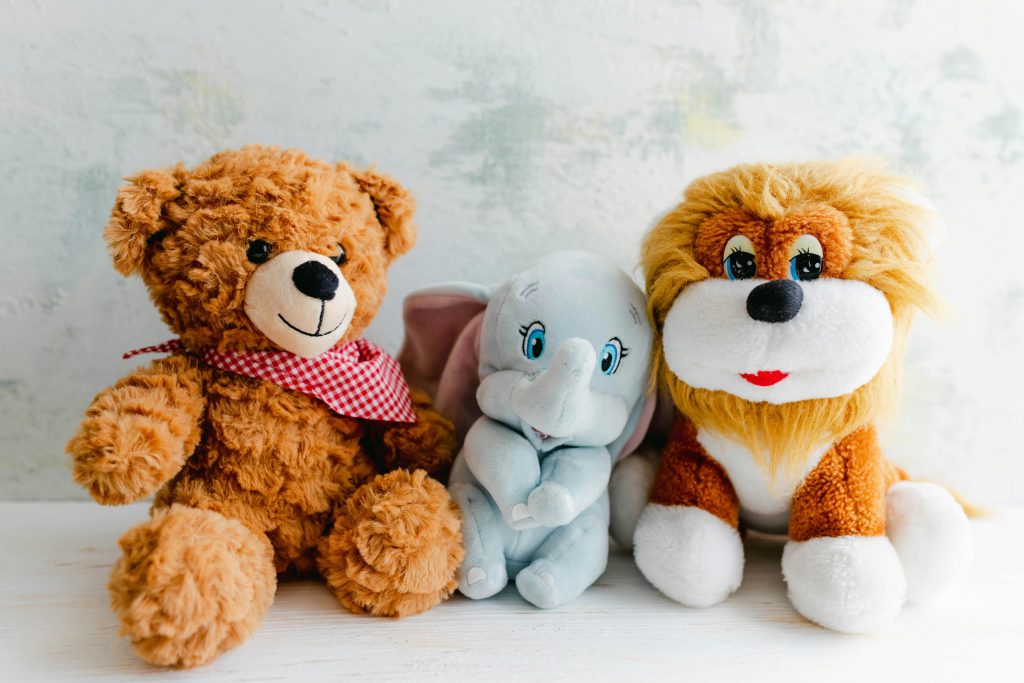
5 Weighted Stuffed Animals Worth Considering on Amazon
These are current Amazon U.S. options I’d actually shortlist because they are clear about weight, size, and real-life use case.
HUGIMALS Charlie the Puppy
Short description: This is the “full-body hug” pick. It feels more like an emotional support plush than a novelty toy.
Features: 20 inches, about 4.5 pounds, evenly distributed weight through the body, removable weighted insert, machine-washable outer plush, and non-toxic glass beads.
Who it’s for: Kids who want something they can truly snuggle across the chest, lap, or shoulder. Great for home wind-down time and older kids who like a more substantial sensory comfort toy.
FRIENDLY CUDDLE Weighted Lap Blanket for Kids & Adults
Short description: More lap pad than bedtime plush, but still soft and animal-shaped enough to feel friendly.
Features: 5-pound design, two travel bags, machine-washable outer layer, strong stitching, and 12 sections of quiet weighted beads.
Who it’s for: Kids who need support during homework, reading, school pickup, travel, or calm-down corner time. This one is especially practical if you want a weighted lap animal instead of a giant cuddle toy.
YESGIRL 26.8-Inch 5-Pound Dog Weighted Stuffed Animal
Short description: This one leans big, cozy, and bedtime-friendly.
Features: 26.8-inch body, 5-pound weight, soft plush fill, weighted abdomen, and a size that works as both plush toy and pillow.
Who it’s for: Kids who want one oversized buddy to hug, lean on, or curl up beside. Also nice for children who like visual comfort as much as sensory pressure.
Warmies Microwavable & Weighted Stuffed Animals, Puppy
Short description: The comfort-food version of a weighted plush. Warm, cozy, and very soothing.
Features: About 13 inches, around 1.5 pounds, microwavable for warmth, freezer-friendly for cooling, and lightly scented with lavender.
Who it’s for: Kids who like warmth and softness more than heavy pressure. This is a sweet option for bedtime routines, cold nights, or children who might find a 4- or 5-pound plush too much.
Mewaii Mom’s Choice Award 4-Pound Weighted Highland Cow
Short description: A good middle-ground option between lap pad and giant plush.
Features: About 23 inches long, 4 pounds of weight, beads in the belly and limbs for a more hug-like feel, and a design built for cuddling rather than just display.
Who it’s for: Kids who want a bigger animal friend without jumping to the heaviest category right away. It also works well for couch reading and shared snuggle time.
How to Introduce One Without a Power Struggle
Do not make it a “special calming intervention.” That phrase alone could make a child suspicious.
Instead, keep it casual:
“Want to try this puppy on your lap while we read?”
“Should sloth sit with you in the car?”
“Do you want the warm one or the big one?”
That tiny bit of choice matters. Kids are much more likely to accept a deep pressure toy when it feels like theirs, not yours.
Best Times to Use a Sensory Stuffed Animal
You do not need to use it all day. In fact, you probably should not.
The sweet spots are usually:
- after school, when emotions are a little crispy
- during reading or screen-free quiet time
- before bed
- in the car
- during transitions that usually go sideways
Five Counties’ OT tip sheet suggests short periods of about 10–20 minutes during the times a child tends to struggle most.
Signs Your Child Might Love Deep Pressure Input
Some kids practically tell you without words.
Watch for patterns like:
- always piling blankets on themselves
- asking for tight hugs
- lying under couch cushions like a very determined sandwich
- getting calmer with heavy pillows or stuffed animals
- focusing better when something rests on their lap
That does not prove a weighted plush will work, but it is a pretty decent clue.
Signs It Is Not the Right Fit
Not every child wants extra pressure, and that is okay.
Pause or skip it if your child:
- tries to throw it off immediately
- says it feels scary, itchy, or “too heavy”
- gets hotter or more irritated instead of calmer
- cannot move it independently
- already resists anything that feels confining
The goal is comfort, not compliance.
What to Pair With It for Better Results
Weighted Stuffed Animals usually work best as part of a routine, not a solo act.
Try pairing one with:
- dimmer lights
- a familiar bedtime book
- slow breathing
- soft music
- a predictable after-school snack and reset
- quiet art or coloring
That combo matters because the plush helps the body settle, while the routine tells the brain, “You’re safe now.”
Weighted Stuffed Animals vs. Weighted Blankets
A weighted blanket covers more of the body. A weighted plush gives more flexibility.
That is why many parents start with a plush. It is easier to carry, easier to test, and usually easier for a child to accept. And while research on weighted blankets is mixed for sleep outcomes, children and parents often still prefer the calming feel. The same logic can apply to a well-chosen weighted cuddle toy: maybe not a miracle, but definitely a useful support.
A Gentle After-School Routine That Often Works
One of the easiest ways to use a sensory stuffed animal is during the messy hour right after school. Snack first. Questions later. Then offer a short reset with a weighted plush, a cozy corner, and something quiet for the hands.
If your child needs a low-pressure activity after that, these creative after-school art activities can pair really nicely with a weighted lap animal or cuddle plush. It is a simple way to help the nervous system come down before homework or dinner.
FAQs
Is it safe for a child to use a weighted stuffed animal?
They can be, as long as the child is old enough, the weight is appropriate, the seams are intact, and the child can move the plush independently. Expert-backed guidance commonly points parents toward age 3+ and keeping weight under about 10% of body weight.
Can weighted stuffed animals help reduce anxiety?
They can help some children feel calmer because deep pressure may support regulation and groundedness. But results vary by child, and they should be treated as a support tool, not a stand-alone treatment.
Is it safe for a child to sleep with a weighted stuffed animal?
Sometimes, yes, but start cautiously. Make sure the plush is not too heavy, your child can remove it on their own, and you have tested how they use it before making it part of nightly sleep. Research on weighted products for sleep is mixed, even when families prefer them.
What weight is best for a weighted stuffed animal?
For many children, lighter is better at first. OT-style guidance often puts kid-friendly weighted animals and lap pads around 2–5 pounds and never more than 10% of body weight.
Which is better: a weighted stuffed animal or a weighted blanket?
A weighted stuffed animal is usually easier to test because it is more flexible and less restrictive. A weighted blanket covers more surface area, but some children prefer the portability and familiarity of a plush friend. It depends on your child’s comfort style.
Conclusion
If you are thinking about trying Weighted Stuffed Animals, you do not need the perfect pick right away. You just need a safe, age-appropriate option that matches your child’s size and comfort style. Start light. Watch their response. Let them lead a little.
Sometimes the best parenting tools are not flashy. They are soft, slightly silly-looking, and quietly helpful at exactly the right moment. And honestly? That is often more than enough.