
Chore Chart for Kids: How to Choose One That Works

We may earn a commission for purchases made using our links. Please see our disclosure to learn more.
Tired of reminding your child to put away toys or get ready for school? A chore chart for kids can turn those repeated requests into a simple plan everyone can see. But choosing the right chart matters: a preschooler who loves pictures may struggle with a crowded written checklist, while an older child might find cartoon stickers childish.
Some charts use magnets, others use sliders, stickers, or erasable markers. Each suits a different routine. This guide compares practical products and explains how to assign chores, offer rewards, and avoid arguments over unfinished jobs.
Why Use a Chore Chart Instead of Verbal Reminders?
A chart makes expectations visible. Instead of remembering several spoken instructions, your child can check what comes next. Marking a task complete also makes their effort easy to recognize.
The chart cannot teach a skill on its own, though. Young children still need demonstrations, practice, and help with unfamiliar jobs. Think of it as a shared reference rather than a scorecard for obedience. The goal is steady participation in family life, not a perfectly tidy house. That distinction helps make chores feel like learning rather than a daily inspection.
Compare the Main Types of Kids’ Chore Charts
Magnetic boards use picture tiles or stars to track progress. They are reusable, although loose pieces need storage and can pose a hazard to young children.
Dry-erase charts accommodate changing schedules, but writing can smudge. Slider checklists make marking jobs satisfying, yet often have limited task spaces. Sticker pads offer colorful encouragement, though their pages run out.
Digital charts can help coordinate busy households but require device access. Choose the format your child understands and that adults can maintain without extra fuss. An attractive design is little help if resetting it takes longer than the chores.

What to Look for Before Buying a Chore Chart for Kids
Consider how many jobs need displaying. A compact board may handle three daily tasks; siblings with rotating responsibilities might need more space or separate charts.
Check whether pictures are clear, text is readable at your child’s height, and assignments can change easily. Think about mounting: not every refrigerator holds magnets, and wall charts should be within reach.
For younger children, inspect the manufacturer’s age guidance and small-parts warnings. A simple layout your child understands beats an elaborate chart nobody uses. Check how easily you can replace missing parts, too.
Age-Appropriate Chores to Put on the Chart
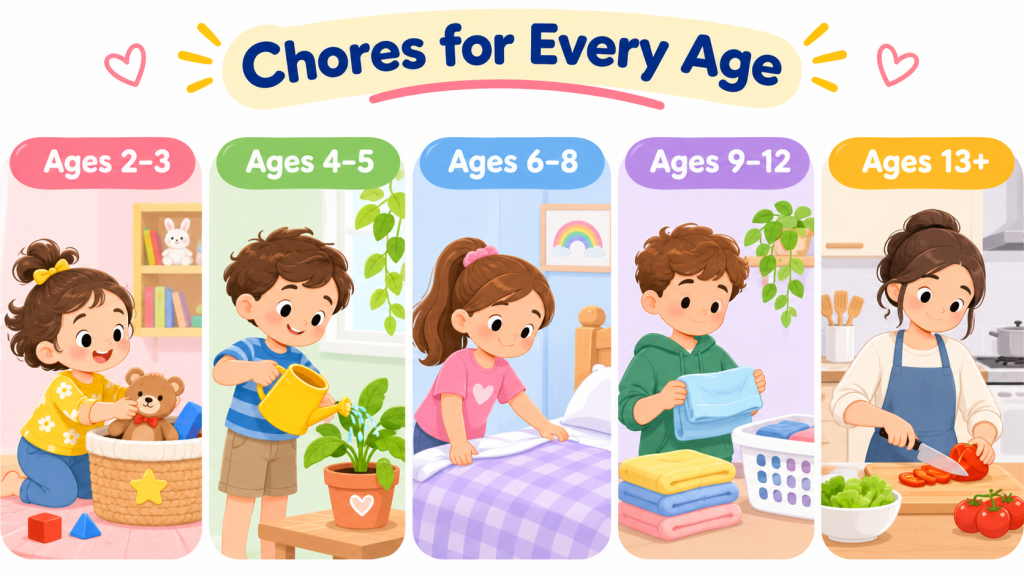
Choose jobs by ability and supervision needs, not age alone. Toddlers might place toys in a bin. Preschoolers can practice sorting laundry, putting shoes away, or watering plants with help.
School-age children may make beds, set tables, fold laundry, or pack schoolbags using checklists. Older kids can take on more involved cleaning after being shown how.
Keep hazardous chemicals, sharp tools, hot appliances, and heavy lifting under adult control. If a child cannot manage a task yet, change the assignment rather than marking them unsuccessful. You can restore the harder job later after more practice.
Decide Between Daily, Weekly, and Routine Charts
A daily chart suits repeated jobs such as hanging up backpacks or clearing dishes. A weekly chart fits collecting recycling or changing sheets. Routine charts show an order: get dressed, eat breakfast, brush teeth, pack a bag.
You can combine formats without filling every square. Keep morning tasks on one strip and assign a separate weekend job. This prevents occasional responsibilities from crowding the daily checklist.
For a smoother handoff from school to home, pair the chart with a simple after-school routine that includes time to unwind before chores.
Recommended Chore Charts for Kids
These options solve different problems. Consider your child’s reading level, preferred tracking method, and how many people share the chart. No single format suits every family.
Melissa & Doug Deluxe Wooden Magnetic Responsibility Chart With 90 Magnets
Best for: Younger children who enjoy picture-based rewards.
This hanging wooden chart pairs a weekly goal board with magnet storage. Its 90 magnets show responsibilities and encouraging messages, helping children track jobs without lengthy instructions. The dry-erase surface adds flexibility. However, loose magnets need careful storage, and the manufacturer warns against use by children under three.
KAQUBE Chore Chart for Kids Dry Erase Board With 10 Sliders, White and Blue, 1 Pack
Best for: Children who like physically marking a task complete.
The KAQUBE chart has ten movable sliders beside a writable task area, letting children mark jobs complete. Its compact format suits a bedroom or family checklist station, and the erasable surface allows changes. Ten positions may feel restrictive for a complicated weekly plan, so use it for daily routines.
Learn & Climb Behavior Reward Chart System Pad With 26 Chore Charts and 2,800 Stickers
Best for: Families who prefer stickers and a fresh paper chart.
This pad includes 26 perforated chart pages, stickers, and task-and-reward suggestions. Parents can assign pages to siblings or replace completed charts without erasing past progress. It suits children who like decorating their achievements. Unlike a reusable board, its pages and stickers eventually need replenishing.
JJPRO Magnetic Dry Erase Chore Chart Set for Fridge With Two Bonus Note Boards
Best for: Households managing chores for multiple children.
JJPRO pairs a magnetic chore board with two smaller dry-erase note boards. These can hold reminders or separate tasks while the main chart tracks responsibilities. Its erasable format simplifies rotating jobs. The set needs a compatible magnetic surface, and children who rely on pictures may prefer another option.
SchKIDules 93-Piece Home Collection Visual Schedule Magnet Set
Best for: Visual learners who need flexible picture-based routines.
SchKIDules includes 72 illustrated activity magnets and 21 headings for arranging jobs and daily transitions. Each tile pairs a picture with words, linking tasks to their names. The pieces can change places as routines evolve. However, this is a magnet collection, not a complete chart; a magnetic board is sold separately.

Set Up Your First Chart Without Overloading It
Start with two or three jobs your child can already do with some help. Instead of “clean your room,” try “put books on shelf” or “place clothes in hamper.” Each gives a clear finish line.
Demonstrate the tasks, agree on when they happen, and practice marking them complete together. Put the chart where your child will notice it at the right time.
Review the first week. If the chart creates more reminders than it solves, cut tasks or simplify the tracking method.
Make Rewards Helpful Without Paying for Every Job
Stickers and stars make progress visible, but rewards need not cost money. A favorite story, choosing a family game, or extra playtime may mean more than a toy.
Explain what earns a mark and recognize effort promptly when teaching a new skill. Never remove marks already earned. As chores become familiar, emphasize pride, independence, and helping the household.
Some families pay allowances for extra jobs but expect everyday contributions without payment. Either approach needs rules everyone understands.
Organize Chores Fairly When You Have Several Kids
Fairness does not require identical jobs. A younger child might sort socks while an older sibling handles something harder. Consider effort, ability, and available time rather than equal output.
Separate color-coded charts prevent confusion when assignments change. A shared board can work if everyone has a clearly labeled column.
Allow children to help choose or rotate some tasks while keeping assignments manageable. If arguments arise, discuss the division of work when everyone is calm, not while a chore is due.
Adapt Charts for Different Attention and Learning Needs
Nonreaders may understand photographs or drawings better than written instructions. Children who struggle with long sequences can start with one or two steps, revealing the next after completion.
Some prefer portable picture schedules; others need a fixed wall display and brief reminders. Ask your child what helps without making them feel monitored.
A chart may support organization but is not a treatment for attention or developmental conditions. Adjust the approach to the child and seek professional guidance if needed.
Common Chore Chart Mistakes That Cause Frustration
Overambitious charts can fail before a routine forms. Ten unfamiliar chores, vague labels, and rewards promised weeks away are especially difficult for young children.
Do not turn every empty box into punishment. Children get tired, forget instructions, or need more practice. Check whether the job was realistic and clearly explained before assuming defiance.
Finally, a chart nobody checks serves little purpose. If it fades into the background, simplify it, move it, or change the check-in time rather than adding rules.
Keep the Chart Useful as Your Child Gets Older
Have a brief weekly check-in to erase finished tasks, collect magnets, and discuss what felt too easy or hard. Add responsibilities gradually and teach new skills first.
Store loose magnets away from young children, use suitable markers, and clean surfaces as directed. A chart missing pieces or covered in smudges gets frustrating fast.
Eventually, your child may prefer a plain checklist, calendar, or phone reminder. That is progress. The tracking method should change as their independence grows.
What Parenting Guidance Says About Chores and Rewards
The American Academy of Pediatrics explains in its guidance on age-appropriate chores that checklists, realistic expectations, and encouragement support household participation. It recommends introducing one new job at a time when long lists overwhelm children.
The CDC’s guidance on praise and reward charts recommends choosing specific, achievable behaviors and giving young children timely, consistent feedback. It says previously earned rewards should not be taken away.
These recommendations support using simple visual systems. They do not establish that magnetic boards outperform stickers or that any particular product guarantees lasting habits. Choose a chart for usability, then focus on teaching and consistency.
Frequently Asked Questions About Chore Charts for Kids
What age should a child start using a chore chart?
Preschoolers can use a simple picture chart with adult help. Younger toddlers may enjoy helping without formal tracking. Readiness matters more than a birthday: look for the ability to understand a familiar task and participate without pressure. Keep the first chart playful and short.
How many chores should I put on my child’s chart?
Start with two or three tasks, adding more when your child handles them comfortably. The right number depends on ability, time, and task complexity. If your child needs repeated reminders, a short list may work better than a crowded weekly grid.
Should I give rewards for completing chores?
Rewards are optional, but encouragement helps children learn routines. Praise, stickers, or choosing a family activity can recognize progress without paying for every job. Explain the rules, follow through consistently, and gradually emphasize contributing rather than collecting prizes. Ordinary appreciation still matters when sticker rewards end.
Are magnetic chore charts safe for toddlers?
Not every magnetic chart suits toddlers. Detachable magnets or other small pieces can be swallowed. Check age warnings, inspect pieces, and keep loose parts away from children who mouth objects. For younger children, consider a large picture checklist without detachable pieces.
What should I do if a chore chart loses its effectiveness after a few weeks?
Check whether tasks are realistic and your child knows what completion looks like. The chart may be crowded or easy to ignore. Let your child choose new tasks or change the tracking method. If progress stalls, practice the chores together again.
Conclusion: Choose a Chart Your Child Can Actually Use
A chore chart for kids works best when it reflects the child and the household rather than an idealized routine. Consider reading ability, space, changing tasks, and needed adult help. Review expectations as skills grow.
For younger children who respond to visual encouragement, the Melissa & Doug magnetic chart is a practical starting point. For children who need a flexible picture sequence, the SchKIDules magnet set offers more ways to arrange a routine, provided you have a magnetic display surface.
Begin with a few manageable jobs and teach them together. Consistent use matters more than a fancy board.