5 Things To Build With Legos With The Little Ones
We may earn a commission for purchases made using our links. Please see our disclosure to learn more.
Sometimes the hardest part of LEGO time is deciding what to make before everyone loses interest. If you have a mixed box of pieces and a child asking, “What should we build?”, a few simple prompts can turn scattered bricks into a creative activity. These Things To Build With Legos are designed for young children and grown-ups to tackle together without advanced instructions. You will find five manageable ideas, age tips, research on construction play, and useful sets for different families. The goal is to give your child enough structure to begin, then room to make the idea their own.
Affiliate disclosure: This article contains product recommendations. If you make a purchase through qualifying links, we may earn a commission at no extra cost to you.
Why Things To Build With Legos Work So Well for Family Play
Building bricks sit between open-ended play and a scripted activity. A challenge—make a house, car, animal, bridge, or playground—gives children a starting point while they still choose the details.
That flexibility suits siblings with different skills. One child can stack walls while another adds a roof or wheels.
Before You Start, Match the Bricks to Your Child
Age guidance matters more than the complexity of the idea. Standard LEGO bricks contain small parts, so they are not intended for children under 3. For toddlers, larger DUPLO pieces are the more appropriate option; LEGO lists Brick Box 10913 for ages 1½ and up.
Preschoolers may prefer a quick build that becomes pretend play, while older children may stay with a challenge longer. The easiest Things To Build With Legos fit the child in front of you.
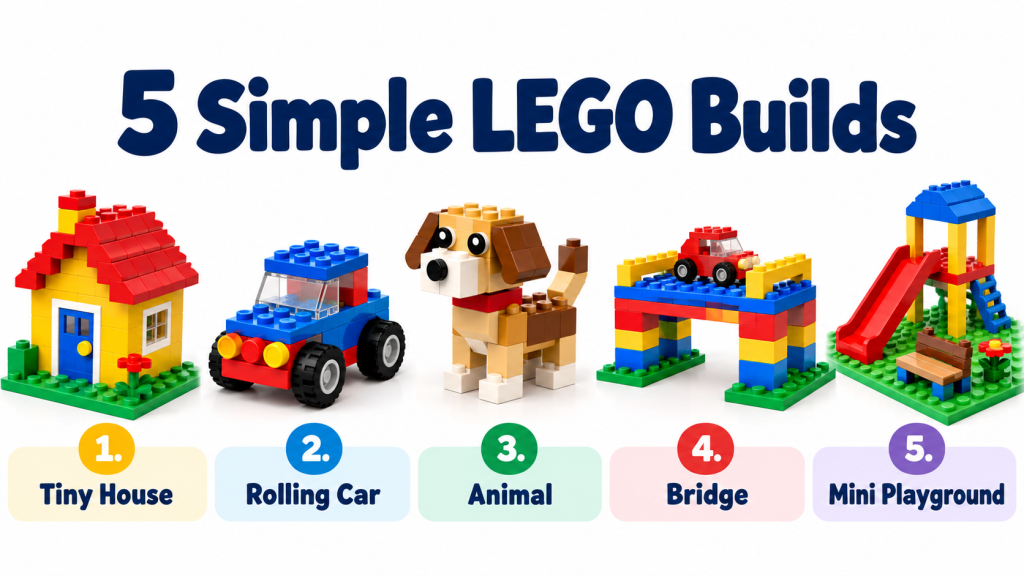
1. Build a Tiny House With a Big Personality
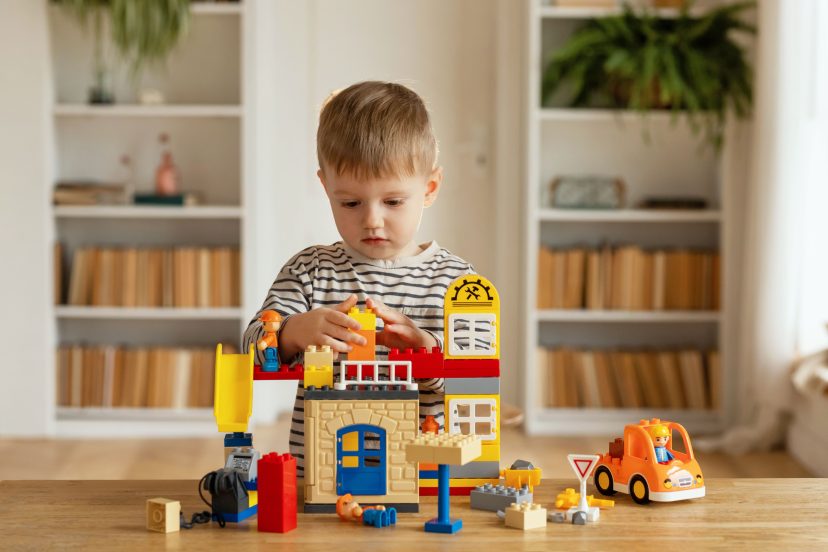
A small house is one of the easiest Things To Build With Legos because children understand the basic idea. Start with a rectangle, add a doorway, then let your child decide what makes the home unusual.
Maybe it needs a rainbow roof or dragon garage. Younger builders can focus on walls and colors; older children can add rooms, furniture, or a removable roof.
Once the house becomes a setting for a story, it often keeps growing naturally.
2. Make a Car That Actually Rolls
Vehicles are satisfying because the result can move right away. Start with a short base, attach two wheel sets, then build upward without making the car too tall.
Ask who owns the vehicle. A family car may need luggage; a rescue truck might need tools; a space rover can have giant headlights.
Among Things To Build With Legos, a car invites easy experimenting. If it drags, wobbles, or loses a wheel, change the design and try again.
3. Create an Animal From Simple Shapes
Animals work well for children who enjoy pretend play. Pick a familiar animal and reduce it to obvious features: four legs and ears for a dog, a long neck for a giraffe, or a wide tail for a crocodile.
Do not worry about realism. A blue rabbit with mismatched ears is still a rabbit if your child says it is.
This is one of the most flexible Things To Build With Legos. Younger children can make chunky creatures; older ones can add food, beds, or habitats.
4. Build a Bridge and See What It Can Hold
A bridge turns brick play into a simple engineering challenge. Place two books, boxes, or sturdy brick towers a short distance apart and ask your child to connect them.
Build any bridge that reaches, then test it with a small toy car or lightweight figure. If the middle breaks, try thicker supports, overlapping bricks, or another layer underneath.
Choose this when a child wants Things To Build With Legos that feel more like a challenge than pretend play.
5. Design a Mini Playground
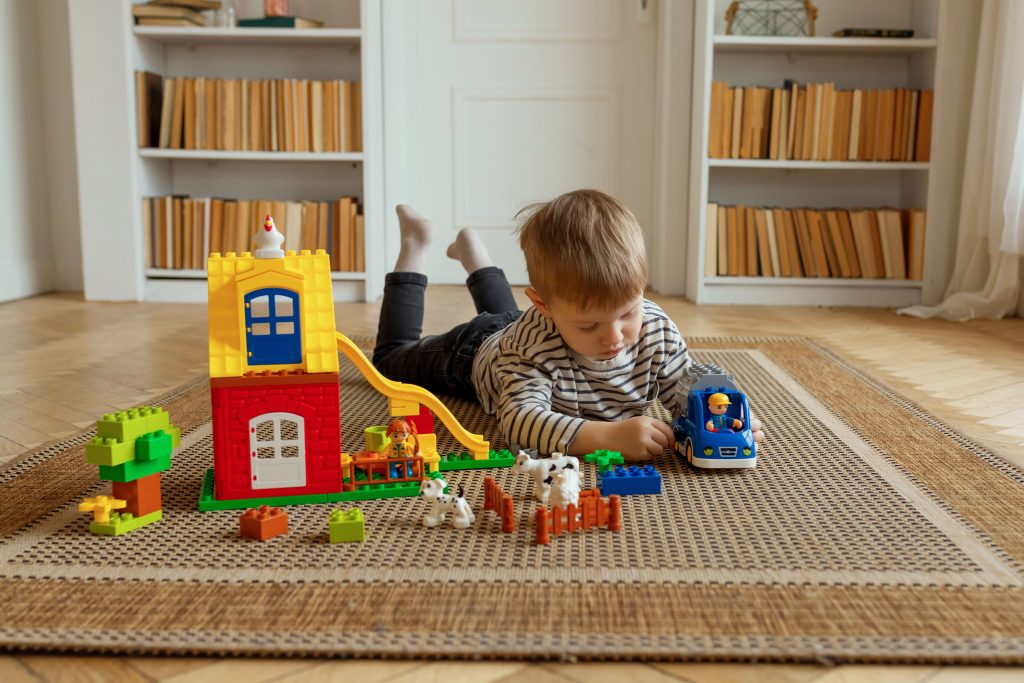
A playground lets several small ideas live in one build. Start with one feature—a slide, swing, climbing wall, seesaw, bench, or snack stand—then build around it.
Children can use figures to test scale, but accuracy is optional. The playground may become a schoolyard, animal sanctuary, or superhero course.
For families searching for repeatable Things To Build With Legos, this idea changes easily each time. Let every child contribute one feature.
Turn the Build Into a Story Instead of Stopping at “Done”
Once the model is standing, ask one open question: Who lives here? Where is this car going? Why does the bridge cross the river?
A single prompt can extend construction into storytelling. Children may add a mailbox, traffic light, treasure chest, or secret door because the story gives those pieces a purpose.
When collecting Things To Build With Legos for rainy afternoons, treat each build as the beginning of play.
Keep Younger Builders Engaged Without Taking Over
Young children often need momentum, not full instructions. Build the first two or three pieces together, then offer a choice: “Should the roof be tall or flat?” or “Do you want wheels or a door next?”
Avoid correcting unusual choices unless safety is involved. A crooked wall may be exactly what makes the project theirs. If frustration rises, save the build for later or start fresh.
What Research Says About Building Play
The American Academy of Pediatrics’ clinical report on play, published in 2018 and reaffirmed in January 2025, says developmentally appropriate play can support cognitive, language, social-emotional, and self-regulation skills. It also emphasizes responsive play with caregivers.
A 2025 randomized study of 331 three-year-olds found that five weeks of concrete or digital spatial-assembly activities improved trained spatial skills. Some feedback conditions transferred to other spatial tasks, while effects on overall mathematics were much smaller.
Evidence is still nuanced. A 2023 study of 634 children ages 7 to 9 found no association between construction-play frequency and spatial or mathematics scores. More play alone does not guarantee better outcomes.
For safety, the U.S. Consumer Product Safety Commission guidance on small parts advises keeping toys with small parts away from children under 3 and following age guidance.
Recommended Products for Things To Build With Legos
You do not need a new set for every idea. The right box simply helps when you need toddler-size pieces, storage, portability, or a themed starting point.
| Product | Best for | Age guidance | Useful feature |
| LEGO DUPLO Brick Box 10913 | Toddlers | 1½+ | 65 larger pieces and storage |
| LEGO Classic Creative Suitcase 10713 | Travel and small spaces | 4+ | 213 pieces in a divided case |
| LEGO Classic Medium Creative Brick Box 10696 | First standard-brick collection | 4+ | 484 pieces, wheels, windows |
| LEGO Classic Large Creative Brick Box 10698 | Siblings and frequent builders | 4+ | 790 pieces and two baseplates |
| LEGO Classic Creative Pets 11034 | Animal-loving kids | 5+ | 450 pieces and guided pet ideas |
LEGO DUPLO Brick Box 10913
Best for: Toddlers starting construction play
This 65-piece set includes larger DUPLO bricks, two figures, a wheeled car, number bricks, flowers, and familiar elements in a storage box. Its size and age guidance make it sensible when standard bricks are still too small. The limitation is simple: older preschoolers may eventually want a wider variety of pieces.
LEGO Classic Creative Suitcase 10713
Best for: Small homes, visits, and portable play
The suitcase combines 213 pieces with sorting compartments, keeping setup and cleanup contained. Bricks, wheels, eyes, and assorted shapes support quick houses, vehicles, and creatures without a large play table. It is a compact starter option, although children who enjoy bigger scenes may soon want more basic bricks.
LEGO Classic Medium Creative Brick Box 10696
Best for: Families buying a versatile first standard-brick set
With 484 pieces in 35 colors, plus windows, eyes, tires, wheel rims, and a baseplate, this box can handle most projects in this guide. It offers broad variety and built-in storage without becoming enormous. Because the pieces are small, it is intended for ages 4 and up and should stay away from younger siblings.
LEGO Classic Large Creative Brick Box 10698
Best for: Siblings, frequent builders, and bigger shared projects
This 790-piece collection adds 33 colors, several window and door styles, wheels, and two green baseplates. The larger supply makes it easier for two children to build together or create several connected models. The tradeoff is cleanup: more pieces mean more sorting and more floor space.
LEGO Classic Creative Pets 11034
Best for: Kids who want guidance before free building
Creative Pets includes 450 pieces and instructions for animals such as a dog, cat, hamster, rabbit, and bird, followed by ideas for customization. It suits children who freeze when given a blank prompt but enjoy changing a model afterward. Its animal focus is less versatile if vehicles and buildings are the main interest.
Make Cleanup Part of the Activity
Put a tray or blanket under the building area so loose pieces are easier to gather. Ask younger children to collect wheels or one color while you handle the rest.
A divided case helps with small collections; a larger bin works when speed matters. Simple routines make Things To Build With Legos easier to repeat because tomorrow’s activity does not begin with yesterday’s mess.
Extend the Fun Without Buying More Bricks
Change the prompt before you change the collection. Build the same house in two colors, make a car for a tiny animal, or rebuild the playground for winter.
You can also add paper for maps, signs, or simple design sketches.
If you are building a broader rotation of off-screen activities, these screen time alternatives for kids include construction, art, movement, reading, and science ideas that can sit alongside brick play.
FAQs About Things To Build With Legos
What are the easiest LEGO builds for a young child?
Start with familiar shapes: a small house, tower, car, animal, boat, or basic bridge. Use a few pieces at first, then let the child add details after the main shape works. For toddlers, choose larger age-appropriate bricks instead of standard small pieces. Simple success often creates more interest than beginning with a complicated model.
How can I help without building everything for my child?
Give a starting point, then switch to questions and choices. Build the first corner of a house and ask where the door should go, or help attach wheels and let your child design the car body. If something falls apart, ask what they want to change before fixing it yourself. The goal is shared play, not a perfect adult-made model.
What Things To Build With Legos are good for siblings?
Choose projects with separate jobs that connect later. A mini town, playground, zoo, bridge scene, or group of vehicles works because each child can make one part. If ages differ, give the younger child a simpler task while the older child handles detail. Use only pieces appropriate for the youngest child who can access the play area.
Do kids need instructions to benefit from building play?
No. Instructions can teach construction techniques and help children who prefer a clear starting point, while free building offers a different challenge. A useful middle ground is to follow a small model once, then change its color, size, purpose, or story. That keeps enough structure for confidence while preserving choices and experimentation.
How many bricks do we need for these ideas?
There is no required number. A small collection can handle a tiny house, animal, short car, or simple bridge, while larger scenes need more pieces. If your child repeatedly runs out of ordinary bricks, add basic pieces rather than many narrowly themed sets. Storage space and attention span matter as much as piece count.
Final Thoughts on Things To Build With Legos
The best Things To Build With Legos with little ones are simple enough to begin quickly and flexible enough to become something unexpected. Start with a house, rolling car, animal, bridge, or playground, then let the child steer the details and story.
For toddlers, the LEGO DUPLO Brick Box 10913 offers larger pieces and an age-appropriate starting point. For children ready for standard bricks, the LEGO Classic Medium Creative Brick Box 10696 gives a broad mix without requiring a huge collection.
Match the pieces to your child’s age, keep the challenge manageable, and resist the urge to perfect their design. Pick one idea, build beside them, and see where their version goes.