Art Activities for Afterschoolers: Fun Creative Ideas
We may earn a commission for purchases made using our links. Please see our disclosure to learn more.
Some kids come home from school chatty and bouncing. Others walk in like a phone on 2% battery. Shoes off. Backpack dropped. Brain fried.
That is exactly why art activities for afterschoolers can be such a gift. They give kids a soft landing. Not another task. Not another worksheet. Just a chance to make, imagine, cut, paint, squish, doodle, and breathe.
In this guide, you’ll find easy, low-pressure ideas you can actually use at home, plus simple ways to make art time feel doable even on busy weekdays. You’ll also get a few product suggestions and a research-backed look at why creative time matters.
Affiliate note: This article includes suggested art supplies, but I only recommend items that fit the purpose of easy, practical afterschool creativity.
Why art activities for afterschoolers matter
After school is a weird little window of the day. Kids are often tired, hungry, overstimulated, and somehow still full of feelings. Art works well here because it lets them decompress without needing the “right” answer.
A worksheet says, “Perform.”
A blank page says, “Exhale.”
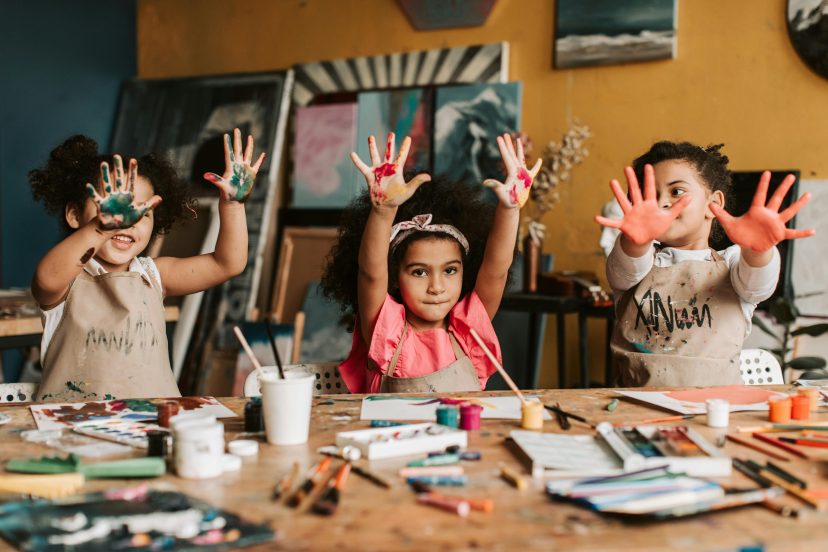
That is part of what makes art activities for afterschoolers so powerful. They can help shift the afternoon from chaos mode to connection mode. Even ten or fifteen minutes of coloring, cutting, stamping, or sculpting can turn the energy of the room around.
Start with a simple afterschool transition
Before jumping into paint and paper, build a small bridge between school and home.
Try this order:
- snack
- movement break
- art invitation
That middle step matters. A quick walk, stretching, dance break, or even “run to the mailbox and back” helps kids shake off the school day. Then art feels like a welcome next step instead of one more demand.
You do not need a Pinterest-perfect system. A banana, a wiggle, and a tray of markers can work just fine.
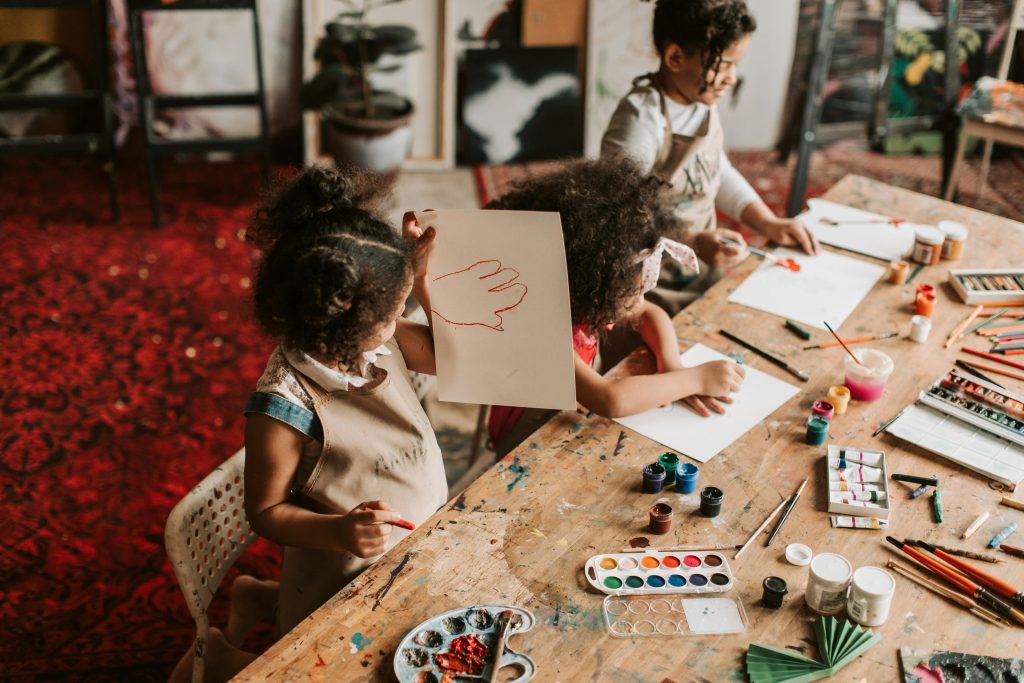
Build a low-pressure art space
The best art corner is not the fanciest one. It is the one your child can actually use.
Think simple:
- washable table covering
- one container for basics
- paper within reach
- a place for drying projects
- wipes or a damp cloth nearby
This is where many parents accidentally make things harder. They imagine a dreamy craft cart with labels and rainbow bins. Cute? Sure. Necessary? Not even a little.
A shoebox of supplies and a clear table can still create wonderful art activities for afterschoolers.
Drawing activities after school that feel easy
Drawing is the easiest place to start because the barrier is low. Paper. Pencil. Go.
Here are a few favorites:
One-line drawing
Have your child draw a cat, tree, shoe, or sandwich without lifting the pencil. The result is usually gloriously wonky, which is half the fun.
Emotion monsters
Ask, “What would your tiredness look like as a creature?”
Then let them draw it.
This is especially helpful for kids who struggle to talk about their feelings directly.
Finish-the-shape challenge
Draw a triangle, squiggle, or circle and let your child turn it into something else. A triangle becomes pizza. A circle becomes a moon. A squiggle becomes a dragon tail.
These kinds of creative after school activities feel playful instead of formal.
Painting ideas that feel exciting, not exhausting
Painting has big “messy masterpiece” energy, but it does not have to turn your kitchen into a crime scene.
Try small-format painting
Use index cards, half sheets of paper, or even cardboard scraps. Smaller space means less overwhelm and faster cleanup.
Use limited colors
Pick just three colors for the day. Kids often become more inventive when they are not staring at twelve paint pots like they are choosing a Netflix show.
Paint to music
Put on calm instrumental music and invite your child to paint what the music feels like. Fast song? Bold lines. Gentle song? Soft swirls.
Painting works beautifully for kids who need a quiet, screen-free reset.
Collage projects using everyday leftovers
Collage is the hero of the busy parent world. It uses what you already have, and it teaches kids that creativity is not about expensive supplies.
Gather:
- magazines
- junk mail
- old wrapping paper
- scrap fabric
- paper bags
- cereal boxes
- safety scissors
- glue sticks
Then try themes like “my dream bedroom,” “things I love,” “animals that should not exist,” or “my perfect snack planet.”
Collage is especially great for kids who get intimidated by drawing from scratch. They can still build something original without starting from a blank page.
Sensory and sculpting art activities for afterschoolers
Some children do not want to sit and draw after school. They want to touch, squeeze, roll, poke, and build. That is where sensory art comes in.
Clay, dough, foil sculpture, pipe-cleaner creatures, and cardboard building all count. These sensory art ideas can be wonderful for kids who regulate better through their hands.
A few easy options:
- Play-Doh story scenes
- foil animals
- cardboard tube robots
- bead-and-pipe-cleaner sculptures
- nature mandalas with pebbles and leaves
If your child loves tactile play, this farm sensory bin activity is another lovely option to mix into your week.
Nature art that gets kids moving first
Sometimes the best art activities start outdoors.
Try a quick “collect and create” routine:
- take a short walk
- gather safe natural items
- come back and make something
Kids can use leaves, sticks, petals, seed pods, and stones to create animals, patterns, or mini landscapes.
Nature-based kids art projects at home also help when your child feels restless. Instead of forcing stillness first, you let movement lead into making.
Story-based art for imaginative kids
Some kids are not motivated by “make a picture,” but they light up when art connects to a story.
Try these:
Draw the next scene
After reading a book, ask your child to draw what happens next.
Invent a character
Give them three prompts:
- favorite snack
- secret talent
- biggest fear
Now turn that into a character design.
Build a map
Let them create a treasure map, dragon island, or neighborhood for made-up creatures.
This kind of process art for kids helps creativity feel like play instead of performance.
Cultural art ideas that broaden perspective
Art can also be a gentle doorway into learning about the wider world.
You might explore:
- paper weaving inspired by textile patterns
- simple folk-art flowers
- family heritage collages
- pattern studies from global design traditions
- storytelling masks
The goal is not to reduce cultures to crafts. It is to invite curiosity and respect. Keep it age-appropriate, talk about where inspiration comes from, and focus on appreciation rather than imitation without context.
This makes art activities for afterschoolers richer and more meaningful, especially for families who want creativity to connect with identity, history, and community.
Afterschool art for siblings and mixed ages
This is where things get spicy.
One child wants glitter. One wants rules. One eats the glue stick emotionally.
The easiest fix is to choose open-ended activities with adjustable levels. Collage, clay, stamping, watercolor, and cardboard builds work well because each child can do them differently.
You can give one shared prompt like:
“Make something that flies.”
Then the younger child makes a blob bird, the older child designs a detailed airship, and everyone wins.
Mixed-age easy art projects for children work best when the prompt is shared but the outcome is flexible.
How to handle boredom, perfectionism, and big feelings
A few common speed bumps show up with art activities for afterschoolers.
“I’m bored.”
Offer a choice between two ideas, not ten. Too many options can freeze a tired brain.
“I messed it up.”
Normalize drafts, do-overs, and happy accidents. You can say, “This is not ruined. It is just at the awkward middle stage.”
Honestly, that advice applies to half of parenting too.
“I don’t know what to make.”
Use prompt cards. Keep a jar with ideas like:
- draw your dream treehouse
- invent a new animal
- make art with only blue
- create a snack monster
Often kids do not need motivation. They need a starting line.
Easy ways to keep cleanup from ruining the fun
Nothing kills a sweet creative moment faster than ending it with a stressed-out cleanup battle.
A few tricks help:
- use trays to contain supplies
- keep washable materials front and center
- set a two-minute cleanup song
- let projects dry in one designated spot
- save unfinished work in a folder or box
Also, not every art activity needs to be saved forever. Some projects are meant to live briefly and disappear. That is okay. The value is in the making, not just the keeping.
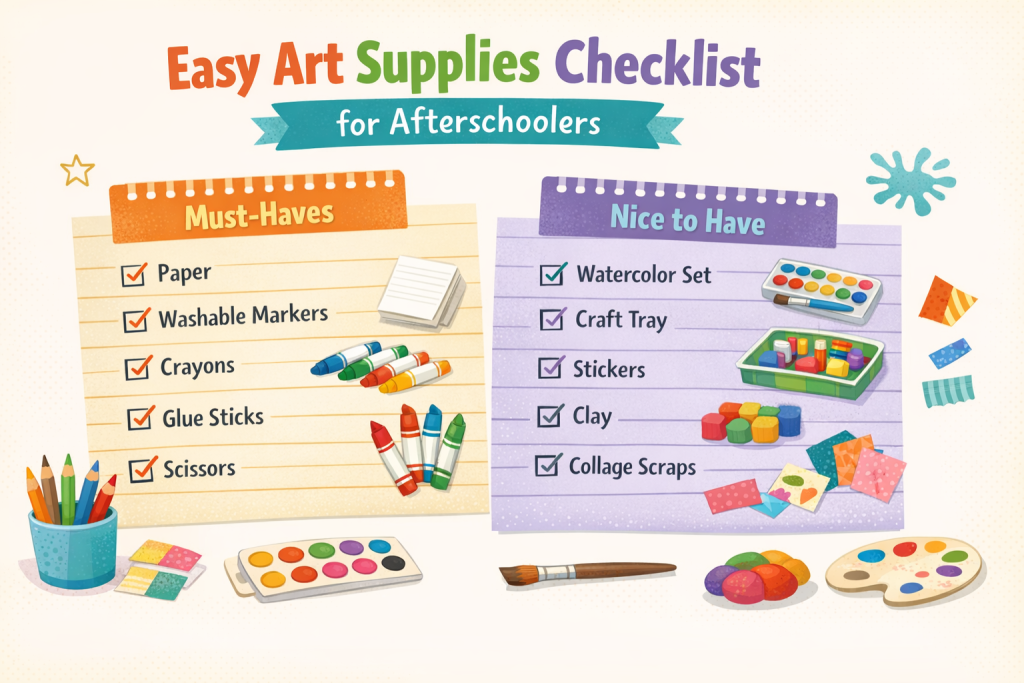
Best art supplies for afterschoolers
Crayola Inspiration Art Case Coloring Set – Tie-Dye (140ct)
Short description: A portable starter kit that covers a lot of ground without making you hunt for missing supplies.
Features: 64 crayons, 40 washable markers, 20 short colored pencils, 15 large sheets, plus a handled case with compartments and latches.
Who it’s for: Great for kids who like variety and for parents who want one grab-and-go option for travel, homework breaks, and rainy-day art.
Crayola Ultra Clean Washable Markers (40ct)
Short description: The classic marker set that earns its keep because it is colorful, versatile, and washable.
Features: 40 colors, non-toxic ink, and the big selling point: it washes from skin, most washable clothing, and many household surfaces.
Who it’s for: Ideal for younger kids, busy weeknights, and any parent who wants fewer “why is the couch green?” moments.
Play-Doh Modeling Compound 36-Pack Case of Colors
Short description: Not paper-based, but absolutely useful for afterschool art because some kids need to build before they can sit.
Features: 36 cans, assorted colors, non-toxic compound, and strong use cases for sensory play, color recognition, texture exploration, and shape-making.
Who it’s for: Best for tactile kids, younger siblings, and afternoons when drawing feels like too much effort.
Elmer’s Disappearing Purple School Glue Sticks, 7 Grams, 30 Count
Short description: The unsung hero of collage, paper crafts, and “I need three glue sticks right now” parenting.
Features: Goes on purple so kids can see where they applied it, dries clear, and is washable, non-toxic, and acid free.
Who it’s for: Perfect for collage bins, shared sibling use, classrooms at home, and kids who tend to over-glue everything in sight.
Faber-Castell Young Artist Learn to Paint Set
Short description: A nice beginner paint set when you want something a little more guided than loose paint cups.
Features: Five washable paint colors, ten sheets of paper, six brushes, a palette, portable case, and illustrated instructions.
Who it’s for: Great for kids who want to “learn how” as they create, and for parents who want a contained painting setup.
What research says about art and child development
The research here is encouraging, even if it does not claim that every crayon session will magically solve a rough afternoon.
One study on how drawing improves children’s mood found that drawing helped children ages 6 to 12 improve short-term mood, especially when the drawing acted as a distraction from sad feelings. The researchers described drawing as a simple, effective tool for emotion regulation and well-being in children.
A separate review of cooperative-creative play and child development summarized long-running intervention findings and reported gains in social behavior, emotional development, communication, creativity, and even aspects of cognitive development. That does not mean every art table becomes a genius factory. It does suggest that creative, cooperative play is doing more under the hood than merely “keeping kids busy.”
Put more simply: art can help kids feel better, connect better, and express more than they sometimes can with words alone.
FAQs about art activities for afterschoolers
What are the best art activities for afterschoolers who are tired?
Go with low-pressure options like coloring, sticker collage, Play-Doh, watercolor dots, or one-line drawing. Tired kids usually do better with simple invitations than complicated multi-step crafts.
How long should afterschool art time be?
In most cases, 10 to 20 minutes is enough. You are not trying to run art camp every afternoon. You are just creating a gentle reset.
What should I do if my child feels they are not good at art?
Shift the goal away from “make something good” and toward “try something interesting.” Process art, collage, and sensory art are especially helpful for perfectionist kids.
How do I keep art activities from becoming too messy?
Use washable supplies, smaller paper, trays, and a cleanup song. Also, choose one medium at a time. Markers only is very different from “here are paint, glitter, glue, feathers, and my remaining patience.”
Are art activities for afterschoolers better than screen time?
Not always in an all-or-nothing way, but they often offer a different kind of reset. Art invites creativity, movement of the hands, and emotional expression, which can be especially helpful after a structured school day.
Conclusion
The best art activities for afterschoolers are not necessarily the fanciest ones. They are the ones your child will actually return to. A marker set. A glue stick. A silly prompt. A little time to breathe and make something with their hands.
So make it simple. Make it gentle. Let the projects be weird. Let the paper be messy. Let the afternoon soften a little.
You do not need to be an art teacher. You just have to give it a chance to begin.