How To Create An Educational and Fun Farm Sensory Bin
We may earn a commission for purchases made using our links. Please see our disclosure to learn more.
If you’ve ever watched a kid dump a whole basket of toys… then walk away to play with the box… you already understand the magic of sensory play. 😅
A Farm Sensory Bin is one of those rare activities that feels easy for you and huge for them. It’s hands-on, screen-free, and somehow keeps little fingers busy while their brains quietly do backflips—sorting, storytelling, problem-solving, and practicing fine motor skills without a single worksheet in sight.
You’re going to learn how to set up a Farm Sensory Bin that actually works (safe, not stressful, and not a “Pinterest or bust” situation). We’ll cover fillers, themes, simple learning add-ons, cleanup tricks, and a few Amazon picks if you want to make it even easier.
Affiliate disclosure: This post may include affiliate links, meaning I may earn a small commission at no extra cost to you.
What a Farm Sensory Bin Is (and why kids love it)
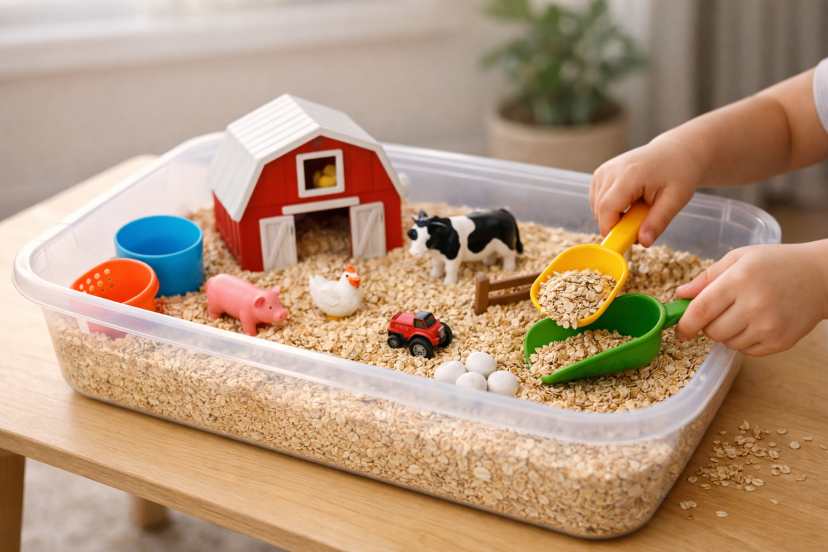
Think of a Farm Sensory Bin like a tiny “open-ended play buffet.” You give a base (like rice, oats, or sand), add a few farm animals and props, and your child does the rest.
Some kids will run it like a serious farm operation: “The cow needs food. The pig is escaping. Emergency fence repair!” Others will calmly scoop and pour for ten minutes straight like they’re doing mindful meditation… with beans.
And the best part? You can make it super simple. A Farm Sensory Bin can be:
- a plastic bin + dry filler + a handful of animals
- OR a full themed setup with barns, fences, and “eggs” to collect
Both count. Both are valuable.
Why a Farm Sensory Bin Feels Like “Play”… but Teaches So Much
A good Farm Sensory Bin hits that sweet spot: fun now, skills later.
Here’s what’s quietly happening while your child is “just playing”:
- Fine motor strength (pinching, grabbing, pouring)
- Hand-eye coordination (aiming scoops into cups, moving tiny animals)
- Language growth (animal names, sounds, story phrases)
- Early math (counting eggs, sorting animals, comparing sizes)
- Self-regulation (steady sensory input can be calming)
It’s like giving their brain a mini gym… but the equipment is a spoon and a sheep.
Safety First: Age-by-Age + Taste-Safe Notes
Let’s keep this fun and worry-free.
For babies and young toddlers (under 3)
- Choose taste-safe fillers (oats, crushed cereal, cooked pasta, chia “mud,” yogurt + cocoa, etc.)
- Avoid small pieces that could be a choking risk
- Keep it supervised and short
For ages 3–5
- You can use rice/beans if your child isn’t mouthing materials
- Add tools like tweezers and scoops for extra fine motor work
- Keep props sturdy (no fragile mini parts)
For ages 5+
- Introduce simple challenges (“Can you build a fence that holds all the animals?”)
- Add early STEM (ramps, bridges, sorting rules)
- Let them help set it up—and clean it up (yep, it’s possible)
The Quick Supply List (Mostly Stuff You Already Own)
Before you buy anything, check your kitchen drawers. Seriously.
Core basics:
- A bin, tray, or shallow storage container
- A sensory base (rice, oats, beans, kinetic sand, etc.)
- Farm animals (plastic figures, wooden animals, even pictures laminated)
- Scoops/cups/spoons (measuring cups are perfect)
- A towel or mat underneath (future-you will be grateful)
Optional “fun boosters”:
- Painter’s tape (to mark “pens” or “fields” on the bin bottom)
- Cardboard scraps (barn walls, roads)
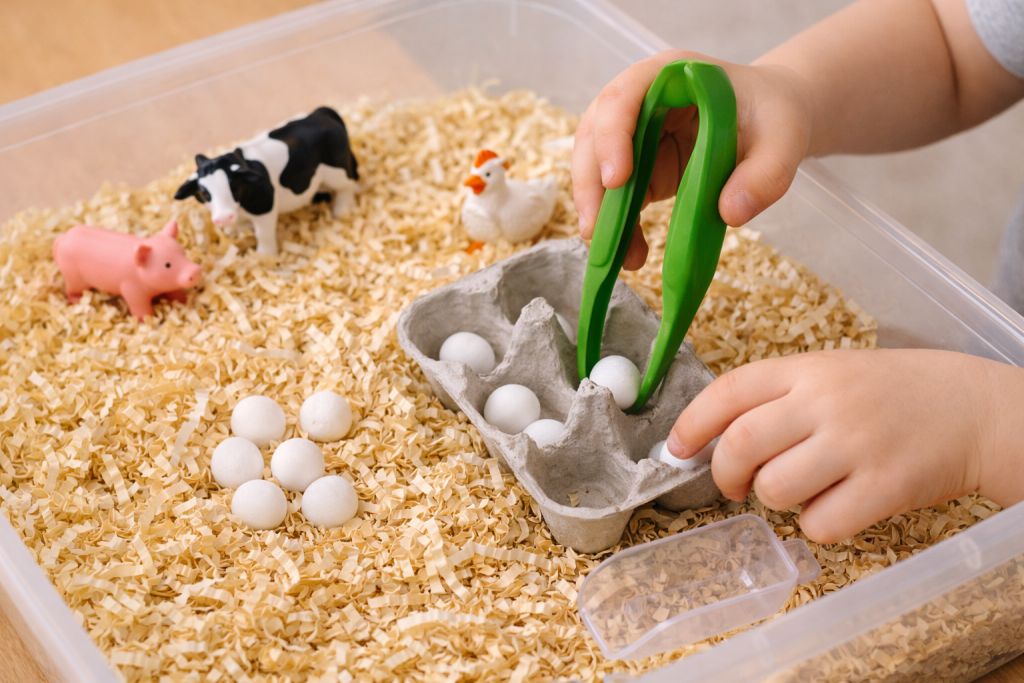
- Egg carton (instant “egg collecting” station)
Choose Your Base: Rice, Beans, Oats, Sand, “Mud” & More
Your base decides the whole vibe. Here are easy options:
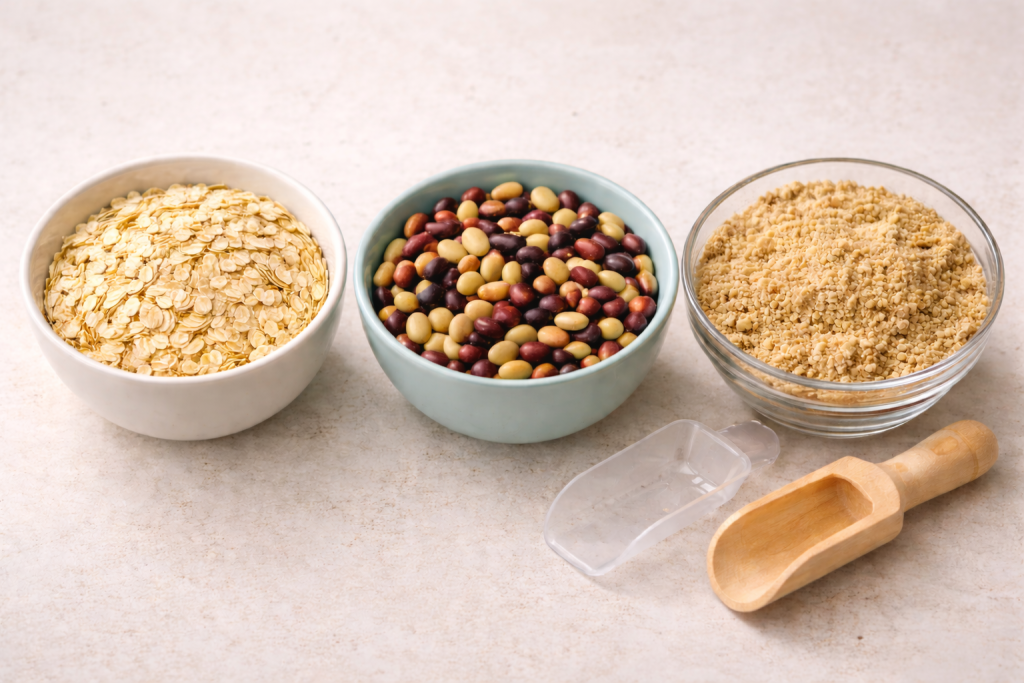
- Rice (classic): great for scooping and pouring, loud but satisfying
- Dry beans/lentils: heavier, less splashy, excellent for sorting
- Oats: softer, more taste-safe-ish, easy cleanup
- Cornmeal: “feed” texture, fun for farm scenes
- Kinetic sand: calmer, less scatter, amazing for building
- Shredded paper: “hay” look, very low stress
- Taste-safe “mud” (for supervised play): yogurt + cocoa powder, or mashed sweet potato + cinnamon
Quick tip: If you’re unsure, start with oats. They’re forgiving. Like the sweatpants of sensory bins.
Farm Animals & Props That Invite Story Play
The animals are what turn this from “scooping practice” into a whole little world.
Add a mix like:
- cow, horse, pig, sheep, chicken, dog
- a farmer figure (or a LEGO person who has been promoted to “farmer”)
- fences, a mini barn, small rocks, craft sticks, or fake grass
“Loose parts” that work beautifully
- pom-poms = “feed” or “apples”
- brown pipe cleaners = “worms”
- white beads = “eggs”
- cloth scraps = “blankets” for the animals
If your child is into vehicles, toss in a small tractor. If they’re into pretend play, add a tiny bucket and call it “feeding time.”
5-Minute Setup: A No-Overthink Recipe
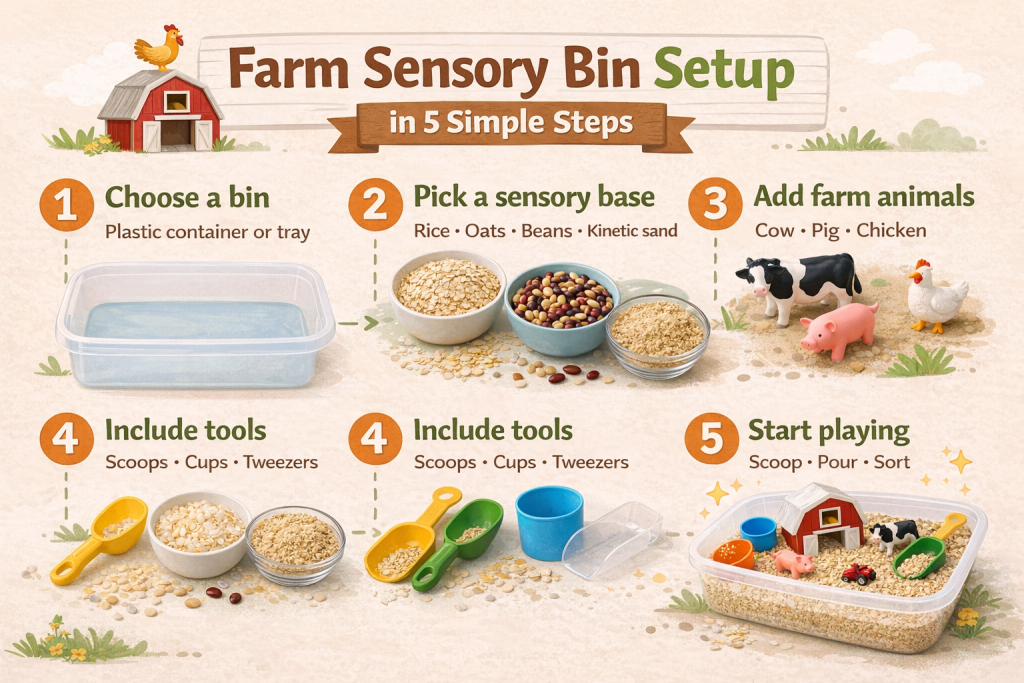
Here’s a simple formula you can repeat anytime:
- Put a towel/mat down
- Add 2–4 cups of your base
- Drop in animals + 2–3 props
- Add 2 tools (scoop + cup)
- Say: “Want to make a farm?”
That’s it.
If you want to make it feel extra special without extra work, add one “mission”:
- “Can you find all the eggs?”
- “Can you make a pen for the pigs?”
- “Can you feed each animal?”
Kids love a tiny purpose.
6 Farm Sensory Bin Themes Kids Replay (E-I-E-I-Oh yes)
If you want variety without buying new stuff, rotate themes:
- Feeding Time Farm – pom-poms as feed, cups as troughs
- Chicken Coop Egg Hunt – beads in an egg carton
- Harvest Field – dried corn + “vegetables” (colored buttons/pompoms)
- Mud & Puddles – kinetic sand + blue glass gems (supervised)
- Barn Builder – craft sticks + cardboard barn pieces
- Vet Visit – band-aids, cotton balls, a “check-up station”
One bin. New story every time. Like rewatching a favorite show… but the child is also the director.
Fine Motor Boosters: Scooping, Pinching, Pouring
A Farm Sensory Bin is basically a fine-motor playground.
Easy fine motor “jobs” to offer
- “Move the corn to the trough.”
- “Pick up eggs with tweezers only.”
- “Pour feed into each animal’s bucket.”
- “Rescue the animals stuck in the ‘hay’.”
If your child gets frustrated
Switch the tool. Tweezers too hard? Use fingers. Fingers too messy? Use a scoop. The goal is practice, not perfection.
Math & STEM: Counting Eggs, Building Fences, Simple Ramps
You can add learning without turning into a classroom.
Try:
- Counting: “How many chickens do we have?”
- Sorting: big animals vs small animals, farm vs “not farm”
- Patterns: cow-pig-cow-pig line-up
- Measuring: “Which cup holds more feed?”
- Building: fences from craft sticks, barns from blocks
- Simple ramps: cardboard ramp into a “silo” cup
Kids learn best when the math is attached to a story. “We need 3 eggs for breakfast!” lands way better than “Count to 3.”
Language & Social Skills: Farm Sounds, Roles, and Tiny Dialogues
Farm play is a language booster disguised as animal chaos.
Quick prompts that spark talk
- “What does the cow want today?”
- “Where does the horse sleep?”
- “Uh oh—who escaped the fence?”
- “Can you tell me a story about this farm?”
If you have multiple kids (or cousins over), assign roles:
- farmer, vet, animal helper, fence builder
Even shy kids often talk more when they’re speaking “as” a character.
Sensory Calm: Using Your Bin as a Reset Corner
Sometimes a Farm Sensory Bin isn’t just “activity time.” It’s a reset button.
If your child is overwhelmed, tired, or coming off a big feeling, steady sensory play can help them regroup. Not because it magically fixes emotions—but because it gives their body something rhythmic and predictable (scoop… pour… scoop… pour).
If that’s your goal, choose:
- heavier bases (beans, kinetic sand)
- quiet tools (cups, scoops—not loud rice in a metal bowl)
- simple setup (fewer props, less decision-making)
And keep your voice soft. This is “calm farm,” not “county fair.”
Cleanup, Storage, and “Please Don’t Spill” Hacks
Let’s talk about the part nobody puts in the cute photos.
Make cleanup easier before you start
- Put the bin on a towel, shower curtain liner, or large tray
- Keep a dustpan or handheld vacuum nearby
- Use a smaller bin than you think you need (less surface area = less scatter)
The “two-minute reset”
When play is done:
- Ask your child to “put animals in the barn” (a small container)
- Scoop the base back into a jar or zip bag
- Wipe the bin and you’re done
Also—personal confession—I once added glitter to a sensory bin. It’s been three years. I still find it. Learn from my choices.
Rotate Like a Pro: Refresh the Bin for Free
Rotation keeps sensory play interesting without draining your wallet.
A simple rhythm:
- Week 1: rice + animals + scoops
- Week 2: oats + eggs + tweezers
- Week 3: kinetic sand + barn builder theme
- Week 4: shredded paper “hay” + vet visit
Store your animals and props in one zip bag labeled “Farm.” Then when you’re tired, you can still pull it off like a wizard.
Product Picks: 5 Farm Sensory Bin Helpers
1) Learning Resources Helping Hands Sensory Scoops (Set of 4)
Short description: Kid-sized scoops designed for pouring, sifting, and grabbing—perfect for sensory bins.
Features: easy-grip handles, different scoop styles, durable plastic
Best for: toddlers/preschoolers who love pouring and transferring
2) Learning Resources Jumbo Tweezers (Set of 12)
Short description: Big, easy tweezers that help kids practice pincer grasp without the “this is impossible” meltdown.
Features: chunky grip, classroom-friendly set size
Best for: counting games, “egg rescue,” sorting tiny pieces
3) Kinetic Sand, 2lb Resealable Bag
Short description: A calmer, less-scatter sensory base that still feels rich and satisfying.
Features: moldable texture, resealable storage, doesn’t dry out
Best for: kids who want “mud” play without the real mud
4) IRIS USA 12 Qt Plastic Storage Bins with Lids (Sensory Bin Size)
Short description: Clear, lidded bins that work as your base and your storage.
Features: stackable, see-through, secure lid
Best for: keeping sensory materials contained and easy to pack away
5) Schleich Farm World Animals Assorted Set (Realistic Figures)
Short description: Detailed farm animals that instantly upgrade pretend play.
Features: realistic textures, sturdy build, great for storytelling
Best for: preschoolers and early elementary kids who love imaginative scenes
Research-Backed Benefits + Farm Sensory Bin FAQs
Here’s the “credibility layer” behind why sensory bins are more than just cute messes.
A major American Academy of Pediatrics clinical report on play (2018) highlights how play supports things like executive function, language, social development, and emotional health—basically, the exact skills you’re feeding when you set up playful, hands-on activities.
Also, a 2024 study of 115 preschool children found nature-based practices showed potential to support self-regulation (including “hot” executive function). A farm-themed sensory setup isn’t outdoor nature, but it can bring calming nature-adjacent themes and steady tactile play into your day—especially helpful for kids who need a gentler reset.
And if you want a fun extension that pairs beautifully with farm play (think “bubbles over the pasture”), this kid-safe homemade bubble solution recipe is an easy add-on for outdoor movement after bin time.
FAQs
How do you make a taste-safe Farm Sensory Bin for babies?
Use edible bases like oats, crushed cereal, cooked pasta, or chia “mud.” Skip small props, supervise closely, and keep sessions short and cheerful.
What are some good alternatives to rice for a Farm Sensory Bin?
Oats, lentils, cornmeal, shredded paper “hay,” kinetic sand, or dry beans all work. Pick based on your child’s age and how much mess your soul can handle today.
How long should a toddler play with a sensory bin?
Usually 10–20 minutes is plenty. Stop while it’s still fun, not when everyone’s tired and the floor looks like a grain silo exploded.
How do I keep my Farm Sensory Bin from becoming a huge mess?
Go smaller than you think, put a towel under it, limit the base amount, and use lidded storage. A quick “animals in the barn” cleanup routine helps a lot.
What learning activities can I add to a Farm Sensory Bin for preschoolers?
Try counting eggs, sorting animals by size, building fences with craft sticks, or making “feed recipes” (two scoops oats + one scoop beans). It’s playful learning that doesn’t feel like homework.
When you’re ready, start tiny. One bin, one base, a few animals. That’s enough to create a little farm world where your kid can practice skills, process feelings, and feel capable.
And honestly? On a busy day, “capable and calm” is a pretty great win.