
Emotional Regulation For Parents: How To Stay Calm When Your Kids Aren’t

We may earn a commission for purchases made using our links. Please see our disclosure to learn more.
Your child is screaming because the blue cup is suddenly unacceptable, and you can feel yourself getting louder too. You know shouting probably won’t help, but knowing that and staying calm are two different things.
Emotional Regulation For Parents means noticing your own stress and choosing how to respond rather than letting frustration make the decision. It doesn’t require pretending you’re never angry or allowing every behavior. It means keeping everyone safe, holding reasonable boundaries, and recovering when a difficult moment goes badly.
Below, you’ll find practical ways to interrupt the urge to yell, respond to tantrums without giving in, and build habits that make the next hard moment easier. You’ll also learn what research supports, which tools might help, and when extra support is worthwhile.
What Emotional Regulation for Parents Really Means
Emotional regulation is the ability to recognize, manage, and express feelings without being controlled by them. A regulated parent can still feel furious about a broken rule. You can say, “I won’t let you hit,” without shouting.
Your goal isn’t to make your child calm on command. It’s to stay steady enough to make a safe decision while their feelings run high. That distinction matters because children’s distress isn’t always something you can fix immediately.
Why Your Child’s Big Feelings Trigger Yours
A child’s yelling can feel urgent, disrespectful, or impossible to escape. Your heart races, your jaw tightens, and you want control. Exhaustion, sensory overload, and old experiences can intensify them.
Notice the story you tell yourself. “She’s doing this to embarrass me” creates a different response from “She’s having trouble with disappointment.” You don’t have to excuse difficult behavior to interpret it less personally. Looking for the unmet need gives you more options.
Spot the Warning Signs Before You Yell
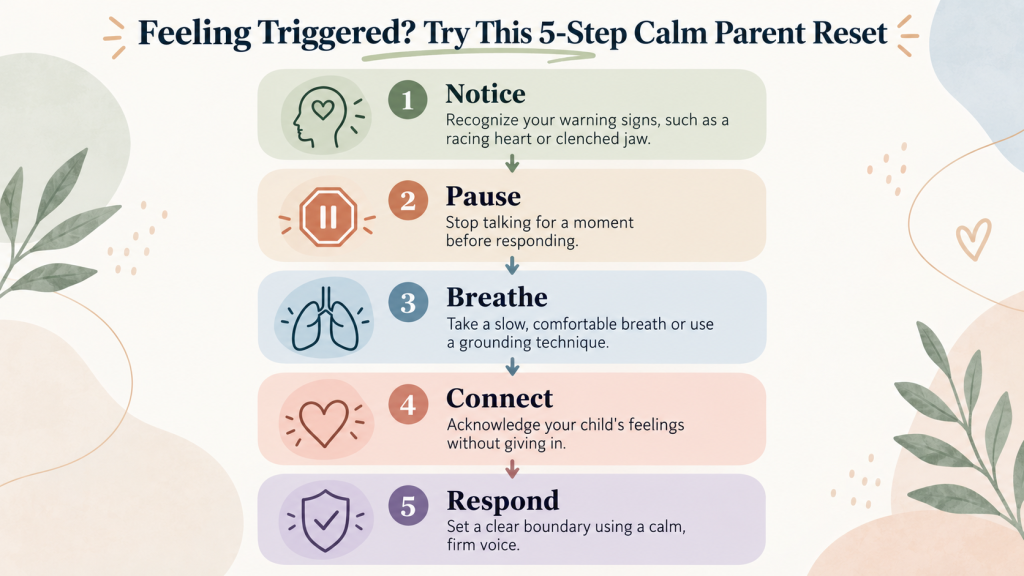
Anger often announces itself physically before you raise your voice. Your shoulders tighten, breathing becomes shallow, or you start repeating instructions faster. Use them as cues to change course.
Try a quick check-in at predictable trouble spots, such as school mornings: What am I feeling? Where do I feel it? What do I need? You might notice hunger or pressure to leave on time. Address the strain rather than demanding more patience.
Use a Simple Reset When You Feel Overwhelmed
Start with your body. Put both feet on the floor, unclench your hands, and breathe out slowly. Relax your shoulders before you speak. This creates space to avoid an impulsive response.
If you’re close to shouting, say, “I’m upset. I’m taking a moment so I can speak kindly.” Step away briefly only when your child is safe and appropriately supervised. For a baby, place them safely in their crib before taking a short pause; never shake a baby. Return as soon as you can respond safely.
What to Say When Your Child Is Having a Meltdown
During intense distress, use fewer words, not bigger explanations. One calm sentence beats a lecture. Try: “You’re disappointed. I hear you. We’re still leaving the park.”
You can offer closeness or space: “Would you like me nearby?” Don’t insist on a hug when your child pulls away. Once they’re settled, talk about what happened and practice another way to handle disappointment. For more examples of warm, direct language, explore these gentle parenting phrases that actually work.
Hold Boundaries Without Becoming Harsh
Staying calm does not mean saying yes to end the noise. Children still need clear limits. State the rule briefly: “It’s okay to be angry. It’s not okay to throw blocks. I’ll move them until you’re ready.”
Use related consequences without threats. Avoid debating while emotions are high. If someone is being hurt, intervene immediately. You can acknowledge a feeling and stop an unsafe action at the same time.
Handle the Parenting Moments That Test You Most
Morning rush: Prepare bags beforehand; give one instruction at a time.
Screen-time endings: Agree on the limit in advance, use a warning if it helps your child, and follow through without bargaining during the meltdown.
Sibling fighting: Separate children and check for injuries; hear both sides later. You don’t need to solve the entire dispute immediately.
Public tantrums: Focus first on safety, not strangers’ opinions. Move somewhere quieter if helpful.
Adjust Co-Regulation to Your Child’s Age
Co-regulation means lending a child support through your presence, voice, and predictable responses while they develop their own coping skills. Toddlers often need simple words and physical reassurance when welcomed. School-age children may benefit from choices and help naming what went wrong.
Teenagers usually need more privacy and respect for autonomy. You might say, “I can see you’re upset. We can talk after dinner.” Adjust for sensory needs, disability, or trauma.

Repair the Relationship After You Lose Your Temper
If you yell, take responsibility without asking your child to comfort you. Once you’re calm, say, “I shouted, and that was not okay. You didn’t deserve to be spoken to that way. Next time I’ll pause before answering.”
You can still address the original problem: “The rule about hitting stands.” Repair must accompany real changes in behavior. Follow an apology with a concrete plan, such as calling another caregiver when you’re approaching your limit.
Create Habits That Make Calm Responses Easier
Practice regulation when nobody is upset. Take three quiet breaths before school pickup, plan meals around predictable hunger, or agree with another adult on a handoff signal. Protect opportunities for sleep and breaks where your circumstances allow.
Record triggers, feelings, and what helped. Look for patterns rather than rating yourself as a good or bad parent. Small adjustments to schedules, noise, or household responsibilities may prevent more conflicts than another parenting script.
Know When You Need More Than Self-Help
If you regularly feel out of control, fear you might hurt your child, or find anger affecting work and relationships, seek support from a healthcare professional or mental health clinician. A pediatrician can also help assess severe, persistent, or developmentally concerning child behavior.
If you’re close to acting violently, prioritize immediate safety: put the child in a safe place, ask a trusted adult to take over, and contact emergency or crisis support if there is imminent danger. Getting assistance protects everyone.
What Research Reveals About Mindful Parenting
A 2019 randomized controlled trial published in Frontiers in Psychology studied 76 mothers with elevated parenting stress. Compared with a waitlist group, an online mindful-parenting program reduced overreactive discipline and symptoms of anxiety and depression. However, improvements in the study’s primary parenting-stress outcome were limited, and some child improvements appeared only in mothers’ reports.
That makes mindfulness a promising practice, not a guaranteed fix. The American Academy of Pediatrics’ guidance on children’s stress responses also recommends regulating first, connecting next, and discussing solutions once a child can engage. For daily life, that means practicing pauses between conflicts and saving the problem-solving conversation for later.
5 Helpful Products for Emotional Regulation for Parents
No purchase replaces rest, support, or consistent practice. These five resources address different friction points, from reactive habits to noisy environments.
Raising Good Humans: A Mindful Guide to Breaking the Cycle of Reactive Parenting and Raising Kind, Confident Kids
Best for: Parents wanting a structured introduction to mindfulness.
Hunter Clarke-Fields combines mindful awareness with approaches to communicating and responding more intentionally. Its exercises encourage parents to notice their triggers before an argument takes over, making it useful for building a repeatable practice. It requires time to read and reflect; it won’t supply an instant solution when your child is already melting down.
Good Inside: A Guide to Becoming the Parent You Want to Be
Best for: Parents who struggle with limits, guilt, and reconnection.
Clinical psychologist Becky Kennedy explores how to stay connected with children while taking charge of difficult situations. Examples covering tantrums, sibling conflict, and repair make the book helpful when you need language for emotionally charged moments. Its relationship-focused approach still takes judgment and repetition; it isn’t a script that guarantees cooperation.
How to Stop Losing Your Sh*t with Your Kids: A Practical Guide to Becoming a Calmer, Happier Parent
Best for: Parents who frequently snap or raise their voices.
Carla Naumburg focuses directly on parental triggers, stress, and the habits that contribute to outbursts. The practical, conversational approach may appeal to readers who want to understand their reactions without dense theory. Because it asks you to examine your own patterns, the exercises work best when you’re willing to reflect between conflicts.
Time Timer MOD – Home Edition Rainbow Wheel
Best for: Families whose transitions regularly become arguments.
This visual timer shows a 60-minute countdown in colorful five-minute segments, helping children see time passing before an activity ends. It can take some pressure off repeated verbal reminders during play or screen transitions. It needs an AA battery and cannot replace advance explanations, empathy, or consistent expectations if a child resists stopping.
Loop Engage 2 Ear Plugs – Everyday Noise Relief with Clear Speech
Best for: Parents bothered by background noise but needing conversation.
These reusable earplugs filter background sound while prioritizing speech clarity, with four silicone tip sizes to adjust fit. They may make busy household noise feel more manageable for some adults, but they don’t treat emotional dysregulation or eliminate distress. Use caution when responsible for children’s safety; check that you can still hear calls and urgent sounds.

Frequently Asked Questions About Emotional Regulation for Parents
How can I stop yelling at my kids when I’m angry?
Notice your earliest physical warning sign and interrupt the sequence before you speak. Exhale, lower your voice, and give one short instruction instead of several. If you need to step away, ensure your child is safe first. Afterward, identify what made the situation especially difficult so you can plan for the next occurrence.
Can I validate my child’s feelings and still say no?
Yes. Validation acknowledges an emotion; it does not require agreeing to a request or permitting unsafe behavior. Try, “You’re angry that playtime is over. It’s okay to be upset, and we’re leaving now.” Keep the limit consistent and offer a reasonable choice, such as walking beside you or holding your hand, where appropriate.
How much time does it usually take to become a calmer parent?
There is no dependable timeline because your stress, available support, and child’s needs all affect progress. Instead of judging success by never feeling angry, notice whether you recognize triggers earlier, recover faster, and repair more reliably. If severe anger persists despite practice, professional guidance can help identify additional strategies and underlying stressors.
What should I do if breathing exercises increase my anxiety?
You don’t have to use breathing as your main calming strategy. Some people prefer grounding through their feet, noticing objects in the room, stretching, or splashing cool water on their hands. Choose a technique that helps you feel oriented and able to respond safely. If body-focused exercises consistently intensify distress, discuss alternatives with a qualified professional.
Does emotional regulation mean ignoring tantrums?
No. Regulating yourself means choosing an appropriate response rather than reacting automatically. You may stay nearby, offer comfort, and maintain a boundary without lecturing. Never ignore injury risks, hitting, or a child who needs immediate help. If tantrums are unusually intense, frequent, or concerning for your child’s development, speak with their pediatrician.
Final Thoughts: Start With One Reliable Pause
Emotional Regulation For Parents is less about remaining perfectly serene and more about what you do between feeling overwhelmed and responding. Start by learning your body’s warning signs, choose one reset you can use safely, and practice a simple phrase that pairs empathy with a clear limit.
If your biggest challenge is reactive shouting, Raising Good Humans offers structured reflection; if transitions create repeated battles, a visual timer may support a more predictable routine. Neither replaces support from other adults or professional care when needed.
The most useful first step is small: decide now what you will say and do when you notice anger rising. Practice that pause during calm moments so it is easier to reach for when your child needs you most.