Crafts for Preschoolers: Easy Ideas, Supplies, and Safety Tips
We may earn a commission for purchases made using our links. Please see our disclosure to learn more.
Crafts for preschoolers work best when they are simple enough to start quickly but open-ended enough for children to make their own choices. At ages three to five, kids are still learning how to control scissors, squeeze glue, hold markers, and handle frustration when a project changes. That is part of the value of creative play.
This guide shares practical crafts for preschoolers, age-appropriate setup tips, useful supplies, safety guidance, and research-backed context. The aim is not to create a flawless project. It is to give your child an enjoyable chance to create, experiment, and make decisions with materials they can manage.
Why Crafts for Preschoolers Are Worth the Mess
A paper plate with crooked eyes may involve planning, choosing colors, gripping tools, solving small problems, and explaining an idea. Creative activities also give children low-pressure choices. A cardboard tube can become a rocket, dog, or nameless creature.
Keep expectations realistic: one child may work briefly while another returns later. Both approaches are fine, because the creative process matters more than producing something that looks like an adult-made example.
How to Choose Age-Appropriate Crafts for Preschoolers
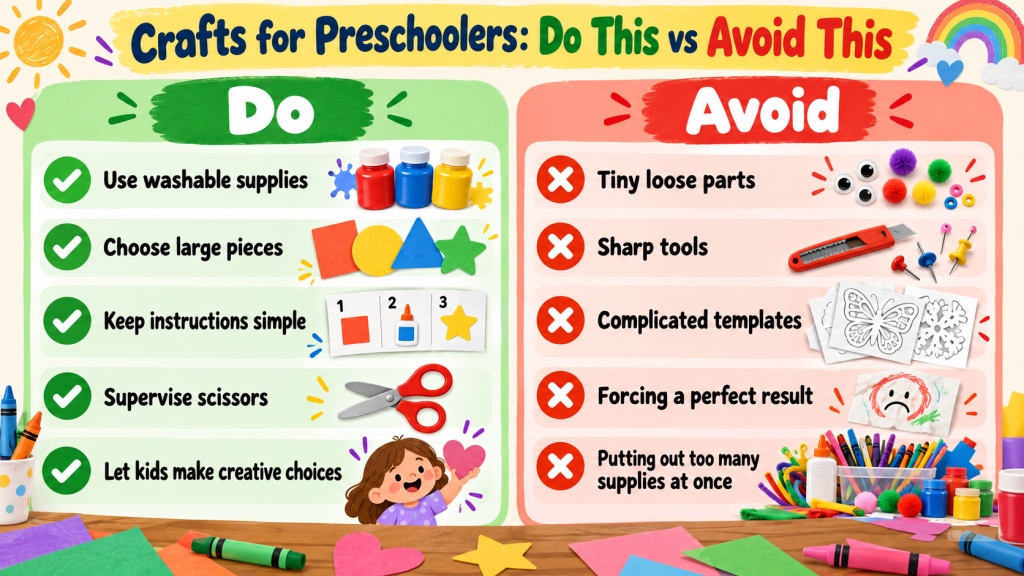
Start with what the child can manage. Large paper, broad markers, glue sticks, chunky brushes, stickers, and simple shapes are often easier than tiny decorations or complicated templates.
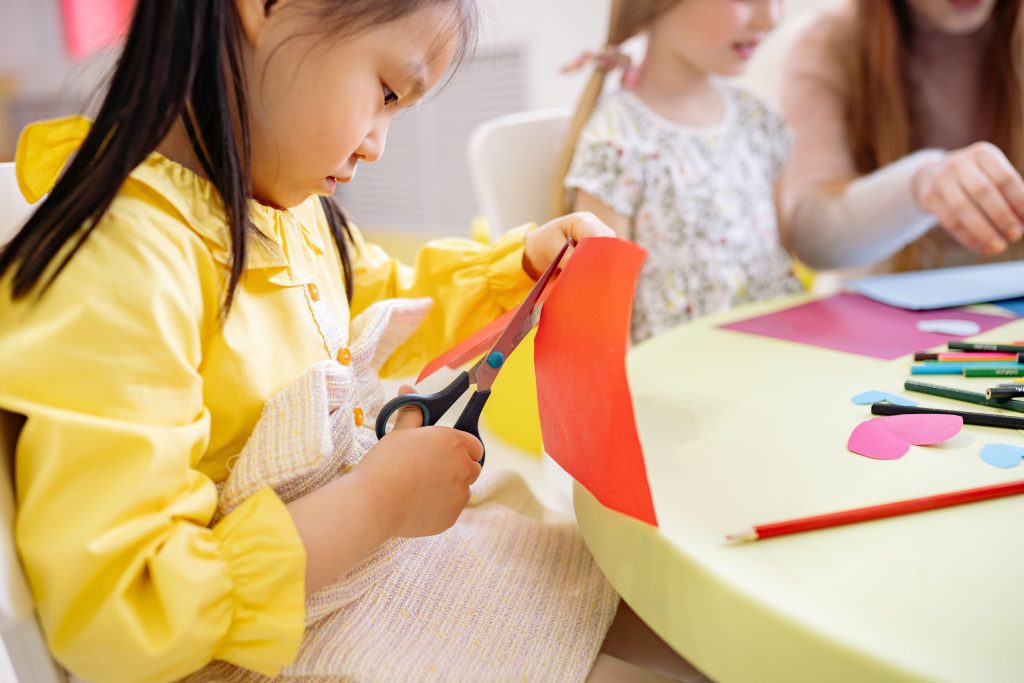
For younger preschoolers, pre-cutting difficult shapes can reduce frustration. Older children may enjoy cutting simple lines with age-appropriate scissors and close supervision.
The project should feel achievable without becoming predictable. Give enough support to get started, then leave space for the child to change the plan.
Set Up a Craft Space That Makes Cleanup Easier
A washable mat, old tray, or flattened cardboard box can define the work area and catch scraps. Put only the materials needed for that activity within reach and keep refills with the adult.
For paint, pour small amounts. For collage work, use a shallow bowl for paper pieces. ParentLoom’s art activity for nursery guide also shares low-mess setup ideas that can help when younger siblings join crafts for preschoolers.
Make Paper Plate Faces With Big Features
Paper plates make an easy base because they are sturdy and already face-shaped. Offer crayons or washable markers, then add large paper ears, yarn hair, or tissue-paper strips.
Instead of showing one finished example, ask, “Who is this?” or “How does this face feel?” The child may create a family member, animal, or monster.
Avoid tiny craft eyes or beads when younger children can reach the area. Drawn eyes work just as well and keep the activity easier to supervise.
Build a Nature Collage From a Short Outdoor Walk
Collect a few safe, dry items such as fallen leaves, grass, flower petals, or flat bark. Back indoors, let your child arrange them on sturdy paper before gluing.
Children can sort the collection by color, size, or texture before creating their picture. The finished collage can represent something recognizable or simply become an arrangement they like.
Skip unknown plants, berries, mushrooms, sharp objects, and treated materials, and wash hands afterward.
Try Sponge Painting Instead of a Paintbrush
Cut clean household sponges into large shapes, place a little washable paint on a tray, and let children press, twist, drag, or overlap the prints.
Sponge painting works well for children still developing brush control because one press makes a clear mark. It also makes simple pattern-making easy.
Start with two or three colors. A smaller palette is easier to manage and still allows children to notice what happens when colors overlap or mix.
Turn Paper Bags Into Storytelling Puppets
A plain paper lunch bag can become almost any character. Draw a face near the flap, add paper ears or clothing, and use yarn or wide paper strips for hair.
Once it dries, ask the puppet its name, favorite food, or biggest problem. This turns crafts for preschoolers into pretend play and can suit children who prefer stories to detailed art.
Two children can also make characters and invent a short scene together.
Make Cardboard Tube Creatures From Recycling
Clean cardboard tubes can become animals, robots, insects, or fantasy creatures. Children can color the tube, glue on large paper shapes, or wrap it with colored paper.
Adults should inspect recycled materials first. Avoid anything with residue, staples, sharp edges, or chemical contamination.
Keep small decorations away from children who may mouth them. Large paper shapes, marker details, and yarn can create plenty of personality without tiny accessories.
Create Cut-and-Paste Shape Pictures
Offer large squares, circles, triangles, and rectangles, then let your child combine them into a house, vehicle, person, animal, or abstract design.
Children who are ready can cut some shapes themselves, beginning with short straight lines. If cutting becomes frustrating, provide pre-cut pieces and focus on arranging and gluing.
That adjustment keeps the project enjoyable without taking away the child’s control over the finished picture.
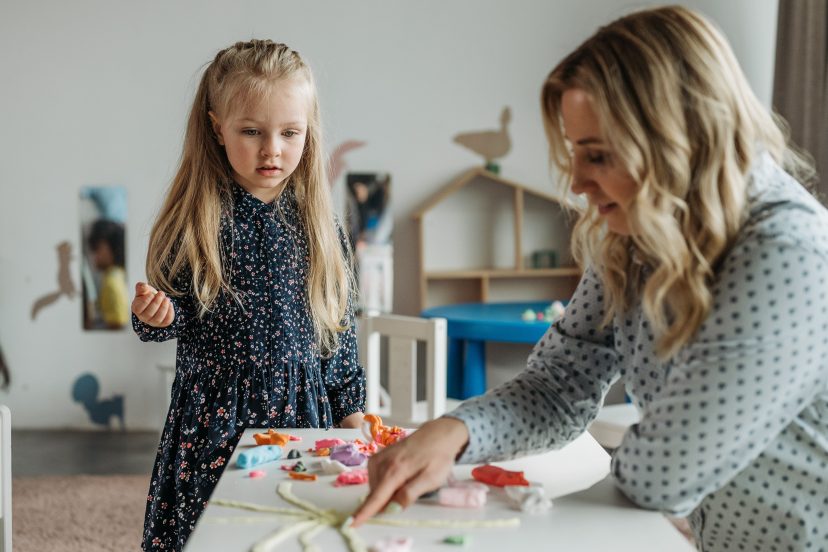
Sculpt With Modeling Dough and Loose Tools
Modeling material needs little preparation. Add a rolling pin, craft stick, plastic cutter, or blunt child-safe tool and let your child squeeze, flatten, roll, pinch, and combine shapes.
Follow the product’s storage directions, and decide beforehand whether an air-dry creation will be saved or reshaped later.
Open-ended modeling works particularly well when children want to keep changing their idea instead of following a fixed sequence of steps.
How to Adapt Crafts for Different Preschool Skill Levels
Change the amount of adult preparation without taking over the creative decisions. For a younger child, cut shapes, open glue, and offer fewer materials. For an older child, add simple planning, cutting, patterns, or storytelling.
If too many choices feel overwhelming, offer two colors instead of ten. Larger tools can also make grasping and manipulating materials easier.
Unless safety is involved, resist fixing unusual colors, crooked placement, or unexpected designs. Those choices are part of the child’s work.
Recommended Products for Crafts for Preschoolers
These picks cover washable color, glue, cutting, dot painting, and paper while serving slightly different kinds of projects.
| Product | Best for | Useful feature |
| Crayola Washable Kid’s Paint, Assorted Colors, 2 Fl Oz (Pack of 6), 54-1204 | Basic painting | Six washable colors |
| Crayola Broad Line Markers (12 Count), Washable Markers for Kids, Assorted Colors | Everyday drawing | Broad conical tips |
| Elmer’s Disappearing Purple School Glue Sticks, Washable, 6 Grams, 12 Count | Collage work | Purple application that dries clear |
| Fiskars 5-Inch Kids Blunt-Tip Safety Scissors, Ages 4-7, Pink | Older preschoolers | Child-size design and blunt tip |
| Do A Dot Art! Markers 6-Pack Rainbow Washable Paint Markers | Low-mess stamping | Sponge-tip daubers |
| Crayola Construction Paper in Colors of The World, 48 Sheets, 8.5 x 11 Inches, 24 Colors | Collage and cutting | 24 assorted colors |
Crayola Washable Kid’s Paint, Assorted Colors, 2 Fl Oz (Pack of 6), 54-1204
Best for: Simple brush, sponge, and printing projects
The set includes six 2-ounce colors and is intended for children ages three and older. Its washable formula is designed to clean from skin and most washable clothing, making it practical for frequent crafts for preschoolers. Paint still needs table, floor, and clothing protection during enthusiastic projects.
Crayola Broad Line Markers (12 Count), Washable Markers for Kids, Assorted Colors
Best for: Everyday drawing and quick setup
These markers are intended for ages three and up and use conical tips for broad or narrower marks. The washable formula suits drawing, outlining, and coloring without a complicated setup. They are less suited to very fine detail, but that is rarely a problem for preschool art.
Elmer’s Disappearing Purple School Glue Sticks, Washable, 6 Grams, 12 Count
Best for: Paper collages and learning where glue goes
The glue applies purple so children can see where it is going, then dries clear. A stick format is easier to control than liquid glue for many paper crafts and helps limit puddles. Heavy cardboard or thick decorations may still need a stronger adhesive handled by an adult.
Fiskars 5-Inch Kids Blunt-Tip Safety Scissors, Ages 4-7, Pink
Best for: Preschoolers age four and up practicing cutting
These child-size scissors use blunt tips and handles designed for smaller hands. They fit straight lines and simple paper shapes better than adult scissors. Check the age guidance for the exact version, supervise cutting closely, and store scissors away when the activity ends.
Do A Dot Art! Markers 6-Pack Rainbow Washable Paint Markers
Best for: Children who enjoy paint but dislike brushes
Six colors come in easy-grip bottles with sponge dauber tips for dots, patterns, letters, and prints without open paint cups. The set is designed for children age three and older. The large dots are manageable, although these specialized tips cannot replace ordinary markers for detailed drawing.
Crayola Construction Paper in Colors of The World, 48 Sheets, 8.5 x 11 Inches, 24 Colors
Best for: People, collage pieces, backgrounds, and cutting practice
This pack includes 48 sheets in 24 colors designed to represent a range of skin tones. It gives children more options for faces, families, and self-portraits while still working as ordinary construction paper. Heavy wet paint may cause paper to curl.
What Research Says About Crafts for Preschoolers
Evidence does not show that one specific craft produces a guaranteed developmental benefit. Instead, research and professional guidance support developmentally appropriate, playful experiences that involve choice, movement, communication, and problem-solving.
The American Academy of Pediatrics’ 2018 The Power of Play clinical report, reaffirmed in January 2025, links developmentally appropriate play with social-emotional, cognitive, language, and self-regulation skills.
The National Association for the Education of Young Children recommends process-focused art experiences that emphasize choice and experimentation rather than copying one model.
HealthyChildren.org’s preschool hand and finger skills guidance also notes that preschoolers increasingly use scissors, clay, paint, paper, and crayons as their hand skills develop.
For safety, the U.S. Consumer Product Safety Commission advises choosing children’s art materials, following labels, supervising use, and keeping age-inappropriate small parts and hazardous materials away from young children. CPSC art-material guidance
FAQs About Crafts for Preschoolers
What are the easiest crafts for preschoolers to start with?
Start with activities that have only one or two actions: sponge painting, sticker collages, paper plate faces, dot-marker pictures, or large-shape gluing. These projects give children a quick visual result without requiring precise cutting or complicated instructions. Keep the first setup small, then add another material if the child stays interested.
How much time should a preschool craft activity take?
There is no required length. Some preschoolers may be satisfied after five or ten minutes, while others may work for half an hour or return later. It is usually better to stop while the activity still feels enjoyable than to insist on finishing every planned step. Attention also changes with sleep, hunger, novelty, and interest.
Should parents help with crafts for preschoolers?
Yes, but aim to help with access and safety rather than controlling the final result. An adult can cut difficult pieces, steady a container, demonstrate a tool, or manage materials the child cannot safely handle. Once the child can participate safely, let them choose colors, placement, characters, and details.
What craft supplies should I avoid with preschoolers?
Avoid supplies that are not labeled for the child’s age, and be especially cautious with small loose parts, sharp tools, solvent-based products, aerosols, hot glue, and unknown recycled containers. Water beads should also be kept away from young children because swallowed beads can expand and cause serious internal injuries.
How can I do crafts in a small apartment without creating a mess?
For small-space crafts for preschoolers, use a tray, washable mat, or flattened cardboard box as the entire craft zone. Choose glue sticks, markers, dot daubers, stickers, or small amounts of washable paint instead of glitter and large paint containers. Store supplies in one lidded bin and bring out only what you need.
Final Thoughts on Crafts for Preschoolers
The best crafts for preschoolers are not the most elaborate ones. They are the projects children can understand, touch, change, and proudly call their own. A paper plate, a few shapes, washable paint, or modeling material can be enough when the adult keeps the setup manageable and leaves room for imagination.
Choose supplies according to age, supervise cutting and small pieces, and favor washable, child-labeled materials. A starter kit with markers, glue sticks, paper, paint, and age-appropriate scissors can cover most of the ideas here.
Most importantly, treat the finished craft as evidence of a process rather than a performance. Set out one simple invitation, follow your child’s lead, and let the project become whatever they decide it should be.