Toddler Room Transition: 7 Signs They’re Ready for a Big Kid Bed
We may earn a commission for purchases made using our links. Please see our disclosure to learn more.
You know that moment you glance at the crib and think, “Wow, this is starting to look… small”? That’s the spark of your toddler room transition. It’s exciting, a little nerve-wracking, and absolutely doable. In this guide, we’ll walk through clear signs your child is ready, how to set up a safe, soothing room, and the simple routines that make the switch stick. We’ll also share research-backed tips and a few Amazon picks parents love.
Heads-up: Product links below may be affiliate links; they won’t change your price.
What “Toddler Room Transition” Really Means
When people say “toddler room transition,” they usually mean moving from a crib to a toddler or twin bed and refreshing the space for big-kid independence—think lower shelves, soft lighting, and fewer hazards. You’re not redesigning a showroom; you’re creating a calm, toddler-proof sleep zone that supports better nights and easier mornings.
Helpful idea: Frame it as an upgrade (“Your big kid bed!”), not a loss (“No more crib”). That small language shift eases big feelings.
7 Signs Your Little One Is Set for a Big-Kid Bed
- Climbing attempts—they’re practicing mountaineering at nap time. (The AAP flags 35 inches/89 cm height as a common tipping point for crib escapes.)
- Potty-training at night—getting up to go becomes simpler out of a bed than over crib rails.
- They ask for a bed—kids love ownership. An enthusiastic “bed!” is a green light.
- Sleep disruptions caused by crib limits—some toddlers fight the crib more than sleep.
- Consistent bedtime routine—when your rhythm is steady, a bed switch lands smoother.
- They’re too long for the crib—knees and rails shouldn’t be best friends.
- You need the crib for a new baby—just plan the timing so your toddler doesn’t feel “replaced.”
Safety First: What the AAP Recommends
The American Academy of Pediatrics suggests moving children out of the crib once they’re about 35 inches (89 cm) tall or when the rail drops below chest level—because climbs (and falls) spike at that point. Use a low bed, consider guardrails that meet current standards, and keep cords, heavy furniture, and strangulation hazards out of reach.

Crib-to-Bed Timeline: Typical Ages & Temperaments
Most toddlers transition somewhere between 18–36 months. Early movers tend to be nimble climbers or potty-training pros; later movers often love the cozy, contained feel of a crib. There’s no trophy for going first—pick the window that matches your child’s development and your family’s season.
Quick gut-check: If they’re safe in the crib and sleeping well, you can wait. If they’re climbing or distressed, it’s time.
Toddler Bed vs. Twin Bed: Which One Fits Your Life?
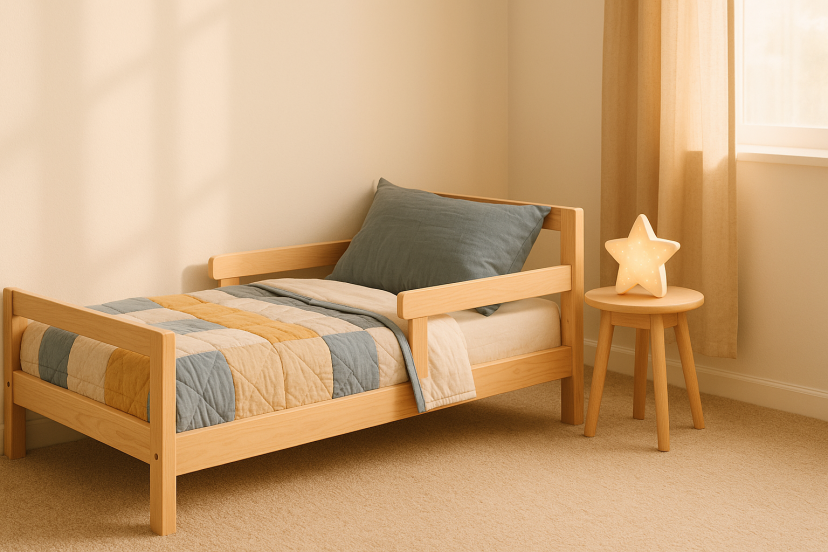
- Toddler bed (uses crib mattress): Low, cozy, and familiar. Great for small rooms and littles who like snug spaces. Often includes built-in rails.
- Twin bed (standard twin mattress): Longer runway (you’ll use it for years). Pair with bed rails or bumpers during the toddler stage.
Ask yourself:
- How small is the room?
- Do we want this bed to last into early grade school?
- Do we travel often (so portable bumpers/rails help)?
Mattress & Bedding: Firmness, Breathability, and Fit
Choose a firm, snug-fitting mattress (no gaps around edges) and breathable bedding. Start minimalist—fitted sheet, light blanket if needed—and avoid bulky pillows or giant plush friends at first. Simple, washable layers will be your new love language.
Layout & Lighting: Set the Room Up for Success
- Float the bed a few inches from walls (reduces wedge risks); add bed rails or foam bumpers if needed.
- Secure furniture to walls. Anchor bookshelves and dressers.
- Use a dimmable lamp or warm night light near the door to cue wind-down and make night potty trips easy.
- Create a “yes” space: If they get up, everything within reach is safe and boring (books, stuffed buddy), not a play carnival.
Routines That Make the Switch Stick
Routines are your secret superpower. Studies connect consistent bedtime routines with earlier bedtimes, shorter time to fall asleep, fewer night wakings, and longer sleep duration—benefits parents can feel by week one.
Try this 20-minute flow:
- 5 min: Tidy toys together (ownership).
- 5 min: Bathroom + water sip.
- 7 min: Snuggle read-aloud (same short book every night for a week).
- 3 min: Lights low, short mantra (“Safe body, sleepy body. See you in the morning.”)
Handling Night Wakings, Doorway Dashers, and Travel Naps
- Night wakings: Keep responses brief and calm. Walk them back with minimal chatter. Same words, same steps each time.
- Doorway dashers: Use an OK-to-wake light or a simple door plan—“We’ll check in every 2 minutes if you’re in bed resting.”
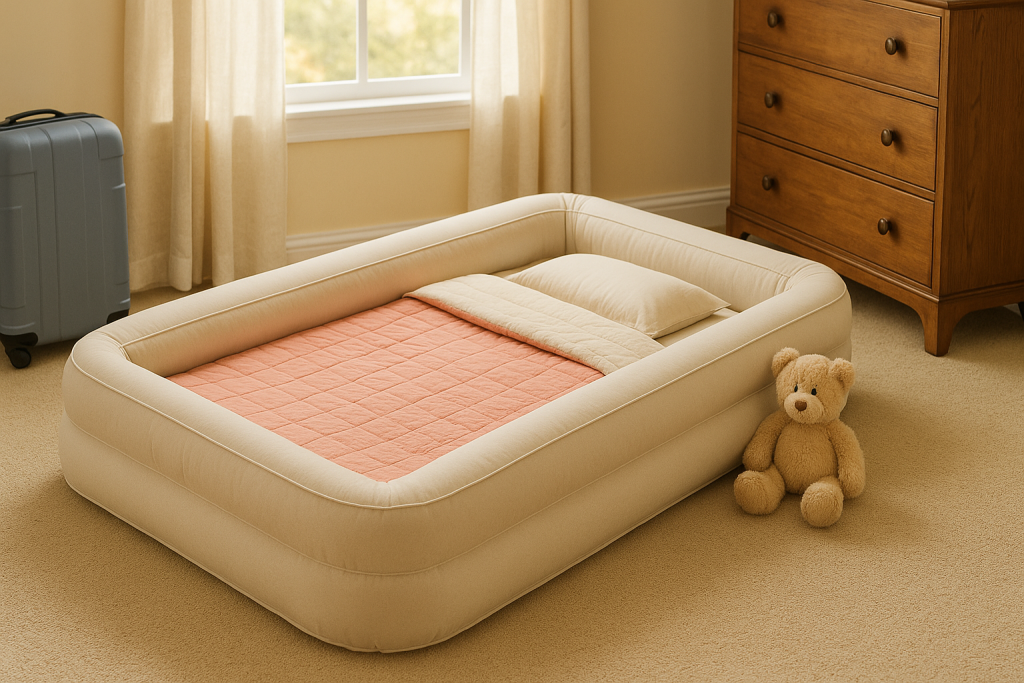
- Travel & naps: For weekends away, an inflatable toddler bed with bumpers or portable foam bumpers keeps the new normal consistent wherever you go.
Common Mistakes Parents Make (and Easy Fixes)
- Jumping straight to fancy bedding: Start simple; add the duvet later.
- Power struggles at lights-out: Offer choices earlier (PJs, book). At bedtime, choices shrink.
- Room packed with stimulation: Keep a calm corner and rotate toys out.
- Too many “just one more”s: Replace add-ons with a predictable routine and a bedtime ticket (one extra, pre-agreed request).
Gentle Scripts for Big Feelings
- “New bed feels different. Your body is safe. I’ll check in after this song.”
- “You want more books. We’ll save them for tomorrow. Right now, we’re resting.”
- “You’re sad the crib is gone. It kept you safe. This bed will keep you safe too.”
Amazon Picks: Sleep Gear for a Smooth Toddler Room Transition
Curated for safety, practicality, and real-world parent wins. (Always check current specs and fit for your bed/frame.)
1) Delta Children Canton Toddler Bed
Low-profile wood toddler bed that fits a standard crib mattress; JPMA-certified.
- Features: Low height, guardrails, GREENGUARD/ASTM/JPM A compliance.
- Pros: Familiar mattress size; sturdy; wide color options.
- Cons: Assembly required; mattress not included.
- Great for: Small rooms and kids who like a snug, crib-like feel.
- Review snapshot: Parents praise the solid feel and easy climb-in; occasional notes about assembly time.
2) Dream On Me Classic Design Toddler Bed
Minimalist design with dual safety rails; low to floor.
- Features: Side rails, center-leg reinforcement, low height.
- Pros: Budget-friendly; classic look; straightforward setup.
- Cons: Wood can scuff; keep Allen key handy.
- Great for: First “big kid” bed on a budget.
- Review snapshot: Families like the value and rails; a few mention finish wear over time.
3) Regalo Swing Down Bed Rail Guard
Swing-down rail eases sheet changes and bedtime cuddles.
- Features: 43″ long x 20″ tall, steel frame, swing-down hinge.
- Pros: Easy to install; sturdy; folds down smoothly.
- Cons: For use with mattress + box spring (check fit on platform beds).
- Great for: Twin beds where you want removable, tool-free rails.
- Review snapshot: Loved for practicality; some report fit quirks on non-box spring frames.
4) hiccapop Inflatable Toddler Travel Bed with Safety Bumpers
Four bumpers, thick vinyl, electric pump—sleepovers solved.
- Features: 4-sided bumpers, reinforced seams, flocked top, travel bag + pump.
- Pros: Portable; sets up fast; beloved for trips and grandparent houses.
- Cons: Like all inflatables, can lose air; store away from pets.
- Great for: Travel, cousins’ sleepovers, room makeovers mid-renovation.
- Review snapshot: Parents rave about the safety bumpers and easy setup.
5) Graco Premium Crib & Toddler Mattress
GREENGUARD Gold-certified foam mattress with washable cover; toddler-bed compatible.
- Features: Fits standard crib/toddler beds; removable/washable cover.
- Pros: Firm, lightweight, easy cleaning; strong brand support.
- Cons: Foam feel isn’t everyone’s favorite; air out before use.
- Great for: Families wanting a budget-to-mid mattress from a major brand.
- Review snapshot: Praised for cleanliness and value.
Quick Comparison (scannable)
| Model | Key Spec(s) | Warranty* | Approx Price/Tier | Best For |
| Delta Children Canton Toddler Bed | Low profile wood, guardrails, crib-mattress size | Limited (Delta also offers optional 2-yr extended coverage) | Budget–Mid | Small rooms; crib-to-bed familiarity |
| Dream On Me Classic Toddler Bed | Dual rails, center leg, low height | 1-year limited | Budget | First bed on a budget |
| Regalo Swing Down Bed Rail Guard | 43″ x 20″, swing-down hinge, steel frame | 90-day limited | Budget | Add-on safety for twin/box-spring beds |
| hiccapop Inflatable Toddler Bed | 4 bumpers, reinforced vinyl, pump + bag | Lifetime guarantee (US) | Mid | Travel, sleepovers, flexible setups |
| Graco Premium Crib & Toddler Mattress | GREENGUARD Gold, washable cover | 6-year limited (brand site) | Budget–Mid | Cleanability + value |
*Always verify current warranty on the brand page or packaging for your specific model.
Research-Backed Sleep Tips You Can Trust
- Consistent bedtime routine = better sleep. Multiple studies connect predictable bedtime routines in 0–5s with faster sleep onset, fewer night wakings, and longer sleep—benefits that support behavior and learning, too. See this 2015 dose-response study and 2017 review for details.
- Safety milestones matter. When toddlers hit ~35 inches/89 cm, climbing risk rises; moving to a low bed with proper rails and a toddler-proofed room reduces fall hazards. Guidance via the American Academy of Pediatrics (HealthyChildren.org).
FAQs: Toddler Room Transition
How do I keep my toddler from getting out of bed 47 times?
Use a simple, same-every-time return: quiet walk-back, tuck, one line (“Bedtime now; see you in the morning”). Add an OK-to-wake light and a bedtime ticket (one extra request) to cut the stall cycle.
Should I move to a toddler bed or straight to a twin?
If space is tight or your child loves cozy, start with a toddler bed. If you want longevity, go twin with bed rails/foam bumpers during the transition. Both are valid.
What about pillows and blankets?
Start minimal. Use a fitted sheet and a light blanket. Keep plush toys small and few. Build up bedding as your child adjusts and stays reliably in one spot.
How can I avoid a new-baby jealousy spiral?
If a sibling is coming, start the transition 2–3 months before or after the baby arrives. Let your toddler help choose sheets and a “sleep buddy,” and carve out 10 minutes of one-on-one time daily. For thoughtful “you’ve got this” gifts for new moms, see these care-package-style gift ideas for new moms.
When is it not a good time to switch?
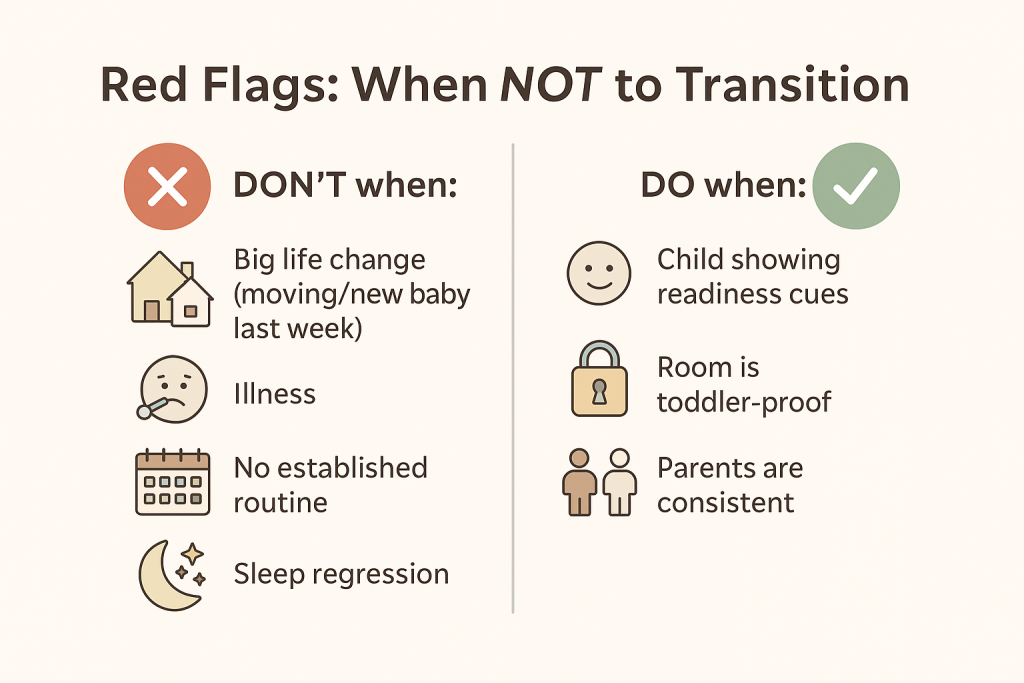
If your child is sick, you’re moving homes, or routines are chaotic, wait a few weeks. You want calm seas for a smooth launch.
Conclusion: You’ve Got This, One Calm Night at a Time
The toddler room transition isn’t a single leap—it’s a series of tiny, confident steps: watch the readiness signs, toddler-proof the room, choose a bed that fits your life, and lean on a simple, repeatable routine. Keep your tone warm, your boundaries loving, and your script short. And when in doubt? Breathe. You’re building skills they’ll use for years—self-regulation, independence, and the cozy joy of a bed that feels like theirs.