Kids Chore Chart Ideas
We may earn a commission for purchases made using our links. Please see our disclosure to learn more.
You know what’s exhausting? Feeling like you’re running a tiny household with a staff… except the staff is 4–14 years old and keeps “forgetting” where the hamper lives.
That’s where Kids Chore Chart Ideas come in—not as another cute Pinterest project, but as a real way to reduce reminders, build responsibility, and make home life feel less like you’re narrating a never-ending to-do list.
In this guide, you’ll get age-based chore chart ideas, simple setups that actually stick, and a few sanity-saving tricks for kids who struggle with routines.
Affiliate note: If you buy through the Amazon links below, you may earn a small commission at no extra cost to you.
The real reason chore charts fail (and it’s not your kids)
Most chore charts fail because they ask kids to remember a routine they never helped build.
A chart works best when:
- the chores are tiny and specific
- the expectation is clear and repeatable
- the kid feels ownership instead of “assigned labor”
Think of it like learning to ride a bike. You don’t hand them the bike and say, “Good luck.” You guide, practice, and celebrate small wins.
A mindset shift: chores are life skills, not “helping you”
Kids aren’t “helping you” by doing chores—they’re learning how to live in a shared space.
Try language that sounds like teamwork:
- “Everyone contributes to the house.”
- “This is your responsibility, just like mine is mine.”
- “We do a quick reset so we can relax later.”
This removes the power struggle vibe and turns it into: this is what our family does.
Pick your chore chart style (quick guide)
Different homes need different systems. Here are options that match real-life personalities:
Visual icon chart
Best for: toddlers, early readers, ADHD/ASD-friendly routines
Why it works: no reading barrier, quick scanning
Weekly checklist chart
Best for: school-age kids and busy parents
Why it works: predictable rhythm, fewer daily negotiations
Token or magnet “progress” chart
Best for: kids who need motivation + a sense of achievement
Why it works: physical movement = satisfying proof
Digital/notes-based chart
Best for: teens
Why it works: feels less “baby-ish,” fits their world
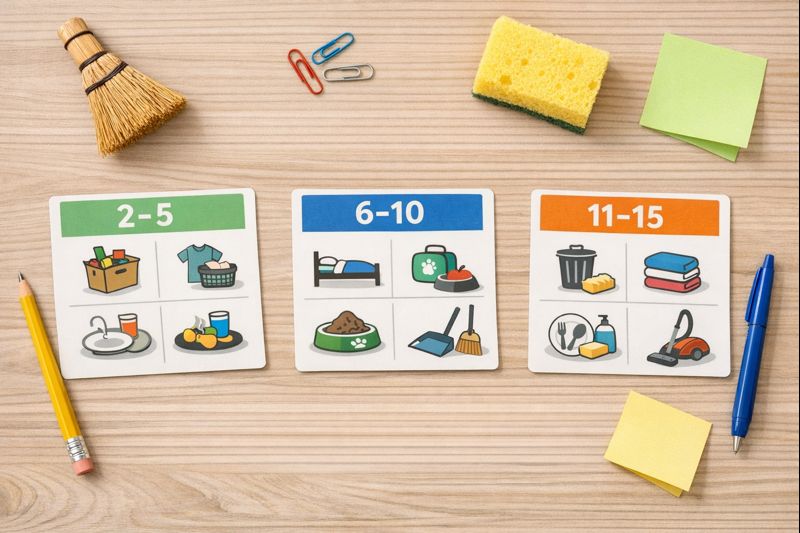
Printable Kids Chore Chart Ideas (simple and flexible)
Printables work because they’re quick to change. No guilt if you “mess it up.”
Try these printable formats
- AM/PM split: morning tasks on one side, evening on the other
- School day vs weekend: because those are different planets
- One-page “reset list”: 5–7 quick chores they can do fast
Pro tip
Laminate it (or slide it into a clear sleeve) and use a dry-erase marker. Instant reuse.
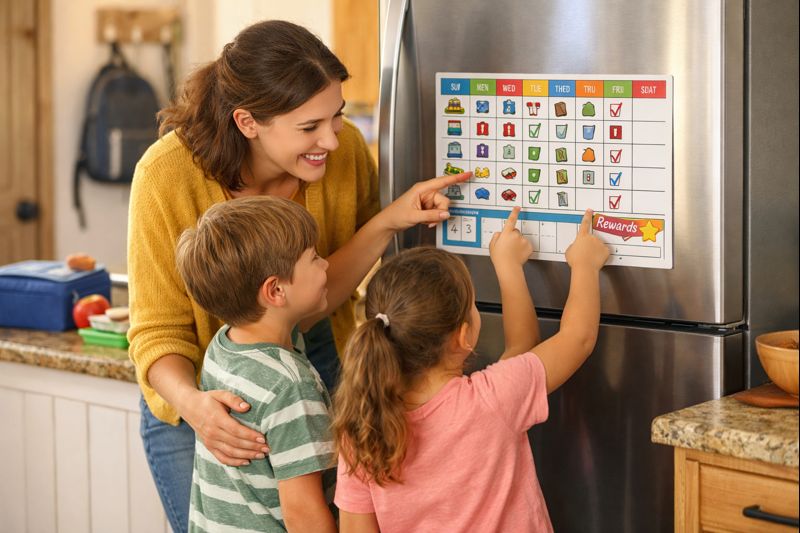
Fridge-based Kids Chore Chart Ideas (because the fridge is mission control)
If your house runs on snacks and schedules, the fridge is the perfect place for a chart.
Make the fridge chart work harder
- Put it at kid eye-level
- Add a pen cup or magnet marker holder
- Keep chores short: “Feed pet,” “Shoes away,” “Wipe table”
If the chart is too high or “adult-centered,” it becomes invisible.
Dry-erase chore charts for chaotic weeks
Dry-erase charts are great when life changes weekly—sports, exams, guests, travel, all of it.
Best uses for dry-erase
- rotating chores (“This week you’re trash captain”)
- special one-time tasks (“Pack gym bag Thursday”)
- household resets (“10-minute tidy before screen time”)
You’re not aiming for perfection. You’re aiming for predictable effort.
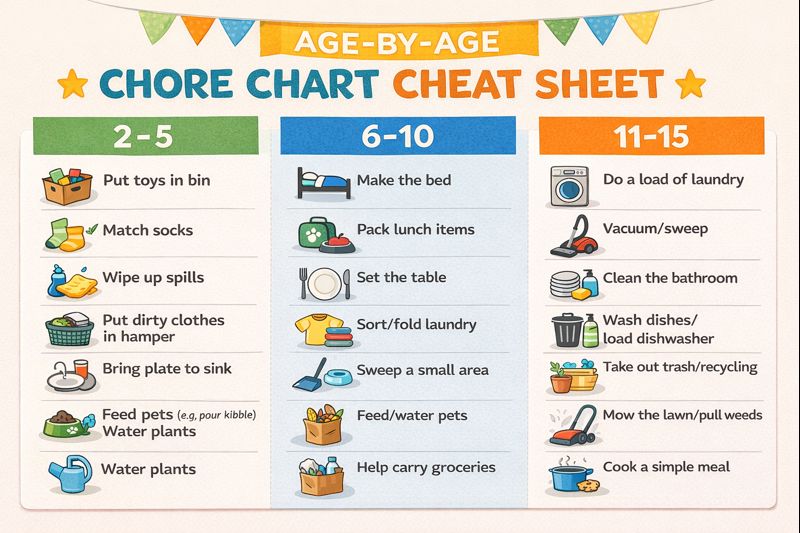
Kids chore chart ideas for ages 2–5 (tiny chores, big pride)
Toddlers love feeling capable—until the task is too big. So keep it micro.
Chore ideas for toddlers/preschoolers
- put dirty clothes in hamper
- put toys in one bin
- wipe spills with a cloth
- bring plate to sink
- “sock match helper” (yes, it counts)
What to track
Track effort, not results. A wonky wipe is still a win.
Kids chore chart ideas for ages 6–10 (structure + independence)
This age can do real tasks—if the expectations are clear.
Chore ideas for elementary kids
- make bed (simple version)
- pack lunch items
- feed pets
- clear table
- sweep a small area
- fold towels
Add one “confidence chore”
Pick one thing they can get good at fast. That builds momentum.
Kids chore chart ideas for tweens & teens (respect their maturity)
Teens don’t want stickers. They want control, fairness, and privacy.
Chore chart ideas that don’t feel childish
- a weekly “household contribution list”
- rotating responsibilities (trash, dishes, bathroom wipe-down)
- a shared family note with due dates
A smart trade
Link chores to privileges they care about: rides, extra screen time, later bedtime on weekends, gaming time.
Make chores feel doable with visuals, colors, and “no-reading” cues
If your kid struggles with working memory, visual supports aren’t “extra.” They’re helpful design.
Easy visual upgrades
- color-code by child
- use icons (toothbrush, shirt, broom)
- keep chores in the same order daily
Even adults love visual systems. That’s why planners exist.
Rewards without turning it into bribery
Rewards don’t have to be money. They can be privileges or choice.
Reward ideas that don’t cost anything
- pick dessert
- choose the family movie
- 15 minutes later bedtime (weekend)
- “music while cleaning” pass
- earn points toward a bigger privilege
A good rule
Reward consistency, not perfection. Aim for “most days,” not “every day forever.”
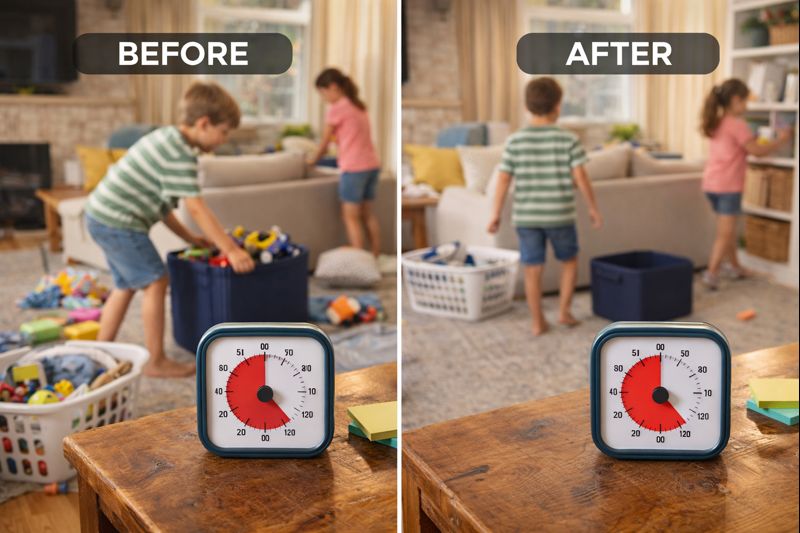
The 10-minute reset: the routine that saves your evenings
If you only adopt one system, make it this:
10-minute reset routine
- set a timer
- everyone resets one zone
- stop when the timer stops
No marathon cleaning. Just a daily house “refresh,” like brushing teeth for your living room.
Rotate chores the fair way (so you’re not stuck with the worst jobs)
Kids notice fairness. Even little ones do.
Simple rotation ideas
- weekly chore “captains” (trash captain, table captain, pet captain)
- “pick from the jar” chores (with only age-appropriate tasks inside)
- split by zones: kitchen, living room, entryway
The goal is shared responsibility—not you being the default employee.
Product Section: 5 tools that make chore charts easier
Below are practical, low-fuss tools that make Kids Chore Chart Ideas easier to follow and harder to ignore.
Learning Resources Good Job Reward Chart (91 Piece Set)
Short description: A customizable magnetic responsibility chart with tiles plus a “You’ve Earned It” reward box.
Features: magnetic tiles + stickers, write-and-wipe area, storage for pieces.
Use case: Great for ages ~3–7, visual learners, and kids who need a clear finish line.
Battat Education Responsibility Chart for Kids (92 Pieces)
Short description: Space-themed goal tracking with magnets designed to build motivation and confidence.
Features: 92 magnets, goal types + progress trackers, play guide included.
Use case: Awesome if your child responds to “levels” and visible progress.
Melissa & Doug My Daily Routines Chart
Short description: A day-structure chart that helps kids visualize routines (morning/evening style).
Features: magnetic pieces, routine-focused layout, kid-friendly visuals.
Use case: Perfect for kids who struggle with transitions (“What do I do next?”).
Cinch Magnetic Dry Erase Board Kids Chore Chart
Short description: A reusable weekly dry-erase chore board that lives on the fridge.
Features: weekly layout, magnets + dry-erase use, designed for quick updates.
Use case: Great for families with changing schedules (sports, shift work, rotating chores).
Time Timer MOD with Protective Case (60-minute visual timer)
Short description: A quiet visual countdown timer that supports focus and smoother transitions.
Features: 60-minute visual countdown, silent operation with optional alert, protective case.
Use case: Ideal for “10-minute reset,” homework blocks, and kids who need time they can see.
Research-Backed confidence: what science and experts say about chores
If you’ve ever wondered, “Is this actually worth the effort?”—yes. And you don’t have to rely on vibes alone.
Chores can support executive function
A 2022 study exploring children’s household chores and executive functions found links between chore involvement and aspects of executive functioning (the brain skills behind planning, remembering steps, and self-control). Here’s the paper: kids household chores and executive function research (2022).
Expert guidance supports age-appropriate chores
The American Academy of Pediatrics encourages giving kids chores that match their development and building responsibility over time. This AAP resource is a solid reference: age-appropriate chores guidance for kids (AAP).
Why this matters in real life
Households are busy. In the U.S., people spent an average of about 2.01 hours per day on household activities (BLS ATUS, 2024). That time adds up—so sharing the load (even in small ways) genuinely helps. Source: household activities time-use data (BLS, 2024).
Want deeper support beyond charts?
If you’re trying to build routines, motivation, and calmer family systems (especially with strong-willed kids), you may like this curated list of reads: top parenting books that support routines and responsibility.
FAQs About Kids Chore Chart Ideas
How do I get my child to follow a chore chart without nagging?
Make the chart visible, keep chores tiny, and attach it to an existing routine (after breakfast, before screens). Then use one calm reminder: “Check the chart.” Not five.
What chores should a 5-year-old have?
Think micro chores: put clothes in hamper, put toys in bin, wipe small spills, bring plate to sink. Focus on consistency, not perfect results.
Should kids get paid for chores?
It depends. Many families separate “household contributions” (expected) from “extra jobs” (paid). That keeps chores from becoming a negotiation every day.
What’s the best chore chart for ADHD or kids who struggle with focus?
Go visual and short. Use icons, a timer, and 1–3 tasks at a time. Bonus points if the chart includes a satisfying action (move a magnet, check a box).
How do I make a chore chart work for multiple kids?
Color-code by child, rotate the “worst” chores weekly, and keep a shared reset routine everyone does together. Fairness matters more than symmetry.
Conclusion
The best Kids Chore Chart Ideas aren’t the prettiest—they’re the ones your kids will actually use. Start small, make it visual, keep it consistent, and treat chores like a skill your child is learning (because it is). You’re not just getting the floor swept—you’re building capable humans.
If you want, tell me your kids’ ages and your biggest friction point (mess, mornings, bedtime, dishes), and I’ll tailor a chore chart + chore list that fits your exact routine.