
Best Car Seat Newborn for Travel (Lightweight)
We may earn a commission for purchases made using our links. Please see our disclosure to learn more.
You know that feeling when you’re packing for a trip and suddenly one item feels like it carries the weight of the whole universe? For a lot of parents, that’s the car seat.
If you’re searching for the best car seat newborn for travel, you’re probably juggling three things at once: safety, ease, and your own sanity (because you’re also carrying diapers, a bag, and a tiny human who has opinions).
In this guide, I’ll walk you through what actually matters for newborn travel, how to pick the right style for your life, and a few high-intent product picks that parents consistently choose when they want lightweight + practical.
What makes choosing a newborn car seat feel so intense
Because it’s not “just a product.” It’s the thing that brings your baby home. It’s what you trust on highways, in taxis, in airport chaos, and during those “we’re late” moments.
Also: newborns are tiny. Their head control is still developing, and that’s why the details (recline angle, harness fit, insert design) matter more than they would for an older baby.
The goal is simple: a seat you can install correctly every time and use confidently, even when you’re tired.
The “newborn-ready” safety baseline (non-negotiables)
Let’s ground this: every car seat sold in the U.S. must meet federal crash standards, but fit + correct use is where safety really lives.
Newborn baseline checklist:
- Rear-facing use from day one (newborns should ride rear-facing as long as possible).
- Harness at or below shoulder level for rear-facing (common “first install” mistake: straps too high).
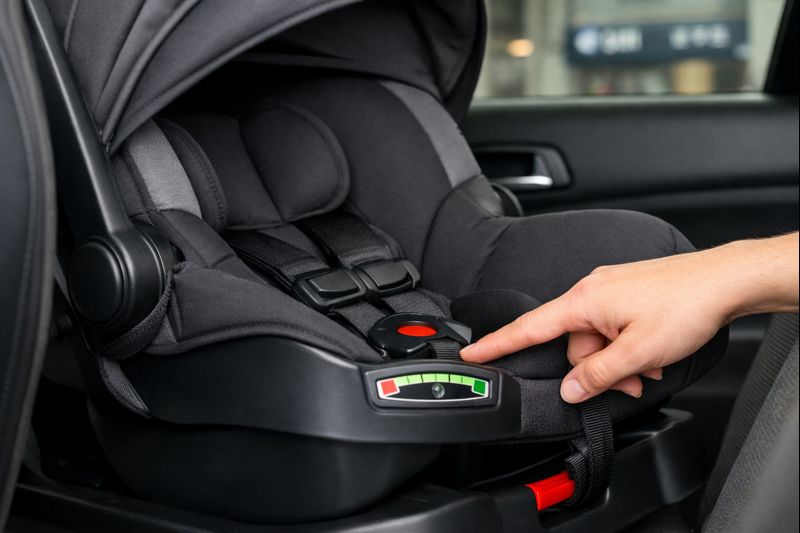
- Correct recline angle so baby’s airway stays open (most seats have a bubble/line indicator).
- Back seat placement whenever possible—especially because front airbags are dangerous with rear-facing seats.
If a seat makes these steps easier, it’s automatically a better travel candidate.
Infant car seat vs convertible: which one travels better?
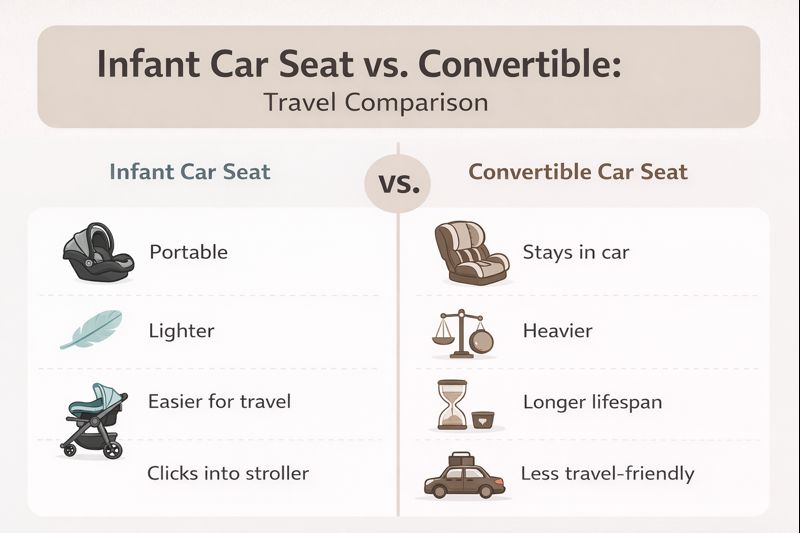
For travel, most families love an infant car seat (the “bucket seat”) because it’s:
- portable for quick transfers
- usually lighter than most convertibles
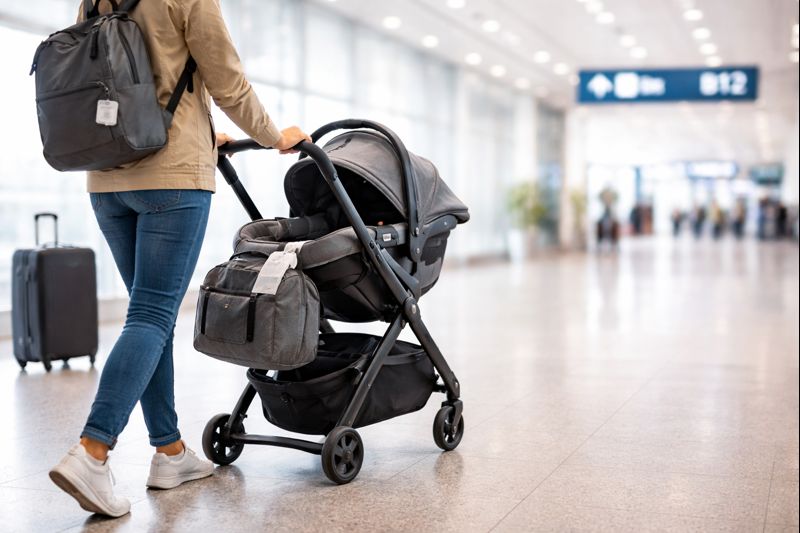
- easy to pair with a stroller/travel system
A convertible car seat can work from newborn too, but it’s bulkier, not designed to carry around, and can be a pain in rideshares/airports. If you’re frequently on the move, infant seats are usually the smoothest path.
Lightweight really matters (and not just for your wrists)
People underestimate how fast “only a few pounds” turns into ouch.
Think of it like groceries: one bag is fine… until you also have a purse, a phone, and keys, and the elevator is broken.
Lightweight matters most if you:
- use stairs often
- travel solo
- do rideshares/taxis
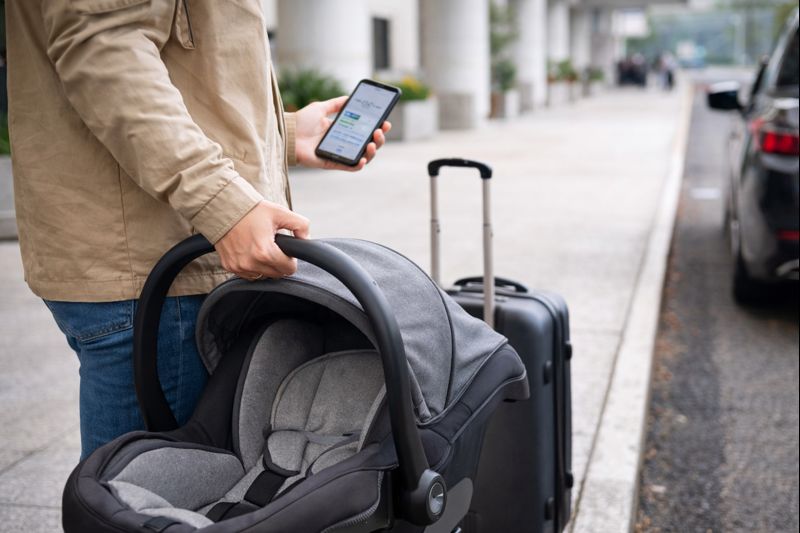
- fly and need to carry gear through terminals
So when you see “lightweight infant car seat,” don’t roll your eyes. That’s your lower back saying, “Yes please.”
Fit check: your car, your body, your daily routine
The best car seat newborn choice isn’t always the fanciest—it’s the one that fits your real life.
Quick fit questions:
- Do you drive a small car where front passengers need legroom?
- Are you trying for 3-across eventually?
- Are you tall, with a seat pushed back?
- Do grandparents help (and need a seat that’s easy to understand)?
If you’re a multiples family, you already know logistics are an Olympic sport. (Also, when you want a fun breather from all the gear talk, here are sweet, low-effort twin day celebration ideas you can actually pull off—because not every “parenting moment” has to be stressful.)
Installation confidence: base, seat belt, and LATCH
The best seat is the one you install correctly every time.
What helps in real life:
- a base with clear angle indicators
- straightforward belt routing
- easy-to-tighten LATCH (if you use it)
- a stable feel when you do the “shake test” at the belt path
And here’s the part nobody loves hearing but everyone benefits from: installation mistakes are common. Nearly half of car seats are placed incorrectly, according to the NHTSA.
If you can, do a quick check with a CPST (Child Passenger Safety Technician). It’s like having a coach look at your form—tiny tweaks, big confidence.
Newborn comfort done right: recline, inserts, and harness fit
Comfort isn’t “luxury” for a newborn—it’s part of safe positioning.
Look for:
- a newborn insert that supports (without pushing the chin down)
- a harness that tightens smoothly (because you’ll do it a lot)
- a canopy that actually blocks light (naps matter)
Tiny tip that saves stress: do the pinch test at the shoulder—if you can pinch harness webbing, it’s too loose.
Crash-protection features that are actually worth paying for
Marketing gets loud here, so let’s simplify.
Features that tend to be genuinely useful:
- side-impact protection (common across many seats)
- a stable, easy base with rebound management features (varies by model)
- higher quality padding that doesn’t bunch or slip
What matters most, though, is still the boring stuff: correct recline, snug harness, solid install.
(Annoying, I know. Also true.)
Air travel with a newborn: FAA labels, gate-checking, and sanity
If you’re flying, you’ll see a lot of opinions online. Here’s the practical core:
- The FAA has guidance for flying with children and what kinds of child restraints can be used onboard.
- Many U.S.-approved car seats have a label stating they’re certified for use in motor vehicles and aircraft (that exact label language appears in federal aviation regulations).
Pro-travel tips:
- If baby has their own seat on the plane, using an approved car seat can be safer and more comfortable.
- If you’re gate-checking, use a padded travel bag to reduce damage.
- Practice installing with the seat belt before your trip (aircraft installs are seat-belt installs).
Stroller compatibility: when a travel system saves your day
If you travel a lot, stroller compatibility is a quiet superpower.
A simple travel system means:
- fewer transfers (less waking the baby)
- faster airport movement
- smoother errands without juggling
If you already have a stroller in mind, check compatibility first—some pairings are seamless, others require adapters or just aren’t worth it.
Heat, sun, and weather: tiny details that change everything
Newborn travel often means “survive the environment.”
Look for:
- a canopy with real coverage
- breathable fabrics (especially for warm climates)
- no bulky coats under the harness (use a blanket over the buckled baby instead)
If you live somewhere hot and humid, breathability isn’t “nice.” It’s your baby not arriving sweaty and furious.
Cleaning and longevity: because life happens in the back seat
Spit-up. Milk drips. Diaper surprises. Snacks from an older sibling who “was helping.”
Travel-friendly cleaning features:
- machine-washable cover (ideally easy on/off)
- fewer tiny crevices for crumbs
- straps that don’t twist into a knot sculpture
You don’t need a seat that stays pristine. You need one that’s easy to reset.
Product picks: 5 of the best car seat newborn options for travel
1) Graco SnugRide 35 Lite LX Infant Car Seat
Why it’s here: Lightweight, widely used, and often chosen as a practical “first infant seat.”
Standout features
- lightweight carry-friendly design
- rear-facing infant format for easy transfers
- typically sold with base options
Best for
- parents who want a reliable, simple everyday + travel seat
- quick rideshare installs (once you practice)
2) Graco SnugRide SnugFit 35 Infant Car Seat
Why it’s here: A massively reviewed pick with a reputation for “secure + comfy.”
Standout features
- upgraded fit/comfort design compared with basic lines
- strong “daily driver” option for newborn through early months
Best for
- families who drive often and want a more “structured” feel
- frequent errands + weekend trips
3) Evenflo LiteMax 35 Infant Car Seat
Why it’s here: A budget-friendly, travel-practical pick with high review volume.
Standout features
- lightweight-friendly category
- straightforward, no-fuss value
Best for
- tight budgets without wanting to gamble on quality
- grandparents’ car / secondary seat setups
4) Baby Trend EZ-Lift Plus Infant Car Seat
Why it’s here: This one leans hard into “carry easier,” which matters when you’re traveling solo.
Standout features
- carry-focused design details
- travel-minded comfort + everyday practicality
Best for
- parents who carry the seat a lot (stairs, parking lots, apartment life)
- quick hops between car + stroller
5) Doona Car Seat & Stroller (All-in-One Travel System)
Why it’s here: If your travel life includes lots of taxis, airports, and “where do I put the stroller?” moments—this is the famous shortcut.
Standout features
- transforms from car seat to stroller in seconds
- huge convenience boost for travel days
Best for
- frequent flyers and city families
- rideshares/taxis + tight trunk space
- parents who want fewer moving parts
Research-backed reality check: what experts say (and what parents get wrong)
Here are two points that genuinely change how you shop:
1) Correct use saves lives.
NHTSA estimates correctly used child restraints reduce fatalities by 71% for infants under 1 (in passenger cars).
So yes—choosing the best car seat newborn matters. But choosing one you’ll use correctly matters even more.
2) Misuse is common (and fixable).
NHTSA’s National Child Restraint Use Special Study reported substantial misuse rates, including for rear-facing infant seats.
That’s not a reason to panic. It’s a reason to:
- read both the car seat manual + vehicle manual
- do a quick CPST check if possible
- pick a seat with clearer indicators if you’re a “please make this obvious” person (most of us are)
And a bonus comfort-stat: the CDC notes car seat use reduces injury risk dramatically compared with seat belts alone.
FAQs about the best car seat newborn
What is the safest car seat position for a newborn?
The back seat is generally safest, and newborns should ride rear-facing. A rear-facing seat should not be positioned in front of an active airbag.
Should I buy an infant car seat or a convertible for a newborn?
If you travel often, an infant car seat is usually easier (portable, quicker transfers). A convertible can work too, but it’s bulkier and less travel-friendly.
How do I know the recline angle is correct for my newborn?
Use the seat’s built-in level indicator (bubble/line). If you’re unsure, this is a great reason for a CPST check—small angle fixes can make a big difference.
Are car seats allowed on airplanes?
Many are, as long as they’re approved and used properly. The FAA provides guidance for flying with children, and approved restraints typically have an aircraft certification label.
What should I prioritize if I’m overwhelmed and just want a good pick?
Go with this order:
- fits your car
- you can install it confidently
- newborn positioning is easy
- weight/portability matches your travel style
- budget
Conclusion
The “best car seat newborn” isn’t the one with the fanciest headline features—it’s the one that fits your vehicle, fits your baby, and fits your real life so well you can use it correctly on autopilot.
Pick the seat that makes you feel steady. Practice the install once before the trip. And then let yourself enjoy the part that matters most: you and your baby getting where you’re going—safe, calm(ish), and proud of yourselves.