Top Infant Hair Products for Soft, Healthy Hair
We may earn a commission for purchases made using our links. Please see our disclosure to learn more.
You’d think something as tiny as your baby’s head wouldn’t need its own product strategy… and yet here you are, staring at a shelf full of “gentle baby shampoos,” oils, and foams wondering what’s actually safe.
Infant hair products don’t have to be overwhelming. With a few simple principles, you can keep your baby’s scalp comfortable, their hair soft, and your brain a lot less frazzled. In this guide you’ll learn how often to wash, what to look for on labels, and which infant hair products many parents actually use.
Why Infant Hair Products Feel So Confusing
Everyone has an opinion about baby products. Your mom suggests one thing, a friend swears by another, and social media adds a dozen more options.
Under all that noise, most babies really only need:
- One gentle baby shampoo or 2-in-1 wash
- Maybe one extra product, like a cradle cap foam or light baby oil, if there’s a specific issue
Simple really can be safer.
What Makes Infant Hair and Scalp Different
Baby scalps are “new skin.” The outer barrier is thinner and still maturing through the first year, so:
- Moisture escapes more easily
- Irritants (like strong fragrance or harsh cleansers) cause problems faster
- Hair is often fine or patchy, so heavy conditioners aren’t usually necessary
Infant hair care is mostly scalp care. Products that respect the skin barrier and rinse clean are your best friends.
How Frequently Should You Wash Your Baby’s Hair?
There’s no one perfect schedule, but many pediatric sources suggest washing infant hair around 1–3 times per week with a mild, tear-free baby shampoo for most healthy babies. If there’s cradle cap or heavy sweat, your pediatrician may suggest more frequent washing for a while.
Let the scalp guide you instead of the calendar: wash more often if it looks greasy or flaky, less often if it looks comfortable and clean.
Key Ingredients to Look For in Infant Hair Products
On the label, it helps to look for:
- pH-balanced formulas (roughly 5.5–7)
- Mild, tear-free surfactants
- Fragrance-free or very lightly scented formulas
- Hypoallergenic, dermatologist-tested and made specifically for babies
Helpful skin-friendly ingredients include:
- Glycerin – helps hold moisture
- Ceramides – support the skin barrier
- Oat extract or colloidal oatmeal – soothe dry, sensitive skin
You don’t need every buzzword. One or two well-chosen infant hair products are plenty.
Ingredients to Be Careful With on Baby Scalps
You don’t have to be perfect, but it’s reasonable to be cautious with:
- Strong synthetic fragrances and dyes
- Adult shampoos, including dandruff shampoos, unless your child’s doctor recommends them
- Undiluted essential oils on infant skin
- Routine use of certain plant oils (like olive or sunflower oil) on newborn skin, which some research suggests may affect the barrier.
“Natural” doesn’t automatically mean safer; “lab-made” doesn’t automatically mean bad. Formulas tested for babies matter more than marketing labels.
Main Types of Infant Hair Products (Simple Breakdown)
Here’s the quick map of what’s in the baby aisle:
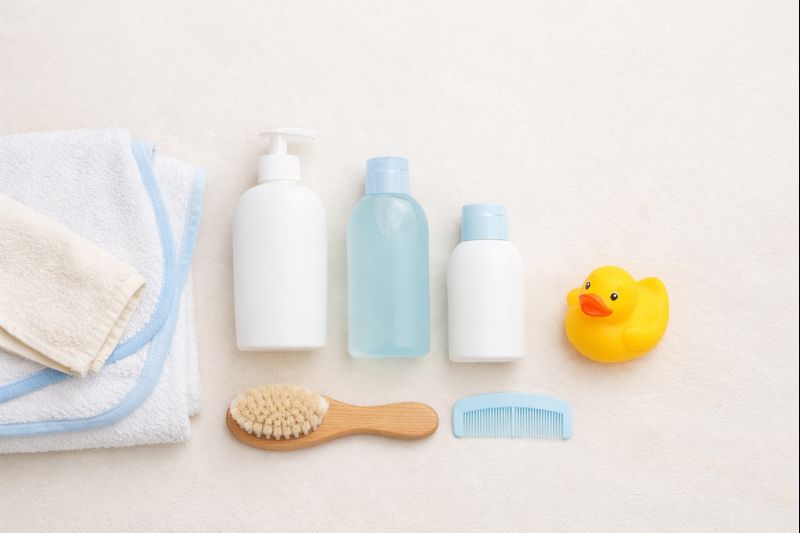
- Baby shampoo or 2-in-1 wash – everyday cleanser for scalp and hair
- Cradle cap shampoo or foam – to help lift flakes when they’re stubborn
- Baby hair or scalp oil – to soften dry patches or cradle cap before washing
- Detangler or leave-in spray – handy once hair is long enough to tangle
- Baby-safe curl cream or conditioner – mostly for older infants or toddlers with coily or very curly hair
Most families start with just a gentle baby wash and add other products only if there’s a real need.
Infant Hair Care for Sensitive or Eczema-Prone Skin
If your baby has eczema or very reactive skin, their scalp will likely be extra sensitive too.
What usually helps:
- Fragrance-free, dye-free baby shampoo
- Short, simple ingredient lists
- Hypoallergenic, pH-balanced formulas
- Introducing one new product at a time so you can quickly spot what triggers a reaction
If your baby’s scalp becomes red, very flaky, or uncomfortable, stop the new product and call your pediatrician.
Caring for Different Infant Hair Types
Infant hair can be straight, wavy, curly, coily, or a mix—and can change as they grow.
A few starting points:
- Straight or fine hair – light baby shampoo 1–3 times per week, no heavy oils
- Wavy hair – same routine, with a tiny bit of light baby oil on the ends if hair seems frizzy
- Curly or coily hair – prioritize moisture and “slip” using a creamy, sulfate-free baby wash; if your pediatrician okays it, add a pea-sized amount of baby-safe curl cream on the ends in late infancy or toddlerhood
In all cases, gently detangle with your fingers or a soft, wide-tooth comb—no tugging.
A Simple Day-to-Day Infant Hair Routine
You do not need a 10-step routine. You can keep it to:
- Set up the bath with warm (not hot) water, a soft towel, baby shampoo, and baby brush.
- Wet the scalp gently, supporting the baby’s head and pouring water with your hand or a small cup.
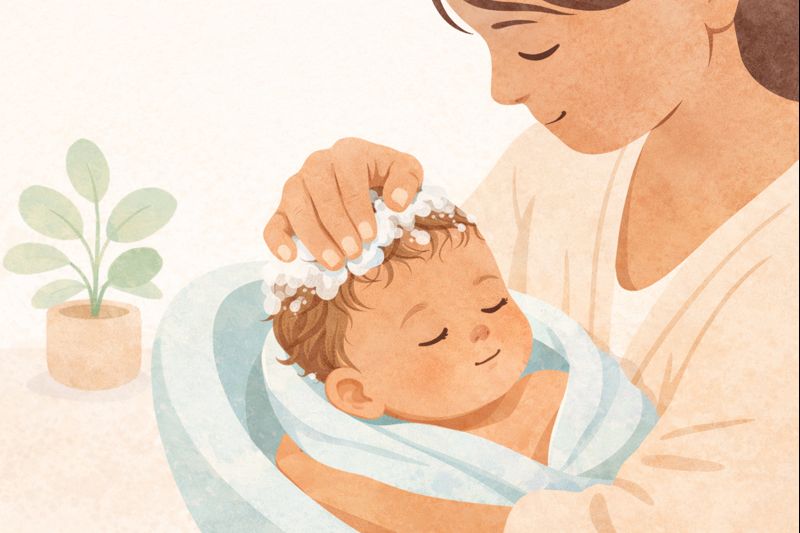
- Use a pea-sized amount of baby shampoo, lather in your hands first, then massage into the scalp with fingertips.
- Rinse thoroughly, making sure no product stays trapped in folds or behind the ears.
- Gently blot the scalp with a soft towel, and only use a small amount of baby-safe moisturizer if the skin appears dry.
Cradle Cap Care: When Infant Hair Products Help
Cradle cap (infant seborrheic dermatitis) appears as yellowish, crusty or flaky patches on the scalp. It looks dramatic, but it’s usually harmless and not painful.
Gentle care often helps: wash the scalp with a mild, tear-free baby shampoo; soften flakes before the bath with a bit of baby oil, mineral oil, or petroleum jelly; loosen flakes with your fingers or a soft baby brush; then rinse well so oil and shampoo don’t sit on the scalp.
If the cradle cap spreads, looks very red, oozes, or doesn’t improve, ask your pediatrician or dermatologist for next steps.
Safe Styling Tips for Baby Hair
You can enjoy cute little hairstyles—as long as comfort comes first.
Try soft cloth headbands that aren’t tight, very loose ponytails or puffs (if hair is long enough), and a quick brush-through with a soft baby brush. Avoid tight elastics that pull at the hairline, heat tools, and strong-hold gels or sprays made for adults.
Top Infant Hair Products Parents Love (Amazon Picks)
Here are five popular infant hair products on Amazon US that fit the gentle, baby-friendly criteria we’ve talked about. Always check labels and talk with your pediatrician if your baby has allergies or skin conditions.
1. CeraVe Baby Wash & Shampoo, Tear-Free 2-in-1
Why parents like it: Developed with dermatologists, this fragrance-free baby wash includes ceramides to support the skin barrier and is designed for delicate infant skin.
- Features: Tear-free, hypoallergenic, no parabens or dyes, pH-balanced.
- Best for: Parents who want a simple, fragrance-free infant shampoo that works as a head-to-toe wash, especially for sensitive or dry skin.
2. Aveeno Baby Daily Moisture Wash & Shampoo with Oat Extract
Why parents like it: Uses oat extract to soothe and gently cleanse without over-drying.
- Features: Lightly scented, tear-free, soap-free, pediatrician-recommended brand.
- Best for: Babies with normal to slightly dry skin whose parents like a mild, classic “baby” scent.
3. Mustela Foam Shampoo for Newborns
Why parents like it: This airy foam is formulated specifically for newborn scalps and cradle cap, making it easy to spread and rinse.
- Features: Gentle surfactants, designed to help reduce flakes, easy-rinse foam texture.
- Best for: Newborns and young infants with visible cradle cap, as long as your pediatrician is comfortable with using a cradle cap product.
4. SheaMoisture Baby Wash & Shampoo with Raw Shea, Chamomile & Argan Oil
Why parents like it: Combines raw shea butter, chamomile, and argan oil to cleanse while leaving hair and skin feeling nourished.
- Features: Sulfate-free, more moisturizing than many basic baby washes.
- Best for: Babies with drier skin or naturally wavy/curly hair where a bit more moisture and slip is helpful.
5. Burt’s Bees Baby Shampoo & Wash, Tear-Free
Why parents like it: A well-known “natural leaning” option that many families use as a gentle everyday baby shampoo and wash.
- Features: Plant-based cleansers, tear-free formula, pediatrician-tested.
- Best for: Parents wanting a baby wash with more naturally derived ingredients but still formulated for little ones.
Remember: these are examples, not prescriptions. Pick the product that matches your baby’s skin, your budget, and your pediatrician’s guidance.
What Research Says About Infant Hair Products and Skin Health
Two key studies can help you feel more confident about using gentle infant hair products.
Mild Baby Cleansers vs. Just Water
A pilot randomized trial in BMC Pediatrics compared a baby cleansing product with plain water for newborn bathing. Researchers found no important differences in skin-barrier measures such as hydration and transepidermal water loss, suggesting that a well-designed baby wash can be as safe for the skin barrier as water alone when used correctly. You can explore it in this summary of the infant skin-cleansing product versus water trial.
Why pH-Balanced Baby Soaps Matter
A Brazilian randomized study on newborns compared a slightly acidic liquid soap with a more alkaline bar soap. Babies bathed with the mildly acidic liquid soap kept a healthier skin pH and better hydration, while those using the bar soap had higher (more alkaline) skin pH and drier skin. This supports choosing cleansers formulated closer to the skin’s natural pH, including baby shampoos and washes. You can read more in this overview of a newborn soap pH trial.
Together, these findings suggest that gentle, pH-balanced baby cleansers and shampoos can support, rather than harm, developing skin when you use them appropriately.
Growing With Your Baby: When to Change Products and Routine
As your baby becomes a busy toddler, hair gets thicker, play gets messier, and bath time turns splashy. You might start washing hair a bit more often, add a light detangler, or move from a cradle-cap-focused shampoo back to a standard gentle baby wash.
Around the same time, you might be thinking about bigger transitions too—like moving from nursery to “big kid” room. If that’s on your radar, this helpful guide to a smooth toddler room transition can take some stress out of that change for both you and your child.
Let your routine evolve with your baby, but keep the core principles: gentle products, simple steps, and watching how their scalp responds.
FAQs About Infant Hair Products
When should I switch from infant hair products to “kids” shampoo?
There’s no fixed age. Many parents keep using infant hair products through at least the first year, or longer if their child has sensitive skin. When you move to a “kids” shampoo, choose one that’s still mild, tear-free, and not heavily fragranced.
Can I use regular shampoo on my baby?
It’s better to avoid adult shampoo on infants. Adult formulas are usually stronger, more perfumed, and not designed for fragile baby skin or eyes. Stick with infant hair products or gentle kids’ formulas until your pediatrician is comfortable with a change.
Do all babies need conditioner?
Most young babies don’t. Conditioner or detangler becomes useful if your child’s hair is thick, curly, or very tangle-prone, usually closer to toddlerhood. Start with a small amount of baby-safe product on the ends only.
Are natural oils safe on my baby’s scalp?
Some families use a little mineral oil or baby oil to soften cradle cap before washing, often with pediatric guidance. Routine use of certain plant oils like olive or sunflower oil on newborn skin may affect the skin barrier, so talk with your pediatrician before using them regularly.
How do I choose infant hair products for a baby with eczema?
Look for fragrance-free, dye-free, hypoallergenic baby shampoos with simple ingredients and a pH-balanced formula. Introduce only one new product at a time and keep baths short and lukewarm. If scalp eczema flares or doesn’t improve, get tailored advice from your pediatrician or a pediatric dermatologist.
Final Thoughts: You’re Doing Better Than You Think
It’s easy to feel like you need a perfectly curated, dermatologist-level routine for your baby’s hair. You don’t.
If you pick a gentle infant hair product (or two), watch how your baby’s scalp and hair respond, and adjust as they grow, you’re already doing a loving, thoughtful job.
Your baby doesn’t need flawless hair. They need a parent who cares—and by reading this, that’s clearly you.