
Parents Choice Bottles: Sizes, Features, and Best Alternatives

We may earn a commission for purchases made using our links. Please see our disclosure to learn more.
Buying baby bottles sounds straightforward until you encounter different neck widths, nipple flows, and claims about reducing gas. If you’re considering parents choice bottles, you probably want an affordable option that your baby can use comfortably without extra cleaning work.
Parent’s Choice offers simple plastic bottles in several configurations, including smaller 5-ounce versions and larger 9-ounce options. But size cannot tell you whether the nipple or spare parts will fit.
This guide compares the available designs, explains how to judge feeding comfort and cleaning requirements, and identifies five alternatives for families who need something different. Buy a small first set rather than committing to a collection prematurely.
What Are Parents Choice Bottles?
Parent’s Choice bottles are a budget-focused line of infant feeding bottles with plastic bodies, silicone nipples, and protective caps. Current product listings include standard-neck and wide-neck designs; some are sold individually, while others come in three-packs.
Several versions feature vented nipples intended to limit air intake. That design is useful to consider, but it does not guarantee relief from crying, reflux, or colic. First, focus on sealing, readable measurements, and suitable nipple flow rather than price.
Parents Choice Bottles: 5-Ounce Versus 9-Ounce Sizes
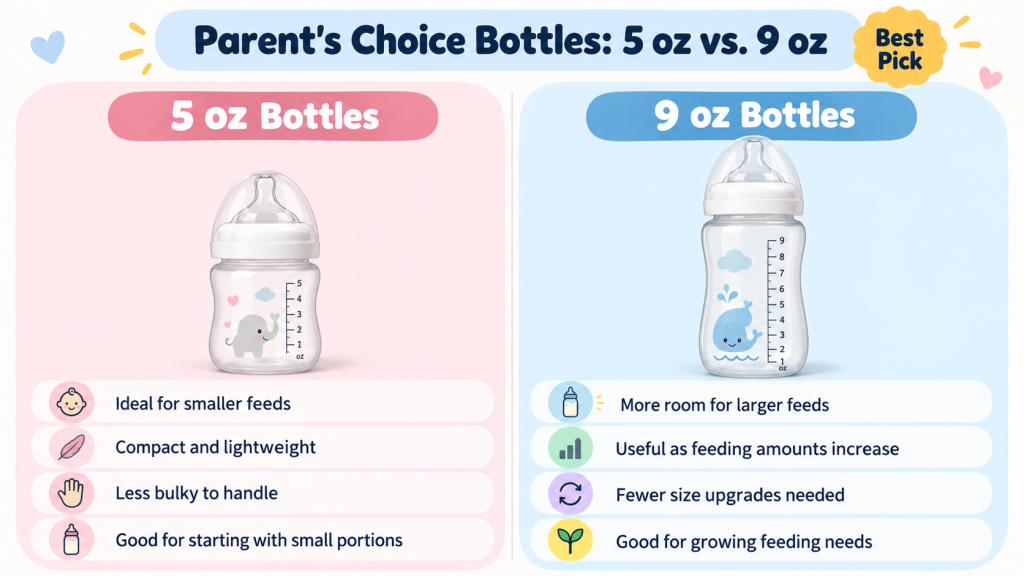
A 5-ounce bottle makes sense when you’re routinely preparing smaller feeds. The brand’s 5-ounce wide-neck three-pack includes slow-flow silicone nipples, making it a reasonable starting format for families who prefer wider openings.
A 9-ounce bottle offers more room as portions change, without requiring you to fill it. Parent’s Choice currently lists both standard-neck and wide-neck 9-ounce three-packs. Larger bodies can be less convenient for small servings. Choose based on the amount your baby usually drinks, not the biggest number printed on the packaging.
Standard-Neck or Wide-Neck: Which Design Fits Better?
Standard-neck bottles have smaller openings and a slimmer profile. Parent’s Choice standard-neck 9-ounce bottles include slow-flow, vented silicone nipples and measurement markings. Their simpler shape may appeal to caregivers who already use narrow bottle storage baskets.
Wide-neck bottles provide a larger opening for adding milk or formula and reaching inside during washing. The brand’s 5-ounce and 9-ounce wide-neck options use soft, vented nipples. Neither format is automatically better for breastfeeding babies; nipple shape and your baby’s response matter more than the width of the bottle body.
How to Choose the Right Nipple Flow
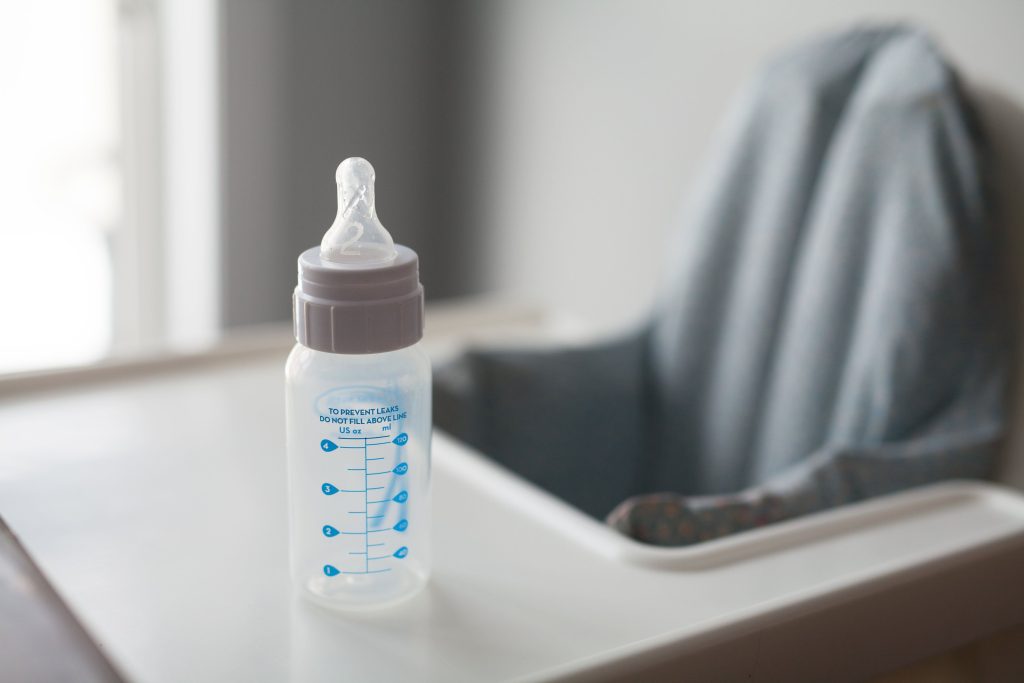
Start with the nipple supplied with your chosen bottle, then watch the feeding rather than relying entirely on age labels. Current Parent’s Choice newborn bottle listings describe slow-flow nipples, and the brand also sells faster-flow replacement nipples for compatible bottles.
A baby who coughs, gulps, or lets milk spill repeatedly may be struggling with a flow that’s too fast. Frustration, prolonged feeding, or a collapsed nipple deserves a closer look at the fit and flow. If feeding difficulties persist, ask your pediatrician or feeding specialist to assess the situation.
Can Vented Bottles Reduce Gas and Colic?
Vented nipples and internal air systems are designed to change how air moves through the bottle while milk is removed. Parent’s Choice uses vented silicone nipples on several models, while some competing bottles add separate vents or valves.
These features may help with air management, but babies can cry for many reasons unrelated to bottle design. Switching bottles repeatedly is unlikely to solve an underlying feeding problem by itself. Consider the baby’s latch, milk flow, positioning, and any ongoing symptoms before investing in a complicated anti-colic system.
Plastic Materials, BPA, and Everyday Durability
Parent’s Choice standard-neck listings identify polypropylene plastic bodies and silicone nipples, and the current wide-neck listings describe their bottles as BPA-free. Lightweight plastic is easy to carry and generally less troublesome than glass if dropped.
Still, BPA-free is a materials claim, not proof that every baby will tolerate a particular bottle. Inspect bottles for cracks, cloudiness, distorted openings, or worn markings. Follow the cleaning and heating instructions for the exact model, particularly when parts from different packages look similar.
Checking Compatibility With Nipples and Feeding Equipment
Do not assume all wide-neck bottles accept the same replacement nipple. Collar dimensions, threading, and sealing surfaces vary by manufacturer, and a nipple that appears to fit can still leak or change the intended flow.
Match replacement parts to the specific Parent’s Choice bottle style and package instructions. Check compatibility separately if you plan to connect bottles to a breast pump, fit them in a warmer, or use a travel cap. A quick fit check with water before preparing milk can save a frustrating feeding later.

Using Bottles for Expressed Milk or Formula
Either expressed breast milk or infant formula can be offered in an appropriate feeding bottle. Start with small amounts when introducing a new bottle, particularly if your baby usually breastfeeds. Another trusted caregiver may have better luck offering those first attempts.
Hold your baby close and let them pause instead of encouraging them to empty the bottle. For formula, follow the manufacturer’s preparation instructions exactly; never adjust powder-to-water ratios just to fit a particular bottle size. Capacity is storage space, not a suggested feeding target.
How to Wash and Sanitize Parent’s Choice Bottles
Disassemble the bottle, collar, cap, and nipple after each feeding. The current Parent’s Choice standard-neck and wide-neck listings describe top-rack dishwasher suitability, but confirm instructions on your actual package before using a machine or sanitizer.
For handwashing, use a dedicated clean basin, soap, and a bottle brush; rinse and allow every part to air-dry completely. Sanitizing is a separate step from washing. It matters particularly for very young, premature, or immunocompromised babies, so choose a method that both the manufacturer and current health guidance support.
Preventing Leaks, Nipple Collapse, and Other Problems
A leaking bottle may simply have a crooked nipple or a collar tightened unevenly. Remove the parts, check the seal for residue or damage, and reassemble before testing with water.
If a nipple collapses during feeding, check whether its vent is blocked or the bottle has been assembled incorrectly. Never enlarge the nipple opening yourself: an altered hole can make milk flow unpredictably. Replace damaged parts rather than trying to repair a split nipple, cracked cap, or distorted bottle neck.
When to Keep Parent’s Choice or Try Another Bottle
Stick with a simple Parent’s Choice design if your baby feeds comfortably, the parts wash easily, and you can obtain correctly matched replacement nipples. You do not need an elaborate vent system solely because one is available.
Consider another design when flow options, glass construction, or more specialized venting would solve a genuine problem. Buy a small pack first, since babies may prefer different nipples. For additional comparisons, see our guide to baby bottles for newborns before choosing a larger set.
Recommended Baby Bottles for Different Needs
Parent’s Choice bottles are primarily sold through their usual store, so the five independently identified options below are alternatives, not rebranded Parent’s Choice models. Each serves a different buying priority.
Dr. Brown’s Natural Flow Anti-Colic Options+ Narrow Baby Bottle, 8 oz, 4-Pack
Best for: Families seeking an internal vent system.
These narrow bottles pair Level 1 slow-flow silicone nipples with a removable internal vent designed to manage air during feeding. The four-pack offers a practical rotation for frequent bottle use. Their principal trade-off is cleaning: the vent components need careful disassembly and washing, which adds work compared with simpler nipple-vented bottles.
Boon Nursh Silicone Baby Bottles – Color Block – 8 Oz – 3 Count
Best for: Parents who prefer collapsible silicone pouches over traditional vent systems.
Boon Nursh bottles feature reusable silicone pouches that collapse as your baby drinks, helping limit air entering the milk. The 8-ounce bottles are dishwasher-safe and have fewer vent components to clean. The three-pack includes medium-flow nipples, so parents of younger babies may need to purchase slower-flow replacements.
Lansinoh Anti-Colic Baby Bottles, 5 Ounces, 3 Count
Best for: Breastfeeding families introducing occasional bottles.
These 5-ounce plastic bottles use Lansinoh’s NaturalWave silicone nipples with a wide slope and an air-venting design. They come with slow-flow nipples, so the size may suit smaller prepared feeds. Bottle acceptance remains individual, though, and the brand’s distinctive nipple shape should not be treated as a guarantee of an effortless breast-to-bottle transition.
MAM 5oz Easy Start Anti-Colic Vented Baby Bottle, 0+ Months, 3-Pack, Boy Design
Best for: Parents interested in a vented base and self-sterilizing design.
This three-pack combines 5-ounce bottles with slow-flow nipples and a vented base. The parts can be configured for the manufacturer’s microwave sterilizing procedure, which may help when a separate unit is inconvenient. The drawback is having more components to take apart, inspect, and reassemble correctly after every wash.
Evenflo Balance+ Glass Wide Neck Baby Bottles, 6 fl oz, 6-Pack
Best for: Families who prefer glass bottle bodies.
This six-pack uses wide-neck glass bottles with clearly visible measurement marks. The 6-ounce capacity provides an intermediate option between compact newborn bottles and larger feeding sizes. Glass can feel heavier and may break if dropped, so check handling preferences, available storage, and replacement-part compatibility before choosing a full set.
What Official Feeding and Bottle-Safety Guidance Tells Us
The CDC’s 2026 bottle-feeding guidance recommends holding babies close, angling the bottle, allowing pauses, and stopping when they show fullness cues. These practices matter regardless of bottle price or vent design. The same guidance warns against propping bottles or adding cereal.
The CDC’s 2025 cleaning instructions call for cleaning after every feed and daily sanitizing for babies younger than two months, premature babies, or those with weakened immunity. The FDA’s BPA guidance explains that BPA-based polycarbonate is no longer authorized for baby-bottle use in the United States. None of these recommendations establishes one bottle brand as medically superior.
Frequently Asked Questions About Parents Choice Bottles
Are Parent’s Choice bottles good for newborns?
Some Parent’s Choice bottles are marketed for newborns and include slow-flow nipples, making them reasonable candidates for an initial trial. What matters is whether your baby can latch, swallow, and pause comfortably. Check the exact model’s age and flow labeling, and seek feeding advice if coughing, distress, or poor intake continues.
Are Parent’s Choice bottles dishwasher-safe?
Current listings for several standard-neck and wide-neck Parent’s Choice bottles specify top-rack dishwasher use. Always follow the instructions accompanying your exact model, because accessories and versions can differ. Separate all parts before washing, secure small components in a dishwasher basket, and let everything dry fully before reassembly.
Can Parent’s Choice nipples fit other bottles?
Do not count on cross-brand compatibility without explicit confirmation. A nipple may sit inside another manufacturer’s collar yet fail to seal or provide its intended flow. Match replacements to your exact neck type first, and avoid stretching or modifying a nipple to make it fit a different bottle.
Should I buy 5-ounce or 9-ounce bottles first?
Start with 5-ounce bottles if you expect mostly small feeds and value a compact size. Nine-ounce bottles offer room for larger portions later, but they do not require you to fill them. Purchasing one small pack before stocking up gives you time to check nipple acceptance and your cleaning routine.
Do anti-colic bottles stop a baby from getting gas?
No bottle can promise to prevent all gas or crying. Vents are designed to reduce air entering the milk pathway, but comfort also depends on feeding technique, nipple flow, and individual needs. If pain, significant vomiting, choking, or poor weight gain persists, consult a clinician rather than repeatedly switching bottles.
Conclusion: Choosing the Right Bottle for Your Baby
For many families, parents choice bottles offer an economical, uncomplicated way to begin bottle feeding. The practical decision is between the smaller or larger capacity, a standard or wide neck, and a nipple flow that suits your baby’s feeding behavior.
Start with a modest quantity, confirm replacement-part availability, and prioritize careful washing over promises on the packaging. If you need a more specialized option, Lansinoh’s 5-ounce bottles offer a different nipple shape, while Dr. Brown’s Options+ provides a removable internal vent. Neither is inherently the best fit for every baby.
Choose the bottle your baby handles comfortably, your caregivers can assemble correctly, and your household can maintain consistently.