5 Parent-Approved Screen Time Alternatives For Kids
We may earn a commission for purchases made using our links. Please see our disclosure to learn more.
When the tablet goes off and the immediate response is “But what am I supposed to do?”, you are not alone. Screens are convenient and sometimes genuinely useful, so replacing them is rarely as simple as saying no. The best Screen Time Alternatives For Kids give children something clear to do with their hands, bodies, curiosity, or imagination. This guide covers five practical choices—art, building, active play, hands-on science, and reading or pretend play—plus product ideas for different ages and homes. The goal is not a screen-free childhood; it is a healthier mix your family can realistically maintain.
Why Screen Time Alternatives For Kids Work Better Than Simple Restrictions
A limit tells a child what is ending; an alternative answers what happens next. If a favorite video disappears and the only instruction is “go play,” that empty space can feel like punishment. Two concrete choices—markers at the table or a backyard activity—give the transition a destination.
Good Screen Time Alternatives For Kids also preserve room for movement, conversation, reading, hobbies, and unstructured play.
Start With Better Transitions, Not Sudden Screen Battles
Give a short warning, finish at a natural stopping point when possible, and have the next activity visible. “Ten more minutes, then we’re building” usually lands better than a surprise shutdown.
Offer younger kids two choices; older children can help create a “when I’m bored” list. If they protest, acknowledge the disappointment without reopening the limit. Screen Time Alternatives For Kids get easier when the routine feels predictable.
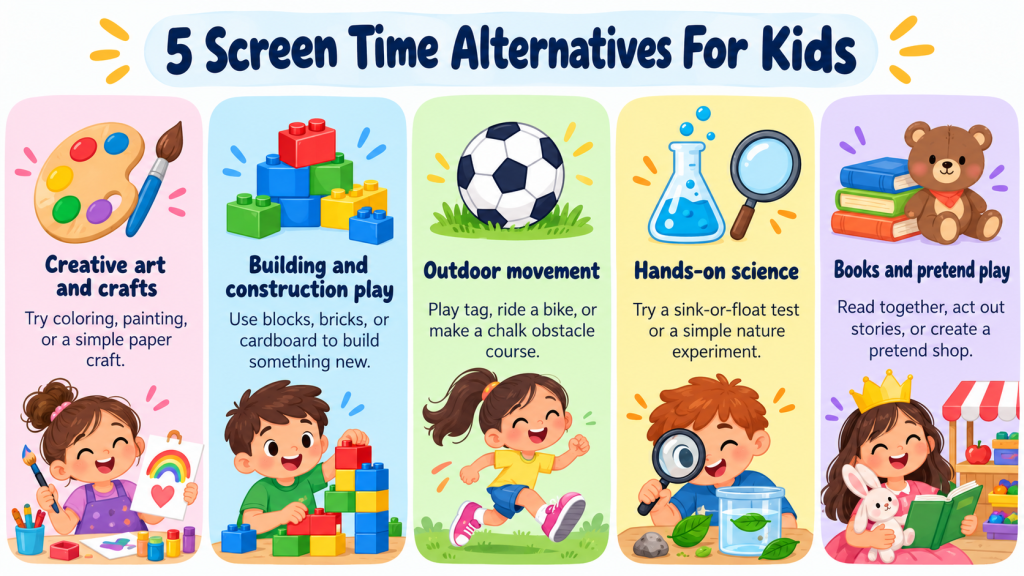
1. Creative Art and Making for Quiet, Open-Ended Play
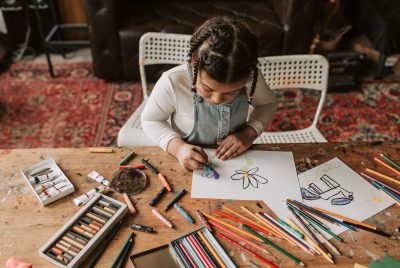
Art fits different moods: coloring for a tired afternoon or a big paper mural for a child with energy to burn. Keep basic supplies together so setup takes seconds.
Skip the perfect craft and try prompts such as “invent an animal” or “design a restaurant menu.” A handled art container makes creative work one of the easiest Screen Time Alternatives For Kids for small homes, rainy days, or travel.
2. Building and Construction Play That Grows With Your Child
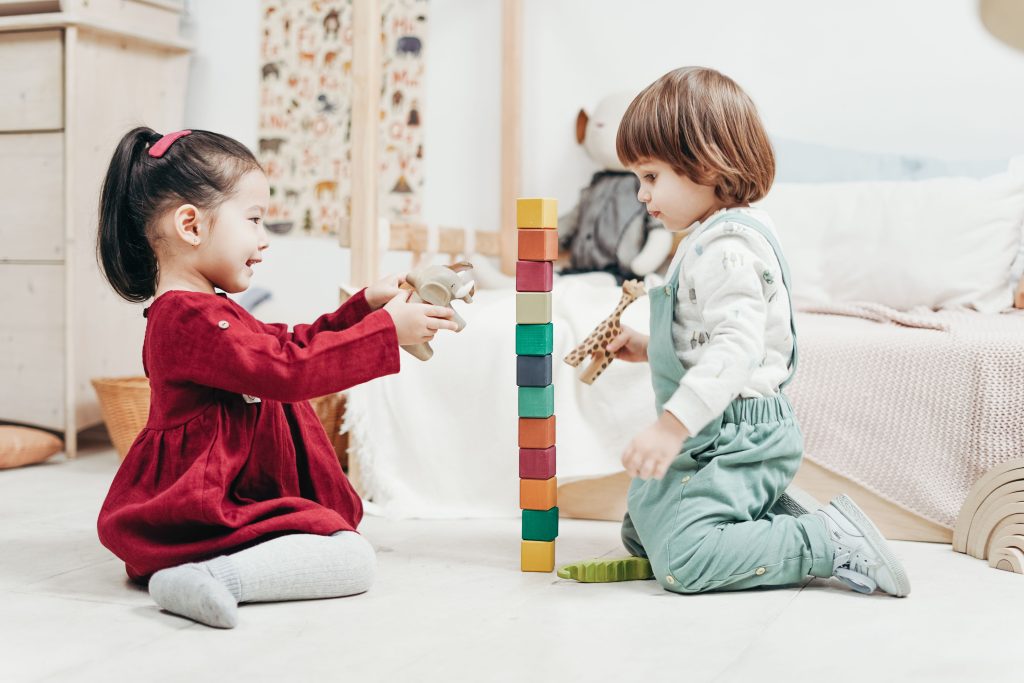
Blocks and construction toys work across ages. A preschooler may stack a tower, while an older child designs a bridge, maze, vehicle, or town.
Refresh familiar pieces with small challenges: build something taller than a book or make a home for a toy animal. If your child expects constant adult direction, learning how to encourage independent play can make screen-free time easier.
3. Outdoor Movement That Feels Like Play, Not Exercise
Movement works best when it has a purpose. “Go exercise” sounds like a chore; “How far can this foam rocket fly?” gives a child a reason to run.
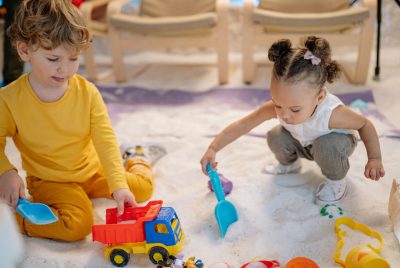
Try scooter laps, chalk obstacle courses, bubbles, catch, scavenger hunts, or a walk with a mission. No yard? Use a nearby park or an indoor dance break. These Screen Time Alternatives For Kids are especially useful after school.
4. Hands-On Science for Kids Who Always Ask “Why?”
Try sink-or-float predictions, paper-airplane tests, magnet hunts, shadow tracing, or growing beans in a clear container. Curiosity often holds attention because the child gets to make something happen.
Keep it playful: ask one question, then let your child investigate. Kits reduce setup, while household experiments cost less. Use age-appropriate materials and supervision, especially when small parts, liquids, or multi-step activities are involved.
5. Books, Pretend Play, and Family Games for Connection
Not every replacement needs to keep a child busy alone. Read a funny chapter, play a short game, build a blanket café, or turn stuffed animals into story characters.
Pretend play often needs only one prop. A box becomes a bus; paper tickets create a theater. These Screen Time Alternatives For Kids can start with you and continue independently once the idea has momentum.
Recommended Products for Screen Time Alternatives For Kids
Products are optional, but a few well-chosen supplies can make off-screen choices faster to start. These five cover art, construction, toddler play, science, and active movement.
| Product | Best for | Play style |
| Crayola Inspiration Art Case, 140ct | Portable creative play | Drawing and coloring |
| LEGO Classic Medium Creative Brick Box 10696 | Open-ended builders | Construction |
| Melissa & Doug Wooden Building Blocks, 100-Piece Set | Toddlers and preschoolers | Stacking and sorting |
| National Geographic Mega Science Lab | Curious older kids | Hands-on science |
| Stomp Rocket Jr Glow | High-energy play | Outdoor movement |
Crayola Inspiration Art Case Coloring Set – Tie-Dye (140ct), Art Supplies Set For Kids, Travel Drawing Kit, Gift for Girls & Boys, Ages 5+
Best for: Portable creative play
This 140-piece case includes crayons, washable markers, short colored pencils, paper, and handled storage. It suits ages 5+ who enjoy drawing and benefit from having supplies ready in one place. Portability helps with travel or visits. Children who prefer paint, clay, or three-dimensional crafts may eventually want a broader art setup.
LEGO Classic Medium Creative Brick Box 10696 | Building Toys for Boys & Girls, Ages 4-99, Develops Fine Motor Skills, W/ Storage Bin, 484 Pieces, Gift for Birthdays
Best for: Open-ended builders
This 484-piece set comes in a storage box with varied bricks and colors for free building instead of one fixed model. Designed for ages 4 and up, it can serve siblings at different stages and be reused in new ways. Because it contains small pieces, families with younger children should choose age-appropriate building alternatives.
Melissa & Doug Wooden Building Blocks, 100-Piece Set of Sorting & Stacking Toys in 4 Colors and 9 Shapes, Classic Toddler Toys for Girls & Boys Ages 2+ – FSC Certified
Best for: Toddlers and preschoolers
This set has 100 lightweight solid-wood blocks in four colors and nine shapes, plus storage. Labeled for ages 2+, it supports stacking, sorting, counting, and imaginative construction without complicated instructions. The familiar format is approachable for younger children. The practical drawback is simple: loose blocks can spread quickly across the floor.
National Geographic Mega Science Lab with 75 Experiments for Kids 8-12 | Earth Science, Chemistry Set, Science Magic, Easy Experiments, STEM Projects, Science Kit for Kids, Birthday Gift
Best for: Curious older kids who like structured projects
This kit combines Earth science, chemistry, and science-magic activities. It includes materials for 45 experiments plus instructions for 30 more using common household items. The range gives science-minded kids more than a one-afternoon activity. Multi-step experiments may require adult help for younger children or kids who prefer more open-ended play.
Stomp Rocket Jr Glow Rocket Launcher for Kids, 4 Rockets – Glow in The Dark | Fun Outdoor Toys for Boys & Girls, Ages 3 & Up – Soft Foam Blaster Set Soars Up to 100ft – STEM Toys for Outside & Backyard
Best for: High-energy outdoor play
Made for ages 3+, this kid-powered launcher uses a stomp pad to send four included glow-in-the-dark foam rockets upward without batteries. It encourages running, retrieving, taking turns, and launching again. It needs generous overhead and landing space, so families without a yard may find it more practical at a park.
What Research Says About Screen Time Alternatives For Kids
The American Academy of Pediatrics’ 2026 Family Media Plan guidance recommends screen-free times and places, quality content, fewer autoplay-style distractions, and deliberate room for reading, outdoor play, family games, and hobbies. Adults are part of that plan too.
A 2024 JAMA Pediatrics systematic review and meta-analysis included 100 studies with 176,742 children under 6. Screen context mattered: background television and age-inappropriate content were associated with poorer outcomes in some areas, while caregiver co-use was positively associated with cognitive outcomes. Effects were generally small to moderate.
A 2026 systematic review and meta-analysis of randomized trials included 65 preschool screen-reduction studies; 62% met their reduction objectives, although the pooled effect was small.
Movement is also worth protecting. CDC guidance updated in 2025 says ages 3–5 should be active throughout the day, while ages 6–17 should get at least 60 minutes of moderate-to-vigorous activity daily. WHO guidance for children under 5 also emphasizes active play and interactive non-screen activities such as reading, storytelling, singing, and puzzles.
Build a “Screen-Free Menu” Children Can See
A visible menu removes the pressure to invent something every time a device turns off. Keep five to eight familiar ideas, then offer only two or three at once.
Use categories such as make, build, move, read, help, or play a game. Pictures work well for younger children. Keep supplies reachable when safe. Screen Time Alternatives For Kids work best when getting started feels easy.
Match Alternatives to Age, Temperament, and Energy
Toddlers may prefer large blocks, pretend play, simple books, sensory activities, and movement. School-age children may choose construction challenges, crafts, science projects, sports, comics, puzzles, or longer games.
Temperament matters too. One child may need quiet drawing after school; another needs to run first. Screen Time Alternatives For Kids work better as a flexible menu than a rigid schedule.
What to Do When Your Child Refuses Every Alternative
Sometimes every suggestion is “boring.” Offer two realistic choices, then allow some space: “You can build at the table or help me make snack.”
A few minutes of disappointment does not mean the transition failed. Consistent screen windows may also feel easier than changing limits. If media use repeatedly interferes with sleep, school, relationships, or daily functioning, discuss the pattern with your child’s pediatrician or another qualified professional.
Screen Time Alternatives For Kids in Small Spaces and Busy Homes
You do not need a backyard or playroom. Try balloon volleyball, drawing prompts, couch-cushion forts, puzzles, audiobooks with coloring, or household scavenger hunts.
Busy evenings suit parallel activities. A child can draw while you cook, sort socks while you fold laundry, or build beside your workspace. Real household participation counts too. The best Screen Time Alternatives For Kids fit the home and schedule you actually have.
Frequently Asked Questions About Screen Time Alternatives For Kids
What are the easiest Screen Time Alternatives For Kids to start with?
Start with low-setup choices: drawing, blocks, books, a short walk, music and dancing, puzzles, or a simple card game. Familiar activities often work better than an elaborate craft when a child is already upset about turning off a device. Keep two or three options visible and rotate them when interest fades.
How can I cut back on screen time without causing frequent arguments?
Use predictable screen windows, give a warning before stopping, and have the next activity ready. Avoid renegotiating after the device is off. Acknowledge that stopping is disappointing and offer two choices. Adults following the same screen-free routines at meals or bedtime can also make expectations feel more consistent.
Do educational apps need to be replaced too?
Not necessarily. Screen use differs by content, purpose, and context. Age-appropriate media used with a caregiver is not identical to passive or background viewing. Focus on whether media is crowding out sleep, movement, face-to-face interaction, schoolwork, reading, or hobbies. A balanced plan can include useful digital experiences alongside strong offline routines.
What are good alternatives when I need to get chores or work done?
Choose activities your child can continue with limited help: coloring, blocks, puzzles, audiobooks, reusable sticker scenes, pretend play, or a helper job nearby. Match expectations to age; younger children may still need check-ins. Start with a short independent period and build gradually instead of expecting a long stretch immediately.
How many screen-free activities should I offer at once?
Usually two or three choices are enough. Too many can create another decision problem, especially for younger children. Keep a larger menu for yourself, then offer a small selection based on time, space, and energy. If nothing appeals, a little boredom can leave room for children to invent their own play.
Final Recommendation: Choosing Screen Time Alternatives For Kids That Stick
The most effective Screen Time Alternatives For Kids are easy enough to repeat. Start with one calm option, one building or thinking activity, and one way to move. A Crayola art case can make quiet creativity easy to begin, while the Stomp Rocket Jr Glow gives active children a clear outdoor choice. Free options—books, cardboard creations, pretend play, neighborhood walks, and household jobs—belong in the same rotation.
Keep transitions predictable, match activities to your child’s age and mood, and aim for balance rather than perfection. A simple screen-free menu that your child helps create is a practical place to begin.